Ibrahim Maza: receiving between the lines
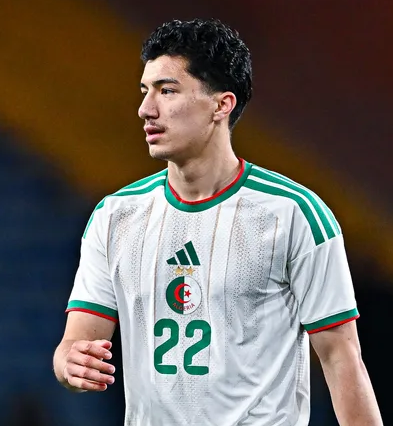
Ibrahim Maza is an Algerian attacking midfielder whose football journey has developed in Germany. His role offers an instructive lens on the small decisions that connect midfield possession to forward progress.
Search Ibrahim Maza skills videos on YouTube ↗
What to watch
Before he receives, check his position in relation to the ball, the opponent’s midfield line and the nearest forward. Notice whether his first touch helps him turn, protect possession or connect a teammate.
A developing international career
Maza has represented Algeria at senior international level and developed his club football in Germany. That combination makes his path interesting to supporters in both places, but it is important not to reduce a player’s identity or career to one transfer or a single national-team appearance. International selection reflects a moment in a continuing career; club roles and competition minutes can change from season to season.
When discussing his career online, use current official squad pages and match records to verify the club, shirt number, appearances and dates. These details are time-sensitive, and older articles can remain visible after a player has moved. This profile deliberately focuses on general tactical observations and training rather than making unverified claims about his present club situation or predicting what he will achieve.
The attacking-midfield role itself is not fixed. A coach may ask the player to receive behind the opposing midfield, move wide to create an overload, support a striker, press a defender or help retain possession. The same player can be asked to do different things in different systems. Understanding that role is part of understanding the performance.
Finding useful pockets of space
An attacking midfielder often looks for space between the opponent’s midfield and defensive lines. It can be a narrow area with pressure arriving from several directions. To receive there, a player needs more than a good first touch: they need to scan early, judge the defender’s position and offer a passing angle before the ball is played.
One useful habit is checking over a shoulder while the pass is travelling toward a teammate. The player can then adjust their position before the ball arrives. If the nearest opponent is tight, the midfielder might move a step away to create room or set the ball back with one touch. If the defender is screening the forward lane, the player can receive side-on and move the ball around the pressure. These are small actions, but they can keep the team’s attack moving.
When studying Maza, viewers can pause shortly before he receives and ask what information appears available. Is there a forward pass? Is a teammate free on the opposite side? Is the closest defender approaching from behind or from the side? The question is not whether a particular choice looks adventurous. It is whether the choice fits the picture the player faces.
Carrying the ball to change the shape
A midfielder’s carry can make an opponent leave a position to challenge. If a defender steps forward, a passing lane may open behind them. If the opponent holds their line, the carrier may gain ground and improve the team’s field position. Carrying is valuable when it changes the defensive picture, not simply because the player touches the ball repeatedly.
To carry safely, the player should keep the ball within a distance that allows a quick adjustment, use their body to protect it and look up regularly. The precise touch length changes with the space available. In a crowded area, shorter touches can preserve control. In open space, a longer touch may allow the player to accelerate. The choice should respond to the defender and the next action.
A useful video exercise is to watch a full possession and count how many opponents react to a carry. Did the dribble draw one defender away? Did it invite a second defender and leave a teammate free? Did the player release the ball before being trapped? This provides a more meaningful review than counting tricks or successful take-ons without considering the outcome for the team.
Passing, combinations and support
An attacking midfielder can connect players around them through short combinations. A pass into a forward may be followed by a return pass, a third-player run or a movement into the space the defender has vacated. The timing of that support is essential. If the midfielder stands still after passing, the opponent can recover their shape and close the next option.
Practise a simple wall pass with a partner and a cone acting as a defender. The passer moves to a new angle immediately after releasing the ball, receives the return pass in stride and decides whether to continue forward or play to a third teammate. Vary the distance and direction so the players learn to adjust their body position rather than repeat a memorized sequence.
Training idea: scan, receive and choose
Set up a 16-by-16-metre square with a central receiving zone, two support players on the edges and one defender. A server passes toward the attacking midfielder, who scans before receiving. The midfielder can turn through a gate, combine with an edge player or play back to the server and move to a new space. Begin with the defender applying light pressure, then allow the defender to choose an approach angle.
Keep the goals simple. The receiver should take a first touch that helps the chosen action and communicate with teammates. The support players should adjust to provide passing lanes rather than standing still. Rotate positions so everyone practices receiving under pressure and defending the central space. For younger or less experienced players, increase the area and remove the defender until ball control is comfortable.
After each short round, ask the receiver what they saw before the pass arrived. Do not demand a single “correct” answer if several options were available. Instead, discuss the trade-offs: a turn might advance quickly but risk losing possession; a combination could keep control and move the defence; a backward pass might allow the team to change the point of attack.
Build a repeatable review routine
Players and coaches can use a three-part review: preparation, action and follow-up. Preparation asks whether the player scanned and positioned themselves to receive. Action asks whether the touch, carry or pass responded to the pressure. Follow-up asks whether the player moved again and helped the next phase. This routine encourages a complete view of midfield play.
In an individual notebook, a player might record one moment where they received facing forward and one where they chose to retain possession under pressure. The purpose is not to judge every action as a success or failure. A technically good choice may still be intercepted because of a strong defensive action, and an inaccurate pass may still have been a sensible idea. Reflecting on the information available helps separate decision quality from outcome.
Representing Algeria and developing responsibly
International football can connect supporters across countries and communities. Maza’s Algerian representation is relevant context, but analysis should avoid assuming that nationality determines a player’s style or personality. Discuss his actual role, the match situation and the football actions visible in the evidence.
For young readers, it is also worth remembering that professional careers are built through many influences: coaching, opportunity, education, health, family support and personal choice. No single drill guarantees a route to the professional game. Practice should be enjoyable, safe and appropriate to the player’s age and experience. Rest and recovery are part of development, not obstacles to it.
Do not copy an adult professional’s full workload, diet or strength program from social media. Young athletes should train with qualified supervision and seek suitable medical guidance for pain or injury. Coaches should adapt the size, contact level and duration of activities to the group in front of them.
How to follow the career with accuracy
Career updates should be checked against the current club profile, the Algerian Football Federation and competition records. When a statistic is included, identify the competition and season, and state when it was checked. A total may differ between league, cup and international matches, and a number that was accurate last season may now be out of date.
Separate confirmed information from tactical interpretation. “The official squad page lists him as a midfielder” is a verifiable record. “His movement creates a passing lane” is an analysis that should be supported by a match example. “He will become one of the world’s best” is a prediction and should not be presented as fact.
This profile does not claim the player or his club has reviewed, approved or endorsed it. It avoids rumors about contracts, private life and future transfers. If the page is updated, preserve that distinction and use links to the original sources rather than reproducing another publisher’s article.
Sources and image rights
For current career facts, consult the official Algerian Football Federation, the player’s current club and relevant competition records. This is independent educational analysis, not an endorsement. Photo source and public-domain dedication are credited below the image.