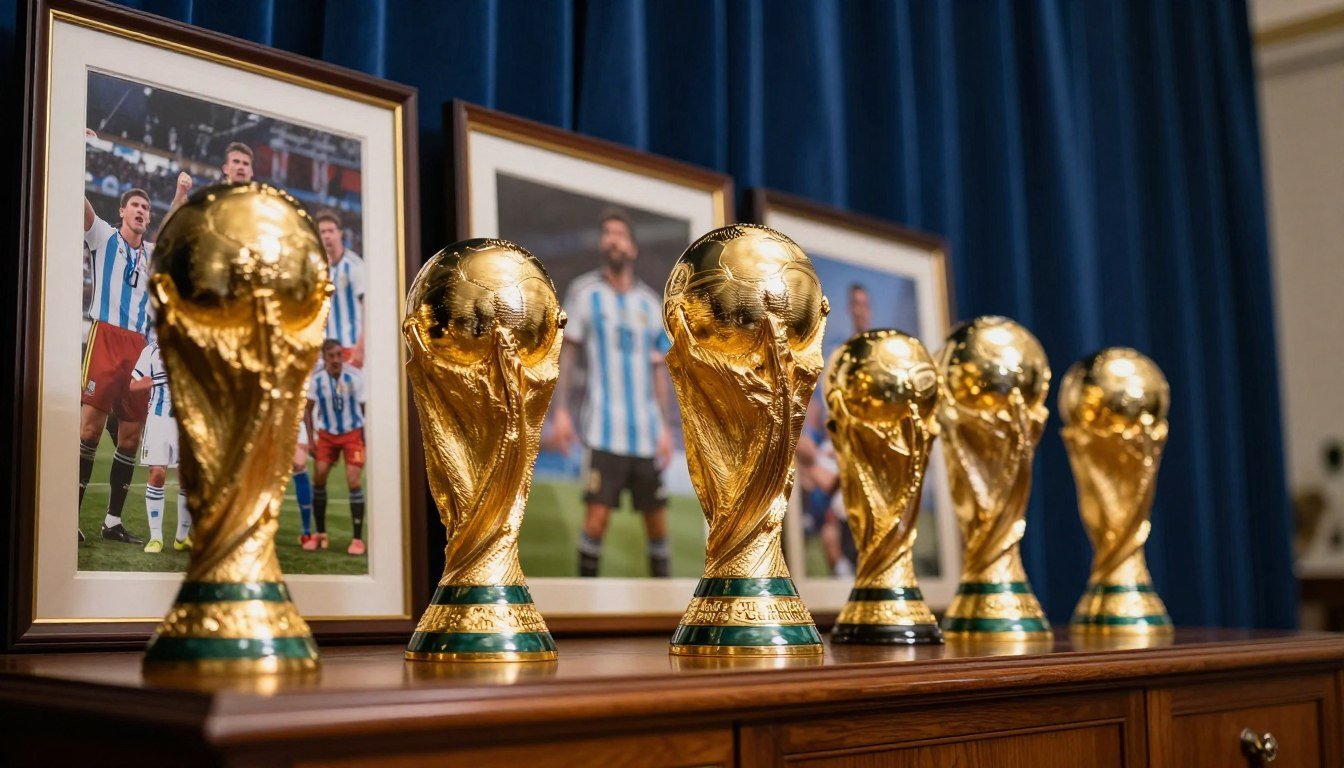
Every World Cup title since 1930 has gone to a team from Europe or South America. Over the 22 tournaments played from 1930 to 2022, only eight nations have lifted the trophy.
A confederation is a continental governing body of FIFA that organizes its region’s qualifiers and receives a share of World Cup places. UEFA is the confederation for Europe, and CONMEBOL covers South America. We answer the question in two parts: the long record and the 2026 tournament.
Key Takeaways
Teams from Europe and South America have won every FIFA World Cup title.
Eight nations have won the 22 tournaments played from 1930 to 2022.
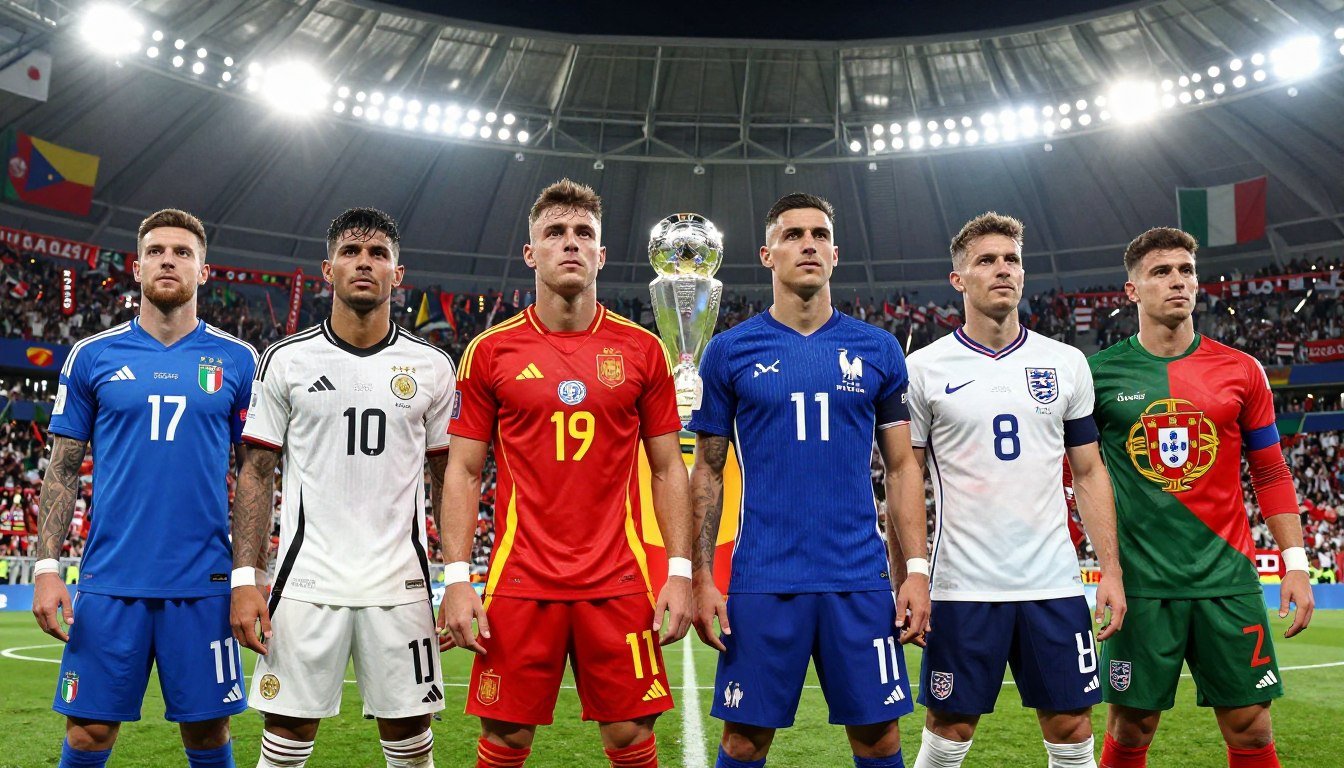
Six of the eight 2026 quarter-finalists came from Europe.
Brazil leads with five titles and has played in every tournament.
Argentina was the only South American side still alive in the 2026 quarter-finals.
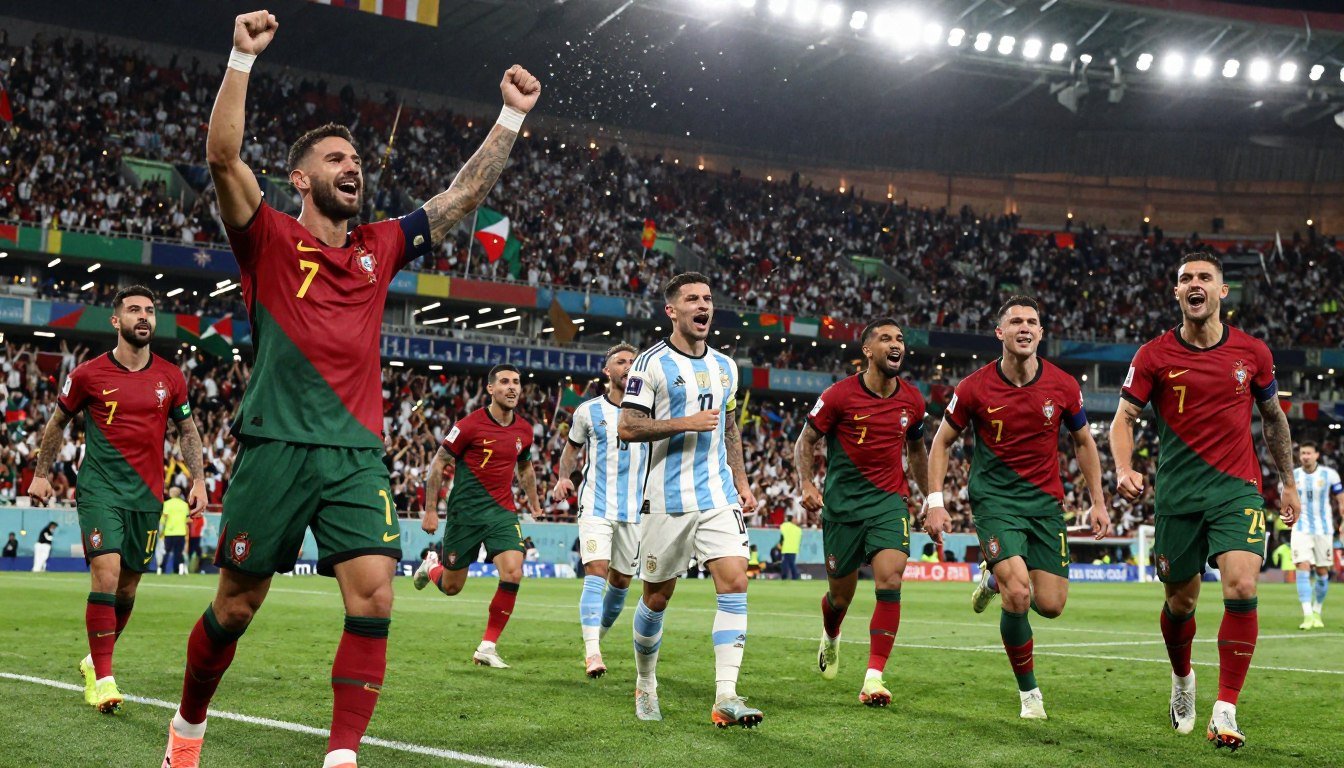
The 2026 quarter-finals show the same pattern. Six European sides reached the last eight, along with Argentina and Morocco. Watch the knockout rounds to see whether that record holds past 2026.
Six of Eight Quarter-Finalists Came From Europe in 2026
Six of the eight teams left in the 2026 quarter-finals play for UEFA. Argentina was the lone South American side, and Morocco was the only African team left.
The 2026 quarter-finals follow a pattern that started at the very first World Cup. That pattern has a long history behind it.
The first World Cup was held in Uruguay in 1930. Seven South American teams, four European teams and two North American teams took part. Since then the tournament has been held every four years, except in 1942 and 1946.
The same two regions have won every World Cup since 1930, and 2026 kept that record alive.
Brazil went out in the Round of 16, the last-16 round. Co-hosts Canada, Mexico and the USA also fell in that round. Every team must first finish in the group stage before the knockouts begin, so a weak group result can end a run early.
Count the European sides still alive after each round to see whether the lead holds.
Which Countries Have Won the Most Titles
Brazil holds the record for World Cup titles, with five. Europe leads all continents when the titles are added together.
Europe has won 12 titles, and South America has won 10. We look at the countries first, then at the regions.
Title Totals by Country
Germany and Italy have four titles each. Argentina has three, while France, Spain and Uruguay have two each. England has one.
Country
Titles
Appearances through 2026
Continent
Brazil
5
23
South America
Germany
4
21
Europe
Italy
4
18
Europe
Argentina
3
19
South America
Brazil and the Record of Appearances
Brazil is the only team to have played in all 23 tournaments through 2026. That record shows steady presence, not just a few strong years. Germany comes next in appearances, with 21.
Europe Versus South America by Titles
Europe’s lead comes from more nations winning titles. Germany, Italy, France, Spain and England are European winners, while South America’s winners are Brazil, Argentina and Uruguay.
Europe leads on titles, but South America is the only region with a team in every tournament.
The Forces Behind the Pattern
Europe’s top leagues give players weekly contact with elite opponents. That routine builds the habits a World Cup demands.
Five of the eight top-ranked FIFA teams are European. The depth of players and coaching in the region shows in that ranking.
Club Football and Youth Academies
Academies in both regions start training players as children. The main reasons for the pattern are these:
Club football in Europe’s top leagues, with games against elite opponents every week
Youth academies that train players from childhood
Champions League knockout matches that test players under pressure
South American street football, which builds close control and quick thinking
A larger share of World Cup places for Europe
Qualifying Places and the 48-Team Format
The tournament grew from 32 teams in 1998-2022 to 48 teams starting in 2026.
Europe holds 16 of the 48 places in the 2026 World Cup, more than any other continent.
Each confederation runs its own qualifiers, and the places it wins become its share. Teams still face a group stage before the knockout rounds begin. Count how many players in a national squad play in Europe to see how much club experience carries over.
Conclusion
The record is clear: only Europe and South America have won the World Cup. The 2026 field is the strongest test yet for a champion from elsewhere.
Follow the knockout rounds and count how many non-European teams survive each one.
FAQ
What is the only country to compete in every World Cup?
Brazil is the only country to have played in every World Cup, all 23 tournaments through 2026. That record started in 1930 and has continued without a gap. Brazil has also won five titles, more than any other nation, so its record combines steady presence with the most championships.
Which continent has more World Cups, South America or Europe?
Europe has more titles, with 12 to South America’s 10, through the 2022 record. Europe’s lead comes from more nations winning, with five European champions against three from South America. Brazil, Argentina and Uruguay are the South American winners, and Brazil alone has five of those titles.
Which continent claims the most FIFA World Cups?
Europe claims the most, with 12 titles. Those titles belong to Germany, Italy, France, Spain and England. Germany and Italy have four each, while France and Spain have two each and England has one.
Is Europe or South America better at soccer?
Neither region holds a single lead on every measure. Europe has more World Cup titles and six of the eight 2026 quarter-finalists, while South America has 10 titles and Brazil’s record of playing in every tournament. The World Cup record gives Europe a small edge on trophies.
What is the best country in soccer ever?
Brazil has the strongest World Cup record, with five titles and appearances in all 23 tournaments through 2026. That record is a fact about the tournament, not a ruling on every era of the sport. Germany and Italy are next with four titles each.
Can one player score more and still trail in other stats? Cristiano Ronaldo has more career goals, but Lionel Messi has more assists and a higher goals-per-game ratio.
We compare the career numbers of Lionel Messi and Cristiano Ronaldo as they stood from October 23 to 25, 2026. Both have been the dominant forwards of the last two decades. Their careers overlapped for more than fifteen years, so their records run side by side.
We use a few key terms on this page. A goal contribution is a goal or an assist credited to a player in a match. The career goal ratio is goals divided by appearances, and international goals are goals scored for the national team.
The Champions League means the UEFA Champions League, and the Ballon d’Or is the men’s best player award. The verdict depends on which measure matters most to you, so the best way to read this comparison is to pick the measure that matches your question, then check the section for it.
Key Takeaways
Ronaldo has more career goals than Messi.
Messi has more assists and a higher goals-per-game ratio.
Both players’ careers overlapped for more than fifteen years.
A goal contribution is a goal or an assist credited in a match.
Messi leads on most trophies, while Ronaldo leads on Champions League records.
Pick the measure that fits your question before you judge.
Messi vs Ronaldo All-Time Stats for 2026
Ronaldo leads on total career goals with 982 as of October 23, 2026. He also has more career appearances, 1,342 to Messi’s 1,182. Both totals include club and country matches, so they are senior career figures.
Messi leads on total assists and goals per game, while Ronaldo leads on goals and games played. We use the same total counts for both players, so the comparison stays fair.
Use one count for both players before you compare assists or goals, because the counts differ by source.
Age and career appearances
Messi was 39 years old and Ronaldo was 41 years old as of October 2026. Ronaldo has 1,342 appearances and Messi has 1,182. More games give a player more chances to score, which is one reason Ronaldo’s total is higher.
Total goals and assists
Under the stricter count, Ronaldo has 291 assists and Messi has over 420. That makes Messi the leader in total assists by more than 120.
The stricter count leaves out some assists that broader records include. The gap in total assists is still wide under either count.
Goals per game
Ronaldo averaged 0.73 goals per game as of October 23, 2026. Messi’s rate sits above that, so he scores more often in the games he plays.
Check whether a total counts friendlies before you quote it, since record books do not always agree.
Who Has More Career Goals?
Ronaldo has more career goals, but Messi scores more often per game. Ronaldo had 982 career goals as of October 23, 2026, against Messi’s 936 in the comparison data. Messi averaged 0.79 goals per game, and Ronaldo averaged 0.73.
Messi scores one goal every 104 minutes, and Ronaldo one every 112 minutes. The gap in minutes per goal looks small, but it adds up over hundreds of matches.
Measure
Messi
Ronaldo
Career goals
936
982
Goals per game
0.79
0.73
Minutes per goal
104
112
Goals per game and minutes per goal
Part of Ronaldo’s lead comes from penalties. Taking penalties out of the count narrows the gap between the two players.
Who is on track for 1,000 goals
Ronaldo needs 18 more goals to reach 1,000, and Messi needs 64 more. Ronaldo scored 69 goals in calendar year 2013, his best calendar year.
Track both totals after each season, because the lead can change with just a few matches.
Who Provides More Assists and Goal Contributions?
Messi leads on assists by a wide margin. Under the broader count, Messi has 466 career assists and Ronaldo has 307, a lead of 159.
Messi makes a goal contribution every 71 minutes in the comparison data, while Ronaldo makes one every 88 minutes. That gap shows Messi’s stronger playmaking, even when the goals themselves are closer.
Ronaldo’s Champions League assist count is close to Messi’s, so the gap shrinks in the biggest club games. Messi’s wider lead comes from his many years of creating chances in league and cup play.
The broader assist definition counts more chances than the stricter broadcast count does. That is why assist totals from different sites can differ.
Confirm which assist definition a table uses before you compare totals.
How Do They Compare at International Level?
Ronaldo scored more for his country, and he also scores faster for it. He has 146 international goals in 234 appearances, which makes him the all-time men’s international top scorer as of October 23, 2026.
Messi has 126 goals in 208 appearances for Argentina, and he is the country’s all-time top scorer as of October 25, 2026. Ronaldo’s international record is the stronger one by total goals.
Goals for Portugal and Argentina
Ronaldo scores an international goal every 128 minutes, while Messi scores one every 137 minutes. Those rates are close, and the difference comes down to minutes on the pitch.
Ronaldo: 146 international goals in 234 appearances
Messi: 126 international goals in 208 appearances
Ronaldo: one international goal every 128 minutes
Messi: one international goal every 137 minutes
Messi’s final Argentina appearance: a penalty in a 3-0 friendly win over Benin on October 6, 2026
Major tournament finals
Ronaldo’s Nations League titles and Messi’s Copa America wins show how each player did in major tournament finals. Those wins are a fair test of how each player handles pressure with a national team.
Compare national records by goals and by matches played, since the appearance counts differ.
Hat-Tricks and Individual Scoring Records
Ronaldo has more career hat-tricks, 66 to 60. Between them, the two players have 127 hat-tricks, and both have 8 hat-tricks in the Champions League.
The records below show where each player holds the top spot in scoring. The most notable marks come from the Champions League and league play.
Most Champions League goals: Ronaldo, with 140 to Messi’s 129
Most Champions League hat-tricks: a tie, with 8 each
Most league goals in a single season: Messi
Hat-trick totals are close inside each competition. The leads can reverse when you count only league games.
Count hat-tricks by competition before you quote a lead, since a total can change with the competition you choose.
Club Records at Barcelona, Real Madrid and Beyond
Messi holds the Barcelona scoring record with 672 goals. He also holds the La Liga goal record with 474 goals as of October 23, 2026.
Ronaldo scored 836 club goals in 1,108 appearances as of October 23, 2026. His Real Madrid run lasted nine years, and that stretch built most of his club record.
Messi vs Ronaldo at Real Madrid is a short comparison, because Messi never played there. Ronaldo also played for Manchester United, so his club total spans several clubs.
Club totals depend on whether friendlies are counted, so the numbers can shift between record books.
Compare the same competition across clubs, since the totals mix different league lengths.
Head-to-Head in Finals and Big Matches
Messi scores more often in finals, with 36 goals in 53 appearances. In all career finals, Messi scored a goal every 137 minutes, and Ronaldo scored one every 148 minutes.
Ronaldo has 25 goals and two assists in 41 finals appearances. Messi has 18 assists in his 53 finals appearances, so his finals role includes more creating.
In club finals alone, Messi scores one goal every 117 minutes, while Ronaldo scores one every 142 minutes. Champions League finals are the biggest club matches, and Ronaldo has scored more goals in that competition than anyone.
Shootout kicks sit outside the regular penalty counts, so a miss there does not change the goal totals.
Compare finals and regular play separately, since a finals record covers far fewer matches.
Who Has Won More Trophies?
Messi has more trophies overall, 49 to 37. His lead comes mostly from league titles and Ballon d’Or awards, while Ronaldo leads in Champions League titles.
Trophy
Messi
Ronaldo
Total trophies
49
37
Ballon d’Or awards
8
5
League titles
13
8
Champions League titles
4
5
Club honours
Messi has 13 league titles to Ronaldo’s eight. Ronaldo has 5 Champions League titles to Messi’s 4, so each player leads one major club prize.
International honours
Both players have won major international titles, and the list below shows who won each one.
FIFA World Cup, 2022: Messi
UEFA European Championship, 2016: Ronaldo
UEFA Nations League, 2019 and 2025: Ronaldo
Individual awards
Messi has won the Ballon d’Or, the men’s best player award, a record 8 times. Ronaldo has won it 5 times.
Check whether a count includes youth or Olympic titles before you compare.
World Cup and Major Tournament Records
Messi has scored 21 World Cup goals, against 11 for Ronaldo. Messi’s 21 World Cup goals give him the bigger record at the tournament.
Messi scored eight of those goals at the 2026 tournament. Ronaldo scored his 11 across six FIFA World Cup tournaments.
Measure
Messi
Ronaldo
World Cup goals
21
11
World Cup title
2022
None
Continental title
Copa America 2021 and 2024
Euro 2016
Messi won the 2022 World Cup Golden Ball, the tournament’s top player award. Ronaldo’s biggest tournament win came at Euro 2016, when Portugal won the European Championship.
Compare World Cup totals by tournament, since the number of matches differs.
Penalties, Free Kicks and Shooting Efficiency
Ronaldo converts penalties more often, at about 83 percent to Messi’s 77 percent. Ronaldo’s penalty conversion rate is higher, but the gap is small once you count attempts.
Shootout kicks are left out of these penalty counts.
Penalties
Ronaldo: 184 penalties scored and 37 missed
Messi: 115 penalties scored and 35 missed
Ronaldo’s conversion rate: about 83 percent
Messi’s conversion rate: about 77 percent
Free kicks
Messi has 76 career free kick goals, and Ronaldo has 65. Messi scores a goal every 5.27 shots, and Ronaldo every 6.43 shots, in league and Champions League games from 2009/10 to 2023/24.
Ronaldo needs more shots for each goal, so Messi’s shooting efficiency is higher in those games.
Read conversion rates alongside attempt counts, since a higher rate with fewer kicks is a smaller sample.
Assessing Playing Style, Dribbling and Heading
Messi completes far more dribbles, 4,103 to 1,963. Messi’s dribble count is more than double Ronaldo’s in the games with recorded data.
Playing style explains much of that gap. Messi often drops deep as a false nine, which means he receives the ball away from the goal and runs at defenders.
Ronaldo plays as a striker who stays high and close to goal, so his heading total is higher. He has scored 158 headers in 1,342 appearances, and Messi has scored 32 in 1,182.
Ronaldo has also won 1,072 aerial duels, against Messi’s 172. Those numbers reflect roles more than raw skill.
Read dribbling and heading totals against each player’s position across the years.
Ronaldo vs Messi Head-to-Head Matches
Their last meeting was a January 2023 exhibition in Riyadh, which PSG won 5-4. Ronaldo scored twice in that match, and Messi scored once.
Ronaldo and Messi last shared a pitch on January 19, 2023. The match was an exhibition, not a competitive game.
Their careers overlapped for more than fifteen years. Most of their meetings came in club or international competition, not in exhibitions like this one.
That history gives the rivalry its weight, even though direct meetings are fewer than the careers suggest.
Check the match records for a head-to-head total, since exhibition and friendly matches are counted differently.
Who Is the Better Player by These Numbers?
Messi is the statistical pick for most readers, based on the goal ratio and assists. Messi has the better goal ratio, at 0.79 to 0.73 goals per game.
Messi is statistically better on the goal ratio, while Ronaldo is ahead on total goals. Ronaldo vs Messi, who is best by these numbers, depends on whether rate or total matters most.
No single winner covers every measure, so the pick depends on the measure you choose.
The case for Messi
For most readers, the choice of Messi or Ronaldo comes down to the goal ratio. Messi also leads on assists and makes a goal contribution more often.
The case for Ronaldo
Ronaldo wins on total goals and on Champions League records, where he also leads the all-time list. He is the best player by career totals, even though Messi is the best player by rate.
Pick the measure that matches your question, then the verdict follows.
Conclusion
Messi has the better ratio and more trophies, and Ronaldo has more goals. Messi leads on assists, while Ronaldo leads on Champions League records.
Both records are real, and each one answers a different question. The next step is to match the measure to your question before you pick a winner.
FAQ
Can Messi reach 500 assists?
Messi would need about 80 more assists to reach 500, since he had over 420 as of October 25, 2026. Whether he gets there depends on how many matches he plays each season. Assist totals also depend on the counting rules a record book uses, so check the definition before you track progress toward 500.
Has Messi hit 900 goals yet?
Yes, Messi has passed 900 senior career goals. He had scored over 930 as of October 25, 2026, counting club and country matches together. The 900 mark is already behind him, so the next milestone to watch is 1,000.
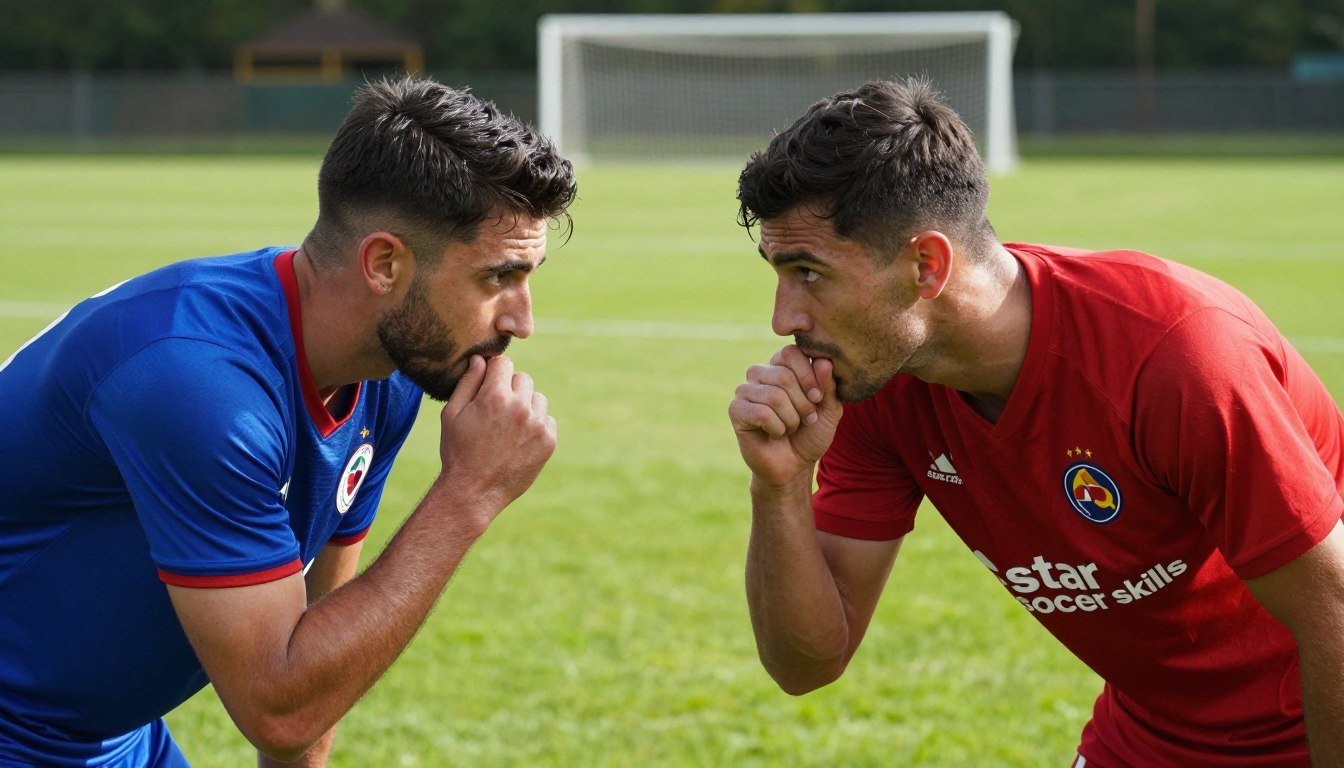
Have you ever watched a defender and a striker lean together, one hand raised beside the mouth? The broadcast camera cannot read their words.
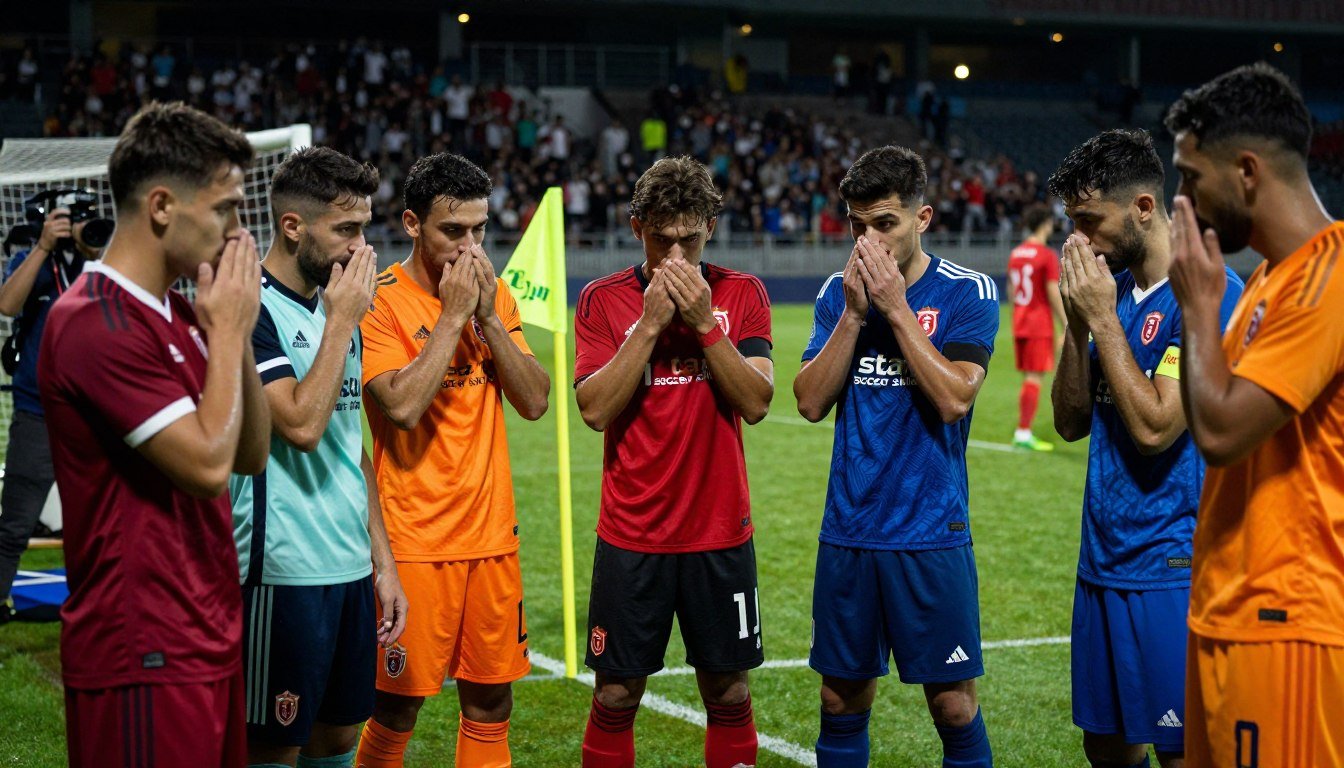
Football players often hide mouths speaking on the pitch behind one hand. That habit has been normal on television for years.
The title question has a short answer. Players cover their mouths for three main reasons: to hide their words from cameras, lip-readers and nearby listeners, to protect tactics, and to hide abusive language.
At the World Cup, the mouth-covering rule now allows a red card for covering the mouth while confronting an opponent. IFAB, the International Football Association Board, is the body that sets the laws of the game and approves changes to them.
IFAB approved this rule in April 2026. The sections below explain each reason and how the rule works. The habit is old, but at the World Cup it can now cost a player the match.
Key Takeaways
Players cover their mouths to hide words from cameras and lip-readers.
Tactics such as set-piece plans are another reason for the habit.
Hiding abusive language is also a motive.
A cupped hand can carry a voice to a teammate at close range.
The mouth-covering rule can bring a red card at the World Cup.
The referee decides whether a player broke the rule.
Why do soccer players cover their mouths when talking
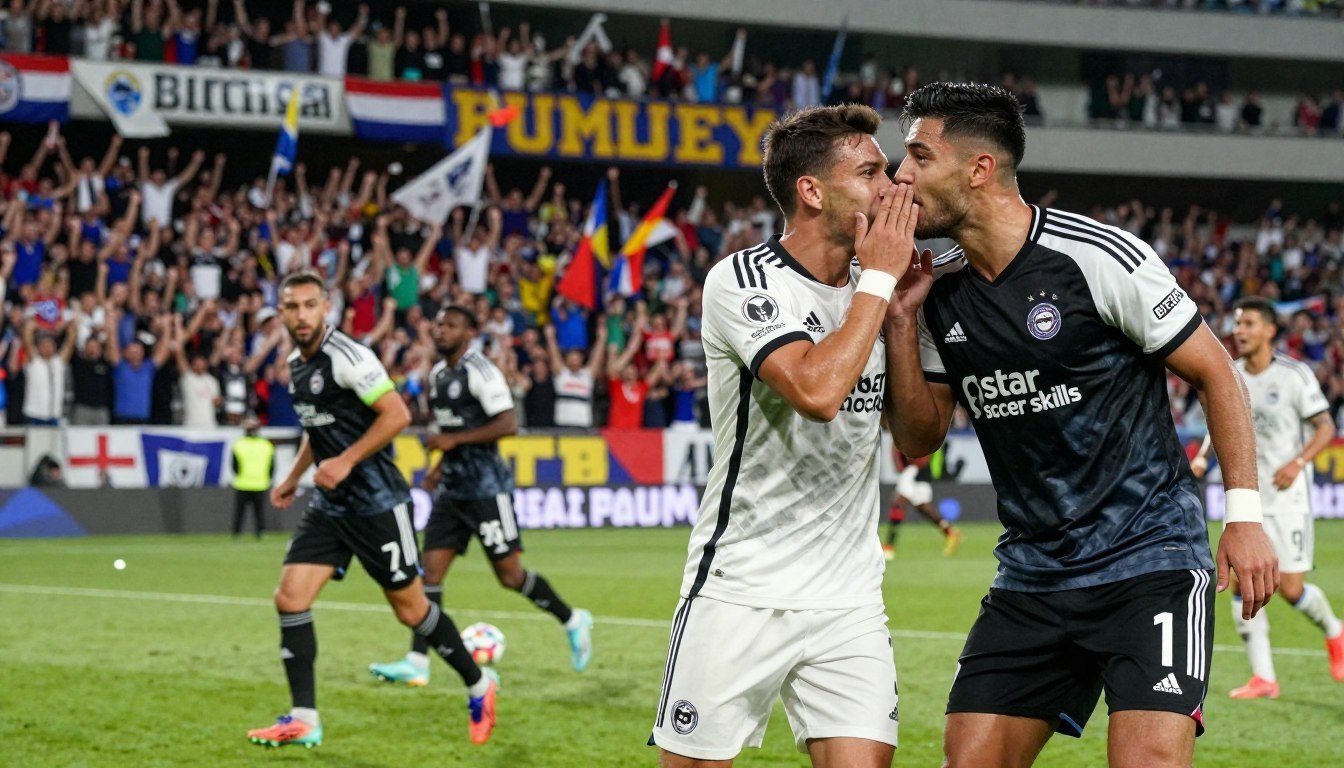
A corner is about to be taken, and two midfielders cup their hands so the opposition cannot follow the plan. Players mostly cover their mouths to keep tactics and private talk away from opponents and cameras.
Lip-readers and high-definition broadcast cameras can pick up what players say on the pitch. Covering mouths blocks that view, so a player can hide mouth movement from the lens. Kyle Walker, the Manchester City captain, has said players do this so cameras cannot see banter or swearing.
Players hide their words for two main reasons: privacy and tactics.
Keeping tactics away from opponents
Set-piece routines, defensive alignments and substitutions are common topics for a hand over the mouth. Opponents who hear them can set up to stop them before the ball moves.
The same logic applies when a goalkeeper calls out a defensive line. A few words from the back can reveal how a team plans to press.
Keeping private talk away from the cameras
Banter and swearing rarely reach the crowd, but a close-up lens can catch them. A hand over the mouth blocks the view of lip-readers, and it makes close-range speech harder to read. Coaches often speak to players this way at set pieces, because a planned move loses its value once the other team knows it.
How the hand helps players hear each other in a loud stadium
In a packed stadium, a shout from ten meters away is lost in the crowd. That is why players lean in rather than yell. A cupped hand works like a funnel, pushing the voice toward one listener.
A cupped hand can aim a voice at one teammate. Crowd noise spreads ordinary speech in every direction, so the voice is weak by the time it reaches the ear. Phil Hall, a PR consultant who has worked with Premier League clubs and players, said cupping a hand near the mouth helps a voice carry to a teammate who is close by.
The effect is like a foghorn, which turns a wide sound into a narrow beam. Players use this in several common situations.
Corners and free kicks, when teammates stand close together
Defensive lines that need a quick call before a press
A goalkeeper calling a defender near the goal
Two midfielders checking a substitution during a stoppage
The hand works best when the listener is close, so a call across the pitch is usually lost.
What the new red card rule says and where it applies
Paraguay’s Miguel Almirón became the first player sent off under the new rule at the World Cup. Covering the mouth while confronting an opponent can bring a red card, and the referee makes the final call.
The 2026 World Cup rule and its origin
On 28 April 2026, IFAB approved a rule that lets competition organizers send off a player for covering the mouth while confronting an opponent. The mouth-covering rule was set for the 2026 FIFA World Cup.
FIFA president Gianni Infantino said: “If you do not have something to hide, you don’t hide your mouth when you say something. That’s it, as simple as that.” His logic is that a hidden mouth suggests hidden intent, so the rule aims to stop the habit in confrontations.
How referees apply the rule on the pitch
The referee weighs all the circumstances before showing a red card. A quick hand near the mouth during a calm talk is not the same as a shouted dispute. In Almirón’s case, his mouth was covered while he spoke toward Türkiye’s Mert Müldür.
Reason
Covered by the rule?
Typical example
Tactics
Only in a confrontation
Set-piece talk
Privacy from cameras
Only in a confrontation
Banter or swearing
Abusive language
Yes, in a confrontation
Dispute with an opponent
A player who covers the mouth in a confrontation risks a red card even if the words are never heard.
The Champions League case that sparked the change
In February 2026, a Champions League playoff brought the issue into focus. Vinícius Júnior of Real Madrid accused Benfica’s Gianluca Prestianni of racial abuse while Prestianni spoke with his shirt over his mouth. Prestianni denied the allegation.
UEFA issued Prestianni a six-match ban for discriminatory conduct. Three of those matches were suspended for two years, and one match was already served provisionally. The sanction is subject to appeal.
Covering the mouth in a dispute can lead to a disciplinary case, even when the words are denied.
The case showed how one covered mouth can pull a whole club into a dispute. The allegation remains disputed, so the outcome of the UEFA appeal will matter.
Conclusion
Players cover their mouths mainly for privacy and tactics, and a hand can also help a voice carry at close range. At the World Cup, covering the mouth in a confrontation can now bring a red card.
Watch how referees use the mouth-covering rule in the coming World Cup matches. Team coaches and fans often judge a case from a single camera angle, which can miss the context.
Check the official IFAB rule text before judging a specific incident.
FAQ
Why do soccer players cover their mouths when talking?
Soccer players cover their mouths mainly to keep tactics, banter and swearing away from cameras, lip-readers and opponents. A set-piece plan loses its value once the other team hears it. A hand can also help a voice carry to a teammate who stands close by in a loud stadium. The habit has been normal on television for years.
Can soccer players cover their mouths when talking?
Yes, in most matches players can cover their mouths when talking. At the World Cup, though, covering the mouth while confronting an opponent can bring a red card under the mouth-covering rule. IFAB approved that rule on 28 April 2026, and it was set for the 2026 FIFA World Cup. The referee decides each case by weighing all the circumstances.
Is covering your mouth a red card?
At the World Cup, covering the mouth during a confrontation with an opponent can be a red card offense. The rule comes from IFAB, the body that sets the laws of the game. The referee makes the final call after looking at everything that happened. A quiet talk with a teammate is not a confrontation, so the rule does not usually apply to it.
Why would one club pay more than 200 million euros for a single player? A single transfer fee has set the world record since August 2017, and it still stands. This list ranks the most expensive soccer player transfers ever and explains why the numbers keep climbing.
A transfer fee is the amount paid to the selling club, and it leaves out wages. Add-ons are conditional payments written into a transfer deal, paid only when stated targets such as appearances or trophies are met. We count add-ons separately from the main fee, and we list every fee in euros.
The current world record is Neymar’s move from Barcelona to Paris Saint-Germain for 222 million euros in August 2017. Fees here are reported figures, not official disclosures from the clubs. The fees below use the figure reported at the time of each move, so compare them with that date in mind.
Key Takeaways
The world record is Neymar’s 222 million euro move in August 2017.
A transfer fee leaves out wages, but add-ons can raise the final cost.
Add-ons are paid only when stated targets are met.
Most fees are reported figures, not official club statements.
Compare fees only from the same year and currency.
The top of the list changed as recently as 2026.
Records Set by the Biggest Transfer Fees
The record is Neymar’s 222 million euro move from Barcelona in 2017. Paris Saint-Germain paid that highest fee in August, and it remains the transfer record. The world record has stood at 222 million euros since August 2017.
Three moves from the 2017 season explain how the top fees rose so fast.
Neymar, Barcelona to Paris Saint-Germain, 222 million euros, 2017: the world record.
Kylian Mbappe, Monaco to Paris Saint-Germain, 180 million euros, 2017: a second huge deal for the same club in the same year.
The 2017 inflation effect: these two deals pushed up prices across the market, and several nine-figure moves followed.
Sellers saw that buyers would pay huge sums, so they asked for more. Clubs that once paid tens of millions began to plan for fees above 100 million euros.
Any move above 200 million euros would need to be paid from a club’s own resources, and no club has done so since.
The Top Five Fees on the List
Five moves sit above the 137 million euro mark, and each one is a reported fee. The top five fees all exceed 135 million euros, and three of them came from the 2017 and 2026 windows. The most expensive soccer player transfers ever are led by a fee of 222 million euros.
Rank
Player
From to To
Fee in euros
Year
1
Neymar
Barcelona to Paris Saint-Germain
222 million
2017
2
Kylian Mbappe
Monaco to Paris Saint-Germain
180 million
2017
3
Enzo Fernandez
Chelsea to Manchester City
145.8 million
2026
4
Alexander Isak
Newcastle United to Liverpool
144.5 million
2025
5
Morgan Rogers
Aston Villa to Chelsea
137.3 million
2026
Isak’s fee includes add-ons. His initial fee was 125 million pounds, with up to 5 million more in add-ons.
Fees for the Top Two Moves
Neymar and Mbappe both joined Paris Saint-Germain in 2017. Their combined fees total 402 million euros, which is more than any other pair of transfers on this list.
Fees for the Next Three Moves
Enzo Fernandez moved from Chelsea to Manchester City for 145.8 million euros in 2026. Alexander Isak’s move to Liverpool came in 2025, and Morgan Rogers joined Chelsea from Aston Villa in 2026 for 137.3 million euros. Two of these five came in the 2026 window, so check the year before comparing fees.
Nine-Figure Moves from 2016 to 2023
Ten moves in this band cost between 100 and 130 million euros. Most of them involve Spanish or Premier League clubs, and the fee was often paid in the same window as a rival signing. Five of the ten fees sit between 117 and 127 million euros.
Player
From to To
Fee in euros
Year
Joao Felix
Benfica to Atletico Madrid
126 million
2019
Enzo Fernandez
Benfica to Chelsea
121 million
2023
Antoine Griezmann
Atletico Madrid to Barcelona
120 million
2019
Philippe Coutinho
Liverpool to Barcelona
118.4 million
2018
Jack Grealish
Aston Villa to Manchester City
117.7 million
2021
Moves Between Spanish Clubs
Griezmann’s move from Atletico Madrid to Barcelona cost 120 million euros in 2019. Gareth Bale’s move from Tottenham Hotspur to Real Madrid for 100 million euros came in 2013, before this window opened.
Moves Involving Premier League Clubs
Coutinho left Liverpool for Barcelona in 2018 for 118.4 million euros. Declan Rice moved from West Ham United to Arsenal for an initial 100 million pounds in 2023, and Harry Kane joined Bayern Munich from Tottenham Hotspur for an initial 100 million euros the same year.
Moves Into and Out of Germany and Italy
Cristiano Ronaldo moved from Real Madrid to Juventus for 100 million euros in 2018. Jude Bellingham left Borussia Dortmund for Real Madrid for an initial 103 million euros in 2023. Check whether a fee includes add-ons before treating it as the final figure.
Premier League Fees and the Homegrown Rule
Two English midfielders from the 2026 window rank among the top eight fees. Morgan Rogers and Elliot Anderson show how the transfer market now prices young English talent. At least eight of a club’s 25-man squad must be homegrown.
Player
From to To
Fee in euros
Year
Morgan Rogers
Aston Villa to Chelsea
137.3 million
2026
Elliot Anderson
Nottingham Forest to Manchester City
135.5 million
2026
Homegrown means a player was developed at a club in England or Wales. The Premier League sets this rule for its squad lists, which allow up to 25 senior players. No more than 17 of them can fail the homegrown criteria.
That limit makes English players valuable to clubs that need to meet the quota. Buyers compete for them, which pushes their fees higher. Clubs that buy homegrown players often get them ready sooner, so check the squad rule before judging a fee.
Records by Position, Age and Nationality
Each position has its own record holder, and the defender record is Harry Maguire’s. Records for goalkeepers, teenagers and British players follow the same pattern. Maguire’s 86.6 million euro move to Manchester United in 2019 is the top defender fee.
Defender and Teenager Records
Maguire moved from Leicester City to Manchester United for 86.6 million euros in 2019. Kylian Mbappe’s move to Paris Saint-Germain in 2017 is the most expensive for a teenager, at 180 million euros.
Goalkeeper and British Records
Each of these four records uses a single player and one fee. The list below shows the holder for each category.
Most expensive defender: Harry Maguire, Leicester City to Manchester United, 86.6 million euros, 2019.
Most expensive goalkeeper: Kepa Arrizabalaga, Athletic Club to Chelsea, 80 million euros, 2018.
Most expensive British player: Declan Rice, West Ham United to Arsenal, 100 million pounds, 2023.
Most expensive teenager: Kylian Mbappe, Monaco to Paris Saint-Germain, 180 million euros, 2017.
Records by position change quickly, so confirm the holder against the current table before quoting it.
Non-European Moves and the Largest Transfer Records
Saudi clubs now hold the highest fee paid outside Europe. Neymar’s move from Paris Saint-Germain to Al-Hilal set that mark. Neymar’s 90 million euro move to Al-Hilal in 2023 is the highest fee paid by a non-European club.
Saudi Clubs and the Record Outside Europe
Al-Hilal plays in the Saudi Pro League, and its signing of Neymar set a new record for fees paid outside Europe. Before that, the figure stood at 60 million euros, the fee for Oscar’s move to Chelsea.
Neymar to Al-Hilal: 90 million euros, 2023, the highest fee paid outside Europe.
Goalkeeper record: Kepa Arrizabalaga, 80 million euros, 2018.
Kepa’s Chelsea fee: the same 80 million euros, paid to Athletic Club.
Two Other Records to Know
The goalkeeper record is often confused with the overall list, but it is a separate mark. Kepa’s 80 million euro move to Chelsea set that record in 2018, and it still ranks as the highest fee for the position.
Non-European records are set by fewer clubs, so a new record outside Europe would still come from a small group.
How to Read Transfer Fees Before Comparing Them
Two headline figures for the same move can differ by 10 percent. Media outlets report most fees, because clubs usually do not disclose them. A reported figure is an estimate until the clubs confirm it.
Use three checks before you compare any two fees.
Confirm the currency and date: a fee in pounds and a fee in euros for the same move can differ by exchange rate.
Separate the initial fee from add-ons, which are conditional and paid only when stated targets are met.
Note whether the fee is a reported figure or one the clubs confirmed.
Fees in this list are given in euros at the exchange rate of the time. Add-ons can move a headline figure up or down after the deal closes.
Compare fees only between moves from the same year and currency.
Conclusion
The record is still Neymar’s 222 million euro move from Barcelona to Paris Saint-Germain in 2017. Clubs have paid large sums for talent since then, but the top spot has not changed. Readers who want to learn more about the market can use the list as a starting point.
FAQ
What is the highest transfer fee ever paid in football?
Neymar’s move from Barcelona to Paris Saint-Germain holds the record at 222 million euros, agreed in August 2017. A transfer fee is the amount paid to the selling club, and it leaves out wages. Media reports usually give the figure, because clubs seldom confirm fees themselves. Treat the number as a reported figure rather than an official one.
Who is the most expensive player of all time?
Neymar holds that title by transfer fee, with 222 million euros paid in 2017. His move to Paris Saint-Germain came from Barcelona in August of that year. Fees count only the amount paid to the selling club, not wages or other costs. His later move to Al-Hilal for 90 million euros in 2023 was a much smaller fee.
Who holds the most expensive defender record?
Harry Maguire holds the defender record. He moved from Leicester City to Manchester United for 86.6 million euros in 2019. The move made him the costliest defender of his time. Defender records can shift as new deals are made, so check the current table before you quote one. Fees of this size are usually reported in euros or pounds, so check the currency too.
Who is the most expensive goalkeeper?
Kepa Arrizabalaga holds the goalkeeper record. Chelsea paid Athletic Club 80 million euros for him in 2018. That fee made him the costliest goalkeeper ever bought. Goalkeeper fees rarely reach the level of attacking players, so the record is separate from the overall list. Confirm the current holder before you quote the figure.
Is a transfer fee the same as the total cost to the club?
No, the transfer fee is only part of what a club spends. Wages are paid on top of the fee, and add-ons add more if stated targets are met. Other costs can also apply to a deal. For that reason, the initial fee shows only part of the full cost to the club.
Sources
2025/26 Premier League squad lists – The official squad-registration rules: clubs may register up to 25 senior players, with no more than 17 who do not meet the Home Grown Player criteria.
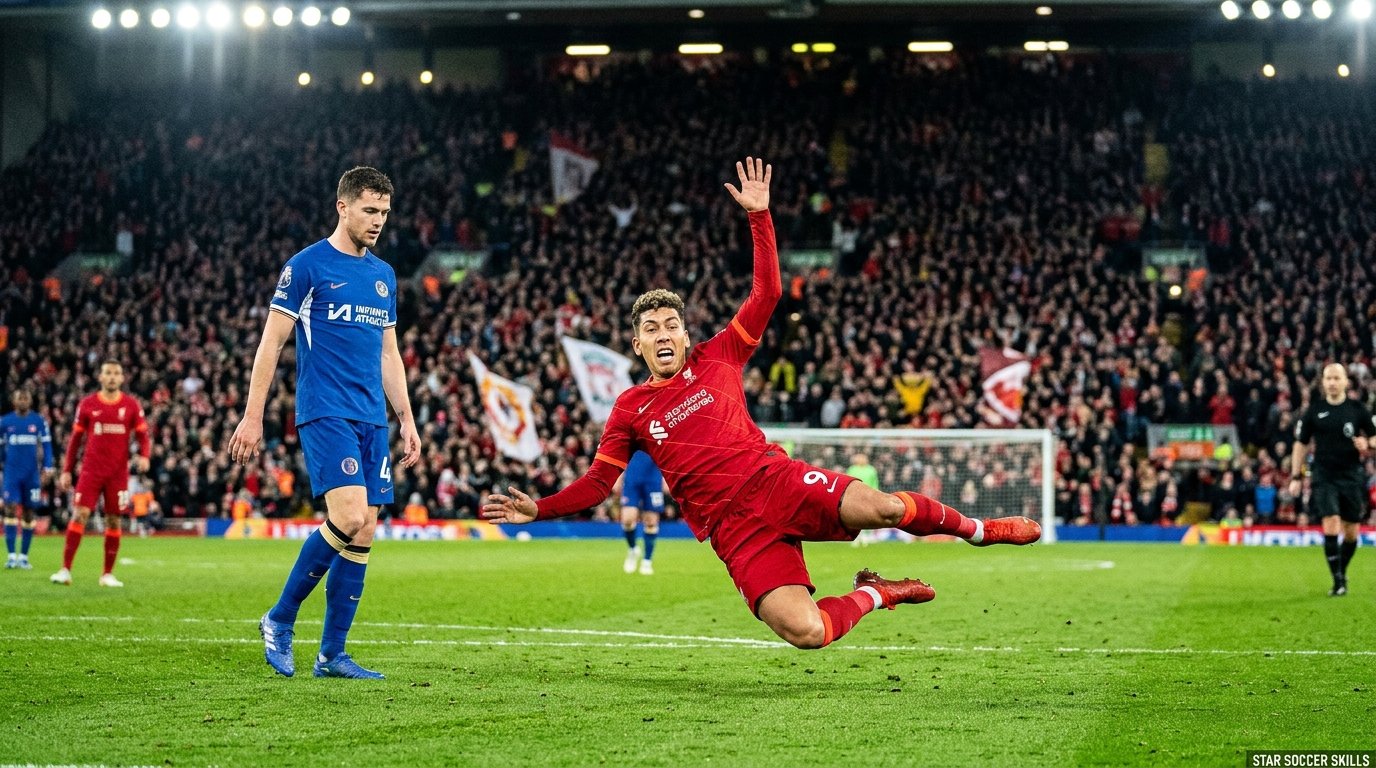
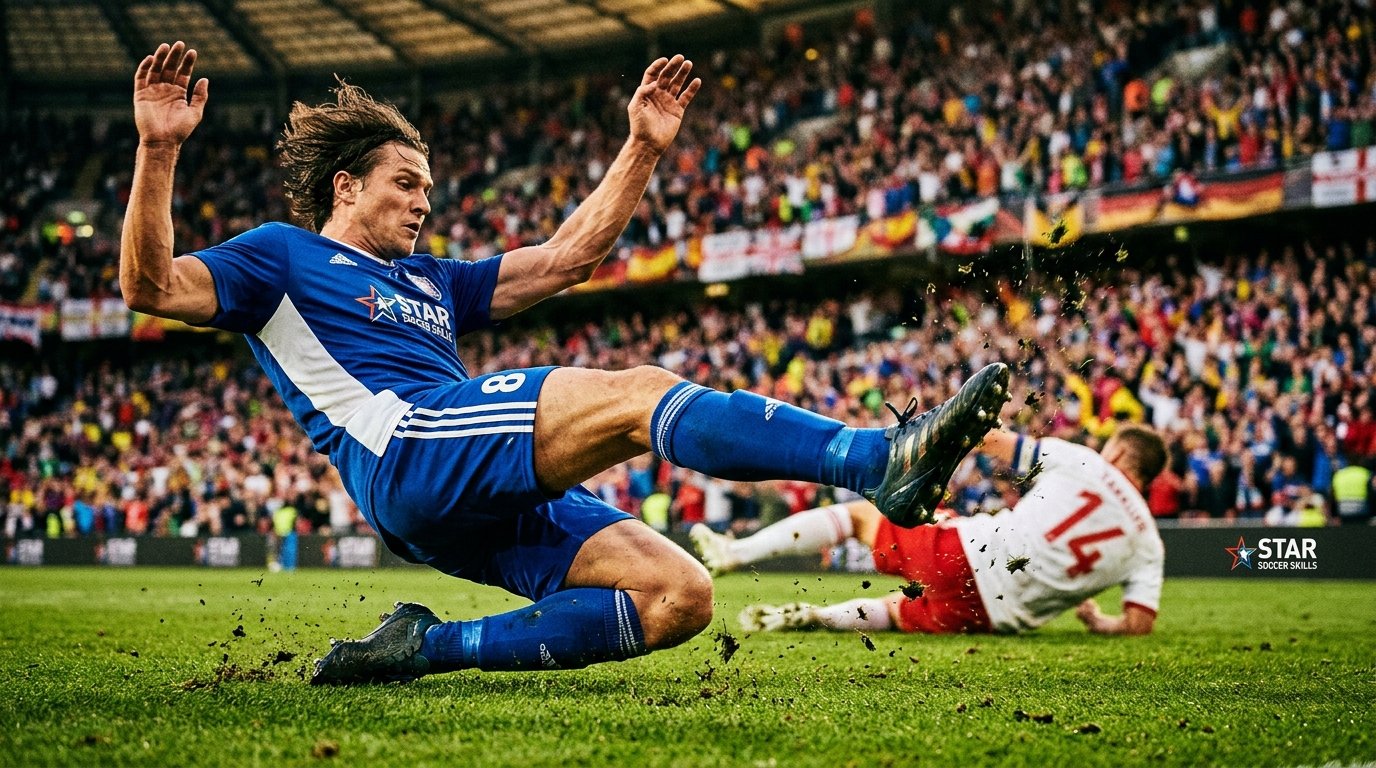
Do you ever wonder why a player goes down after a light touch and jumps up a minute later? That player has usually made a calculation, not a mistake. Players fake injuries and dive because a well-timed fall can win a free kick or penalty, cost an opponent a card, or stop an attack. Under the rules, this is called simulation, which means an attempt to deceive the referee by feigning injury or pretending to have been fouled.
The rules treat simulation as unsporting behavior, and a player can be shown a yellow card for it. Still, the sport often rewards a good fall more than the rules punish it. In a 2014 fan survey, 83% of those surveyed named simulation among the main reasons for their dissatisfaction with modern football.
Winning Free Kicks, Penalties and Cards
Most dives happen in the attacking third, where a single free kick or penalty can decide a match. A player who falls near the opponent’s goal can turn a harmless tackle into a set piece with a real chance to score. The payoff is the reason players take the risk.
Take a common case. A defender brushes a striker’s shin inside the box, and the striker drops to the turf with his arms flung wide. The referee points to the spot, and the penalty kick converts at about 75% in the professional game. A dive that wins a penalty pays far more than the yellow card it might bring.
A dive that wins a penalty pays far more than the yellow card it might bring.
Research on dives shows clear patterns. Dives are more likely near the offensive goal and when the score is tied. They are also more common in leagues where free kicks or penalties are often won by falling. The more often a fall is rewarded, the more often players try it.
Booked players are a special target. A player who already has a yellow card can be sent off by a second booking, so an opponent may fall in the hope of ending his game. A shove followed by a fall can also backfire on the shover, who may get a red card for the push itself.
A dive near the opponent’s goal is the one most worth watching closely, because the reward is largest there.
How to Spot a Dive from the Replay
A genuine injury usually shows itself at the moment of contact, while a dive often starts a moment later. Fans can check the replay for a few clear traits. Timing and body position tell more than the fall itself.
Watch the replay in slow motion and count the frames between the touch and the first reaction. A real injury shows pain almost at once, while a dive often shows a delay. A reaction that starts after the contact has ended is a warning sign.
Signs in the Timing and Body Position
Several signs can point to a dive. Look for these common traits:
A gap in time between the impact and the reaction
No ballistic continuity, meaning the body does not move like a falling object
No contact consistency, so the fall does not match where the touch landed
The archer’s bow pose, with the back arched and the leg pulled up behind
Each sign alone proves little. Together, they give fans a useful check on what the player’s body is doing.
What the Research Found About Detection
A 2010 study found that only about 7% of cases in which players in men’s soccer stay on the field with visible signs of pain are due to real injuries. That means most visible pain on the pitch is not a serious injury. Another study watched 169 dives across six European professional leagues. None of those dives was punished.
These numbers show how hard it is to catch a fall as it happens. Most falls go unpunished, even when the replay makes them look clear.
Why Referees Miss the Fall
A referee must judge a fall on the spot, with no time to slow the action. The referee sees the player on the ground and must decide quickly whether a foul took place. Players know this, and they often sell the fall with a loud cry or a grab at the face.
Watch whether the player holds the part of the body where contact landed, since a dive often grips a different one.
Football, Rugby and the Culture of Getting Up
Football’s dive problem comes from incentives and the rules, not from a lack of injuries. Rugby has more injuries, yet simulation is almost non-existent there. The table below compares the two sports.
Rugby’s injury frequency is up to 2.7 times higher than football’s, but simulation is almost absent from rugby. Rugby players are hit harder and more often, yet they rarely fall to the ground for show.
Factor
Football
Rugby
Injury frequency
Lower
Up to 2.7 times higher
Simulation frequency
Common
Almost non-existent
Main reason
Free kicks and penalties reward a fall
Culture rewards getting up and playing on
In rugby, a player who stays down is often seen as weak, so players work hard to get back up. Football has a different habit. A fall can win a set piece, so the fall pays off.
VAR can overturn an awarded penalty when replays show insufficient contact. That power helps, but it has a limit. VAR is not used mainly to catch flopping, so many dives still pass without review.
Clubs and referees who want less diving can start by rewarding a player who gets up and plays on.
Governing Bodies and Stricter Penalties
The rules treat simulation as unsporting behavior, and a referee can show a yellow card for it. Video review can also reverse a penalty when replays show a player flopped. Enforcement has improved, but it has not solved the problem.
Players who dive often get little help from the rules, since a yellow card for simulation is the usual penalty, and it is rarely shown. The card costs the player a booking, but a penalty that goes to his team can outweigh that cost.
The Rules and the Yellow Card
Simulation falls under the rules as unsporting behavior. A player who fakes a foul or an injury can be booked for it. The card stays on the record, and a second one means a red card and a sending-off.
How VAR Catches a Dive
Video Assistant Referee, or VAR, reviews penalties and sending-off incidents. When replays show a player flopped, VAR can reverse the penalty decision. Reviews of a few seconds of wasted time are not part of this process.
Why Players Still Dive
Some players are known for it. Neymar was singled out for going to ground too easily at the 2014 and 2018 World Cups. A player with a dive reputation can find referees less willing to give him the benefit of the doubt, even on a real foul.
A dive that wins a penalty is more likely to be reviewed than one that only wastes a few seconds.
A dive that wins a penalty is more likely to be reviewed than one that only wastes a few seconds. That gap shows why the reward still outweighs the risk for many players.
Conclusion
Players fake injuries because a fall pays, and that is the problem to fix. The reward is high and the sanction is low, so the trade often favors the diver. Fair play, not theatrics, keeps the sport a spectacle that fans want to watch.
Next time a player goes down, time how long he stays there before judging the fall.
FAQ
Is faking an injury a penalty?
Faking an injury is not a penalty kick, but it can get the player booked with a yellow card under the rules. If the fall wins a penalty, the referee can reverse that decision after a VAR review when replays show the player flopped. The rule exists to stop players from gaining an advantage by deceiving the referee, so fans can expect a card in clear cases.
What is faking an injury in soccer called?
Under the rules, faking an injury is called simulation. Fans and commentators often call it diving or flopping. Simulation means an attempt to deceive the referee by feigning injury or pretending to have been fouled, and it is punishable by a yellow card as unsporting behavior.
Have you ever watched a World Cup match end level and wondered who moves on? Many fans think every World Cup game needs a clear winner, but that is only true in some rounds. The answer depends on the stage of the tournament.
A tied group stage match at the World Cup simply ends as a draw, with each team taking one point. The group stage is the first round-robin phase of the tournament, where every team plays each opponent in its group once. Soccer tiebreak logic only comes into play when teams finish level on points later on.
The knockout rounds work differently. They are the single-elimination matches after the group stage, and a tied score there must be settled. Extra time is two 15-minute periods played after a knockout match ends 90 minutes level. The World Cup 2026 has 48 teams in 12 groups of four, and each team plays three group matches.
Key Takeaways
A group stage draw gives each team 1 point and ends the match.
A knockout match cannot end level and must produce a winner.
Extra time is two 15-minute periods after a 90-minute tie.
A penalty shootout decides a knockout match that is still level after extra time.
The stage of the match decides how a tie is settled.
What Happens When a Group Stage Match Is Tied?
A group stage match that ends level is over, and both teams take one point. A 0-0 score in the group stage gives both teams one point. The result is recorded as a draw, and no further play follows.
In FIFA group play, a football match that is a draw gives each team one point. Group-stage matches end after regulation, with no extra time and no penalty shootout. A win earns 3 points, a draw earns 1 point, and a loss earns 0 points.
In the group stage, a draw ends the match with one point for each team, and nothing more is played.
A tie or draw in football means both teams finish with the same number of goals. Both words describe the same result in group matches. Draw is the official term used in FIFA rules, while many American fans say tie.
The top two teams in each of 12 groups advance to the Round of 32. The eight best third-place teams advance too. A draw can therefore still send a team through, because one point may matter at the end of the group stage. A draw can still be a good result for a smaller team, since one point may decide advancement.
How Are Teams Ranked When Points Are Level?
When teams finish level on points, FIFA sorts them by a fixed sequence of criteria. These tiebreakers look first at matches between the tied teams. Only if those results are still level do the full group results count.
Head-to-head results always come before overall numbers. The table below lists the steps in order, from the first check to the fifth.
Step
Criterion
What It Compares
1
Head-to-head points
Points won only in matches between the tied teams
2
Head-to-head goal difference
Goals scored minus goals conceded in those matches
3
Head-to-head goals scored
Total goals scored in matches between the tied teams
4
Overall goal difference
Goals scored minus goals conceded in all group matches
5
Overall goals scored
Total goals scored in all group matches
Head-to-Head Tiebreakers
The first three steps compare only the games between the teams that are level. A team that won the direct meeting ranks higher, even if its overall goal difference is weaker. If two teams are still level after step three, the process moves on to the full group results.
Overall Group Tiebreakers
Overall goal difference and overall goals scored come next, using every group match. If teams are still level, the team conduct score counts yellow and red cards, and a team with fewer cards ranks higher. The FIFA ranking, using the most recent FIFA/Coca-Cola World Rankings edition, decides any tie that remains.
Third-Place Ranking
Third-place teams from all 12 groups are compared against each other. The eight best third-place teams advance to the Round of 32. Their points, goal difference and goals scored decide which eight go through. Check the head-to-head results first, because they often decide the order before overall numbers matter.
What Happens If a Knockout Match Is Still Tied After 90 Minutes?
A tied knockout match goes straight into extra time, with no draw allowed. Knockout matches must produce a winner. If a soccer game is tied after 90 minutes in the World Cup, it moves into extra time.
Extra time is two 15-minute periods played after a knockout match ends 90 minutes level. Play continues for both full periods, whatever the score. The World Cup winner is decided only after this extra play ends.
Extra time has several special rules:
Two 15-minute periods, played in full
Each team gets six substitutions instead of five
No golden goal rule has applied since 2004
A half runs until a penalty kick is completed, if one is taken
Coaches often use the extra substitution to bring fresh legs into the final minutes. A goal in extra time does not end the match on the spot. If a goal is scored in extra time, the other team still gets the full period to respond.
How Does a Penalty Shootout Decide a Winner?
If the score is level after extra time, the match is decided from the penalty spot. A World Cup penalty shootout works in two stages: five kicks each, then sudden death if needed. The penalty shootout is the series of penalty kicks that decides a knockout match.
The First Five Kicks
Each team takes five penalties. Only players on the pitch when extra time ends may take kicks. The team with more goals after those five kicks each wins the match.
Sudden Death Rounds
If the teams are still level after five kicks each, sudden death begins. Each team takes one penalty kick per round. A round decides the match only when one team scores and the other misses.
Stage
Kicks Taken
Outcome
First five kicks
5 per team
More goals wins the match
Sudden death round
1 per team
One scores and one misses, so the match ends
Level after a round
1 per team
Another round starts
Each sudden death round uses one penalty per side, so the shootout can run long. The order of takers matters, because the first five kicks can decide the match before sudden death starts.
What Are the Key Rules Behind a World Cup Draw?
Each match lasts two 45-minute halves, and the referee adds time for stoppages. Match length follows the Laws of the Game, which The Football Association publishes for its official rules. The referee uses the added time to make up for play that was lost.
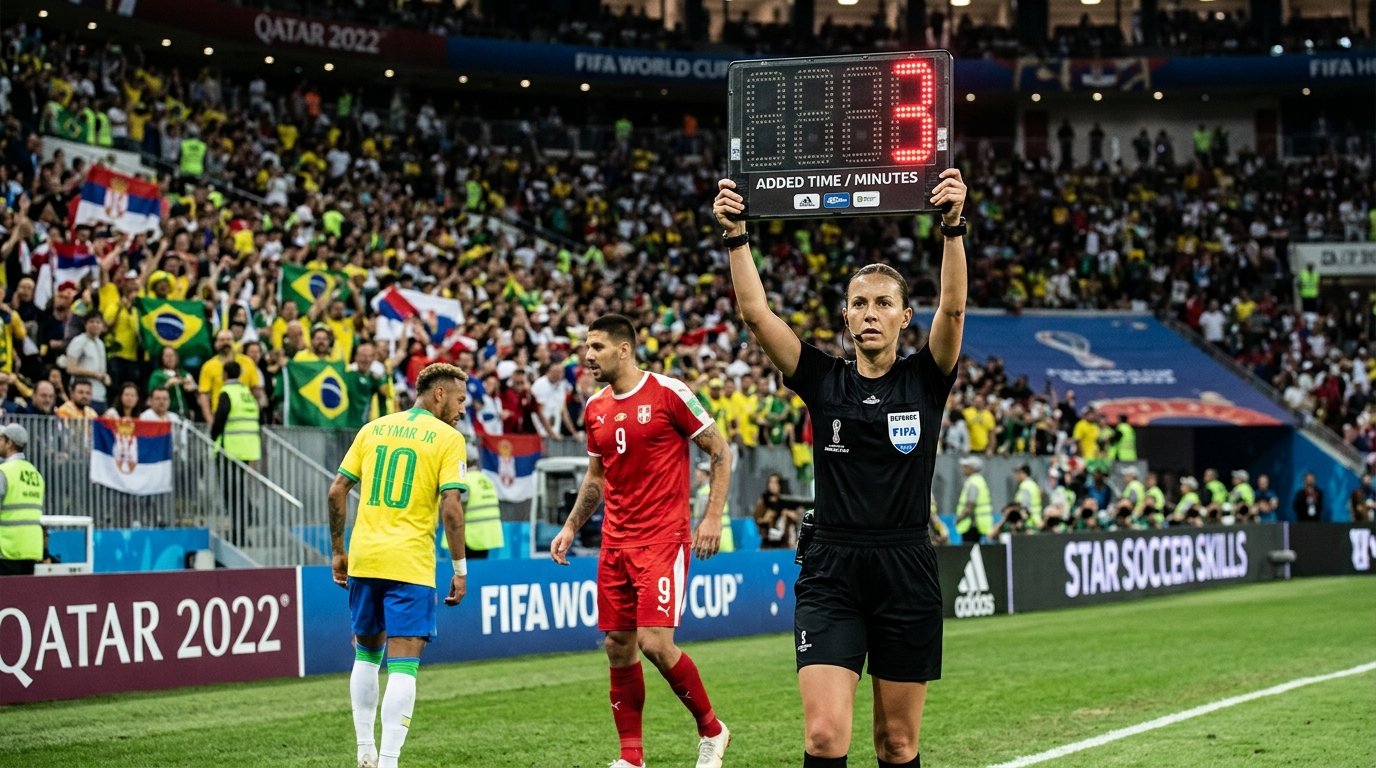
The referee adds time in each half. Halftime cannot exceed 15 minutes. The added time is shown on the fourth official’s board at the end of each half.
The referee allows for lost time from these causes:
Substitutions
Injury assessment
Time-wasting
VAR checks and reviews
Goal celebrations
A half is extended until a penalty kick is completed when the kick must be taken or retaken. This rule can add several minutes to a match with a late foul in the box. The fourth official’s board shows the minimum added time, and the referee may extend it.
Can the World Cup Final End in a Draw?
The World Cup final cannot end in a draw, so extra time and penalties follow any tie. The final is a knockout match and must produce a winner. The winning team lifts the trophy at the end of the match.
Why the Final Always Has a Winner
The final follows the same rules as every knockout round. If the score is level after 90 minutes, extra time is played. If the FIFA final game ends in a tie after extra time, the penalty shootout decides the champion.
A final draw is not possible under these rules. Each of the three steps must be completed before the match can end.
The 2022 Final as an Example
The 2022 final between Argentina and France ended 2-2 after 90 minutes. It finished 3-3 after extra time. Argentina then won the penalty shootout 4-2.
The 2022 final shows a full sequence of extra time and penalties in one match.
Does a Tie in a Knockout Match Work the Same Way?
Yes, a tie in any knockout match follows the same steps. Every knockout match, including the third-place match, must produce a winner. A draw in knockout matches always moves to extra time before any other step.
The third-place match follows the same rules as any knockout match: extra time, then penalties. The third-place match is played between the two losing semifinalists. It does not use group stage rules.
Check which matches fall under knockout rules. These include the Round of 32, the Round of 16, the quarterfinals, the semifinals, the third-place match and the final. Matches in the group stage are the only ones that can end level.
Check the match stage before assuming how a tie will be settled.
How Do Tied Matches Change Team Strategy?
A draw is a useful result for some teams in the group stage. A team that already has enough points may accept a draw and avoid risks. Teams earn points the same way in each group match, but the stakes change in the knockout rounds.
A draw cannot end a knockout match. The rules move a level score into extra time and then penalties. Teams plan with that in mind.
In the knockout rounds, a point is not enough, because the match cannot end level.
Cautious Play in Group Matches
Imagine a smaller team that loses its first match and must win the second. A draw in its third match could still send it through as one of the best third-place teams. That team may play carefully and focus on not conceding goals.
Pressure in Knockout Matches
In the knockout rounds, a draw only moves the match to extra time. Teams cannot settle for one point, so they keep looking for a goal. Coaches often push for an early winner rather than wait for the shootout.
A knockout team must keep attacking, because a draw only moves the match to extra time.
Conclusion
Group draws end the match, while knockout ties continue. A group draw gives each team 1 point and the match is over. A knockout tie goes to extra time, and penalties follow if the score is still level.
FAQ
Can a soccer match end in a draw?
Yes, a soccer match can end in a draw during the group stage of the World Cup. Each team takes 1 point, and the match is over with no extra time or penalties. In the knockout rounds, a draw is not allowed, so extra time and a penalty shootout decide the winner. Many leagues also allow draws, but the rules differ from one competition to another.
What happens if soccer ends in a tie?
In the group stage, a tie ends the match and each team takes 1 point. In a knockout match, a tie goes to extra time, which is two 15-minute periods. If the score is still level after extra time, the penalty shootout decides the winner, with five kicks each and then sudden death if needed.
Laws of the Game & FA Rules – A match has two 45-minute halves, halftime cannot exceed 15 minutes, and the referee adds time for stoppages such as substitutions and VAR reviews.
Have you ever spotted a row of tight black garments under training jerseys and wondered what they are?
Fans often ask the same question during training photos and at major tournaments. The answer is simpler than the look. Elite soccer clubs and national teams use these vests to measure each player’s output and manage player workload.
The vest is built to hold a tracking device steady, not to support the chest. Coaches and sports scientists use the data it collects to plan training and recovery. This article explains the device, how staff use its data and where the system falls short.
FIFA calls the wider group of camera and wearable tools electronic performance and tracking systems (EPTS). Most of what looks like fashion is a tracking pod that records how far, how fast and how hard a player works.
Key Takeaways
The black or sports bra-like garment is a tracking vest, not a bra.
The vest holds a GPS pod between the shoulder blades.
The pod measures distance, top speed, sprints and accelerations.
Heart rate needs a chest strap worn with the vest.
Coaches use the data to plan training, recovery and return to play.
Check for FIFA testing before a club relies on any tracking system.
Why do soccer players wear black or sports bra-like vests? The short answer
The black or sports bra-like garment is a tracking vest that holds a GPS pod between the shoulder blades. The pod is a small device, and the vest keeps it close to the body during play. Without the vest, the pod would bounce and shift with every stride.
Each pod holds a 10Hz GPS, an accelerometer and a magnetometer. These sensors record movement many times each second. A loose pod gives poor numbers, so the fit matters as much as the device.
The vest is a holder for a tracking device, not a piece of support clothing.
Four design choices explain the shape of the vest:
The pod sits high between the shoulder blades, where satellite signals reach it well.
A snug, cropped fit keeps the pod still during sprints and sharp turns.
The placement keeps the pod away from the most common contact points in collisions.
Breathable material is worn on the skin or over a thin layer.
The black bras soccer players wear are the same GPS vest, not a bra. Male soccer players wear vests that look like sports bras because the pod needs to stay still. Male athletes in other field sports wear the same vest for the same tracking reason. Players wearing the vest usually have it under or over the jersey.
Female players usually wear the vest over a standard sports bra underneath.
How a soccer sports bra tracker works and what it measures
A soccer sports bra tracker works through GPS satellite positioning and an accelerometer, with heart-rate data when a chest strap is worn. A pod that samples more than 1250 data points per second records each movement the player makes. A GPS vest records distance, top speed, sprints, accelerations and decelerations.
The data is stored and reviewed after each session. Staff can then compare one player with the rest of the squad or with that player’s own past numbers.
Distance and top speed
A soccer player typically covers around 7 miles per game through sprints, jogging and sharp movements. Total distance shows how much work a player did during a match. Top speed shows the fastest run a player reached.
Staff also count the number of sprints and the sprint distance. A winger whose top speed drops during games may point to a formation problem or a muscle issue, so staff check both.
Acceleration and deceleration
Sprints are counted in both games and training, along with how fast each run is covered. Acceleration measures how quickly a player speeds up. Deceleration measures how quickly a player slows down.
Analysts break down each run after a game. Hard stops can strain the legs, so deceleration counts matter as much as sprint counts.
Heart rate and fatigue
Heart-rate readings need a chest strap. Heart rate is shown in beats per minute (BPM), and it shows how hard the body is working and how well it recovers.
A high BPM during a session shows a high work rate. If a player feels unusual fatigue after training, staff may give extra rest, check food or calorie intake, or plan a lighter session the next day. A single high heart-rate reading means little, so compare each player’s readings with their own earlier sessions over several weeks.
How coaches turn the numbers into training and recovery decisions
Staff use the data to set each day’s session intensity and recovery plan. Each player’s daily distance, speed and number of accelerations are compared with the targets set for that day. The day after a match, the performance staff already has the previous game’s numbers on the screen.
The performance staff collect and process the data. They share it with coaches and medical staff, who use it for training plans, recovery work and treatment decisions.
Staff sort each day into one of three grades:
Green: a light session, often active recovery and ball work the day after a game.
Amber: a moderate session with positional play, set-piece practice and small-sided games before a match.
Red: an intense session that pushes players to their limits in cardiovascular and muscle activation.
Players can view their numbers through a mobile app or desktop software. Seeing the totals can push players to match or beat each other’s training volume.
A 2023 study in BMC Sports Science, Medicine and Rehabilitation found that sports wearable technologies, including GPS trackers, give critical information for assessing fatigue, guiding recovery and supporting injury rehabilitation.
Consider a returning player. Staff compare that player’s high-speed running and deceleration with the pre-injury baseline. If the numbers show a favored leg, staff see it in the data. Compare a returning player’s high-speed running with the player’s own pre-injury baseline before adding minutes.
Approval, limits and alternatives to the vest
A system that a club adopts should first show FIFA-tested accuracy, not just a clean design. A system earns approval by passing FIFA’s tests, and a system that carries the FIFA Quality mark has passed them. The mark is the clearest sign that a tracking system has been checked.
How FIFA checks tracking systems
FIFA launched its EPTS Quality Programme for wearable tracking systems in 2017. The aim was to help ensure these devices do not endanger players. In 2019 the programme added performance tests for optical and wearable devices.
Qualifying systems can carry the FIFA Quality mark. As of 2023, lower-limb wearable systems that pass additional validation through the FIFA Innovation Programme can also be approved. FIFA’s testing checks positioning and velocity accuracy across different velocity brackets and publishes test reports.
Where GPS vests fall short
GPS needs a line of sight to satellites, which stadium roofs and structures can block. Device size, attachment and measurement accuracy also set limits on what the data can show.
Passing a test in one area does not prove a tracker works in every match.
A GPS wearable collects many measurements with a short setup and no operator. Even so, a bulky pod or a loose fit can change the numbers. Accuracy can also shift with the hardware, software settings and sample rate, so two systems may disagree.
One player covered about 3.7 miles per match, roughly half his teammates’ distance, yet was always in the right tactical position. Distance alone misses that value. GPS cannot measure decision-making, vision or leadership.
Vest-free tracking options
Two common options need no vest: foot-worn sensors and video-based match tracking. Foot-worn sensors sit on the shoes, while video systems read the match footage from fixed cameras.
Method
What it measures
Worn on the body
GPS vest
Distance, top speed, sprints, accelerations, decelerations, heart rate with a chest strap
Yes, on the upper back
Foot-worn sensors
Ball-contact quality, strike power, running technique, footwork, strides and kicks
Yes, on the feet
Video-based match tracking
Distances, sprints, heatmaps, team compactness, sprint maps, team dominance
No, uses match video only
Ask a provider for its published accuracy results at the velocity ranges your players actually reach in training.
Conclusion
Soccer players wear GPS vests because the vest holds a tracking pod still. The pod measures distance, speed and accelerations, and it adds heart rate when a chest strap is worn. Its purpose is to manage load and recovery.
Elite teams use this data for training, recovery and return decisions. Staff pair it with medical checks and coaching judgment, not GPS numbers alone.
FAQ
What are the sports bra looking things male athletes wear?
They are usually GPS vests, tight garments that hold a tracking pod between the shoulder blades. Male soccer players and athletes in other field sports wear them over or under the jersey. The vest does not give chest support. Its job is to keep the pod still so distance, speed and sprint data stay accurate during hard play.
Do female soccer players wear GPS vests too?
Yes, female soccer players wear GPS vests for the same tracking reason as male players. They usually wear the vest over a standard sports bra. The vest is not a support garment, so it does not replace a bra. Teams use the same data for training load and recovery.
Do GPS vests measure heart rate?
Only with a chest strap. The vest itself is built mainly to hold the GPS pod steady. Without a strap, the system still records distance, top speed, sprints and accelerations. When a strap is worn, heart rate is shown in beats per minute, which helps staff judge work rate and fatigue.
Do GPS vests work indoors?
Usually not well. GPS needs a clear line of sight to satellites, so indoor sessions and covered stadiums weaken the signal. Staff may accept gaps in the data or use other tools in those places. Open outdoor pitches give the cleanest GPS readings.
Are GPS vests allowed in official matches?
Systems that carry the FIFA Quality mark have passed FIFA testing. The competition organizer still decides whether a vest can be worn in a match. Check the rules of the league or tournament before a game. A club that wants to use a vest in competition should ask the organizer first.
Ever had the ball roll right between your legs during a game? Being nutmegged means an opponent sends the ball through your open legs and gets it past you. The attacker then runs around you and collects the ball, while you turn back to watch.
In soccer, a nutmeg is an informal name for kicking the ball through an opponent’s legs. Dribbling means carrying the ball past an opponent with close control of the ball and the body. The same move also has a place in field hockey, ice hockey and basketball.
Key Takeaways
A nutmeg is when the ball goes through an opponent’s legs.
The attacker runs around the defender to collect the ball.
The defender loses the ball and looks foolish in front of the crowd.
The term is also used in field hockey, ice hockey and basketball.
Dribbling means carrying the ball past an opponent with close control.
The move looks simple on a highlight reel. It takes good timing and a calm touch to pull off in a real match.
Where the Word Came From
The word nutmeg has no proven route into soccer, but its older meaning explains the trick. In Victorian slang by the 1870s, to nutmeg someone meant to trick them or make them look foolish. That is why people say they got nutmegged when they feel silly after a ball passes through them.
The Oxford English Dictionary cites the earliest soccer use in Rodney Marsh’s 1968 book Shooting to the Top. No definitive evidence links the spice trade to soccer usage.
The earliest soccer use on record is from 1968, not from the spice trade.
The Spice Trade Story
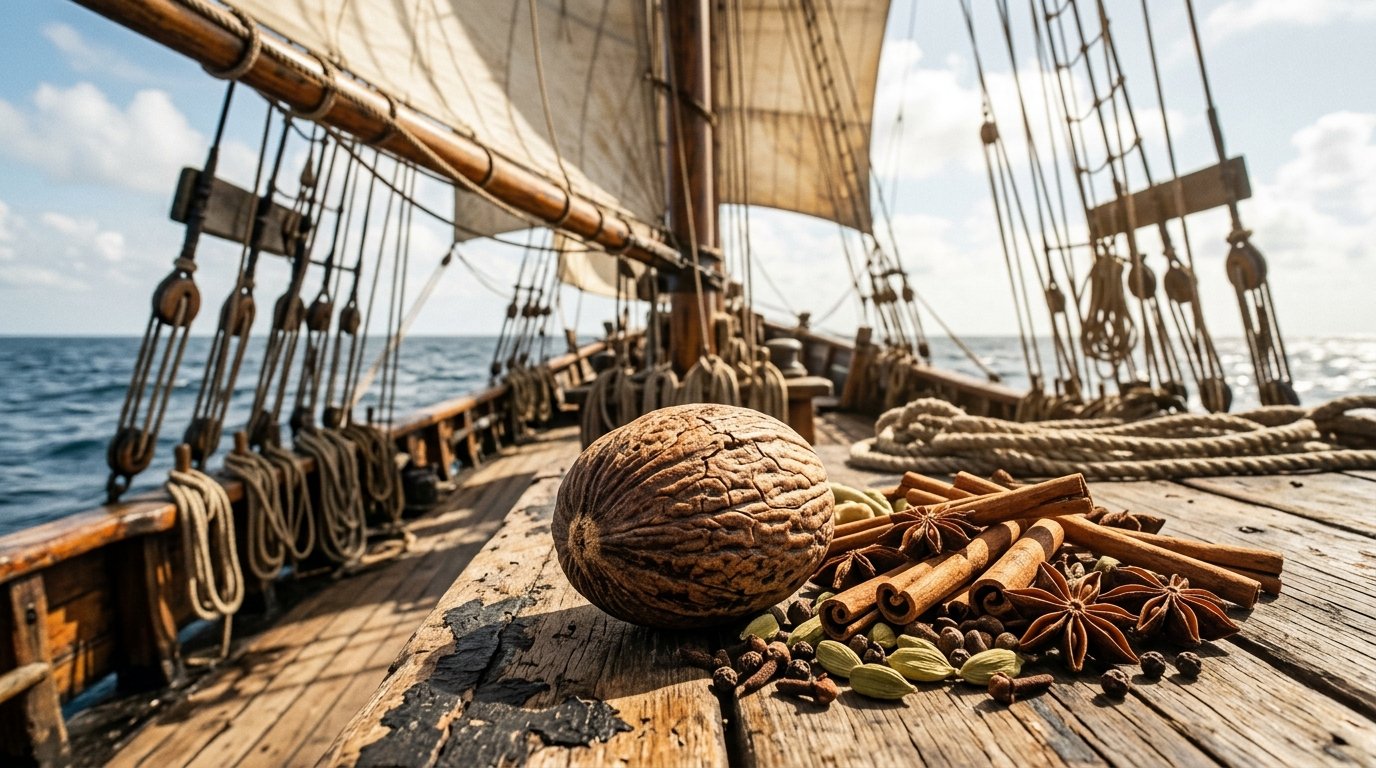
One popular theory traces the word to the spice trade. Traders once mixed fake nutmegs, carved from wood, into real shipments to cheat buyers. A buyer who was fooled had been nutmegged, and the word kept that sense of being tricked.
The story is neat, and it fits the idea of a player being tricked. Still, it explains the old meaning better than the kick on a pitch.
Why Linguists Doubt It
Some language experts doubt the link. No record ties the wooden nutmegs to a move in a football match. The gap in time and place is hard to close.
Other theories point to legs and other body parts instead of the spice. Each one is plausible, but none has been proven. Treat the spice trade story as a plausible theory, not a confirmed history.
How a Nutmeg Works in a Match
The move starts before the ball moves, when the attacker draws the defender in. The attacker runs straight at the defender, so the defender steps in to stop the dribbling run. Timing is what sets up the whole move.
The attacker needs the defender’s legs spread wide before the nutmeg move can work. Only then does the attacker touch the ball through the gap and roll it between the legs.
The strike must be firm enough to pass the defender, but not so hard that the ball runs to another player. Good ball control keeps the pace right. Mainly, the nutmeg is a dribbling move used to get behind a defender, though it can also be used to pass or shoot.
The attacker then runs around the defender and collects the ball on the far side. Collect the ball on the far side before a second defender can step in.
Players Known for the Nutmeg
Few moves are linked to a name as often as the nutmeg is linked to Messi. Lionel Messi is the most cited name, but many other stars have used the move with flair.
Messi, Ronaldinho and Neymar are the soccer players fans name most often when they talk about the move. The table below compares the names most often mentioned.
Player
Club or team
Why they are known for it
Lionel Messi
Barcelona, Argentina
Close control in tight spaces
Ronaldinho
Barcelona, Brazil
Showy feet and flair in one-on-one play
Neymar
Barcelona, Brazil
Quick feet and sharp dribbling
Luis Suárez
Liverpool, Uruguay
Nutmegged defenders so often that fans made a banner
Suárez was known for doing it so often that Liverpool fans made a banner saying he could nutmeg a mermaid. Tobin Heath of the United States women’s team and Eden Hazard of Belgium are also on the list of notable practitioners.
Watch one of these players in a full match to see the move used in context.
Nutmeg Names Around the World
Players in Spain and Latin America call the move caño or túnel. The nutmeg in Spanish has two common names, and both describe the ball passing through the legs.
Each country has its own word for the same move. Other languages use their own names too, and the words often describe a tunnel or a small bridge.
Names in Spanish, French and German
Here are the common names in three more languages.
Spanish: caño or túnel
French: petit pont, which means little bridge
German: Tunnel or Beinschuss
The names mostly come from the idea of a path or a passage under the legs.
Street Games Built on the Move
Street football uses the move in games like Panna Knock-Out, a game from the Netherlands. Players play one-on-one inside a cage, and a player who gets nutmegged is out of the game.
Learn the local name before a pickup game so you know what the other team is calling.
Should You Try It in a Real Game?
Try a nutmeg only when the defender’s legs are already open and no teammate is free. The move works best against an opponent who is running in off balance, a fullback on the wing, or a keeper with open legs. Timing and a clear space decide whether it works.
A failed nutmeg in the middle of the pitch lets the opponent run straight at goal. In a serious game, that risk can cost more than the trick gains.
Keep the nutmeg out of your own penalty box, where a lost ball can lead to a goal.
Coaching advice for most young players is simple: look for the pass first. A safe pass wins many serious matches, and the flashy move does not always help the team. Play the simple pass first; the nutmeg is the option when the pass is not available.
Conclusion
Being nutmegged means the ball went through your legs and past you. A nutmeg is a soccer skill that embarrasses the defender when it works and costs the attacker when it fails.
FAQ
Who is considered the best nutmeg player in football?
Lionel Messi is the name most often cited for the nutmeg, so he is the usual pick. Ronaldinho and Neymar are named often too, and both played for Barcelona. Fans and commentators point to their quick feet and close control in tight spaces as the reason for their fame with the move.
Is nutmegging an opponent allowed in soccer?
Yes, the nutmeg is legal play in soccer. It is a normal dribbling move, and no rule bans the ball going between an opponent’s legs. The real risk is losing the ball. If the pass goes wrong or the ball runs loose, the other side can start a quick counterattack.
A Seleção means “the Selection,” the name for Brazil’s national football squad. The yellow shirt was chosen in 1953 and first worn in 1954. Both answers start with one match in 1950.
Brazil has won five World Cups, and the last title came in 2002. The national side has never missed a World Cup finals. That record makes the team one of the most watched in the world, and fans across the United States follow it closely.
In the 1950 World Cup final, Brazil lost 2-1 to Uruguay at the Maracanã stadium in Rio de Janeiro. The loss hurt the country deeply. The team had worn white, and many fans later blamed that shirt for the result.
In 1953, the Rio de Janeiro newspaper Correio da Manhã ran a design competition for a new shirt. The winning design was yellow, with trim that echoed the national flag. The yellow kit replaced the white one, so the answer to both questions starts with one 1950 match.
How a 1950 Defeat Changed the Team’s Shirt
The white shirts were dropped because they did not show Brazil’s national colours. Before 1954, the team played in white shirts with blue collars. After the 1950 loss, many people felt that white was a sign of defeat, not of the nation.
The Correio da Manhã competition asked for a design that used the four colours of the flag: green, yellow, blue and white. Each colour had a place on the kit:
Green: the trim on the collar and sleeves
Yellow: the main colour of the shirt
Blue: the shorts
White: the lines and details on the shirt
The contest drew 401 entries. The judges chose a design by Aldyr Garcia Schlee, a young designer from Rio Grande do Sul, and the federation adopted it. The rule behind the choice was simple.
The contest rule meant that the winning design had to carry all four flag colours somewhere on the kit.
What the Yellow and Green on Brazil’s Flag Stand For
The green on Brazil’s flag stands for the House of Braganza, the royal family of Dom Pedro. The yellow stands for the Habsburgs, the family of Dom Pedro’s wife, Leopoldina. Brazil’s first flag was made in 1822, after Dom Pedro declared independence on September 7, 1822.
The flag used today was introduced by decree on November 19, 1889. The green and yellow stayed, and the blue globe was added in the center. Those colours appear on the shirt, but the shirt does not carry the royal meaning.
The Green and Yellow Colours of the Flag
The colours come from two royal houses. Dom Pedro belonged to the House of Braganza, and his wife came from the Habsburgs. Each family’s colour was placed on the flag as a sign of that link.
The Stars and the Motto on the Flag
The flag has 27 stars, one for each of the 26 states and one for the Federal District. The white band across the blue globe carries the motto “Ordem e Progresso,” which means “Order and Progress.”
The Myth About the Colours
A popular story says the colours stand for forests, gold, rivers, sea and peace. That explanation has no historical reference. The royal links are the documented source of the colours.
The Meaning of “Joga Bonito” and the Beautiful Game
“Joga bonito” means “play beautifully,” the phrase Brazilian fans use for their attacking style. The phrase links the team’s play to the bright yellow shirt. Fans often say it when the team plays with flair and skill.
The team is known for fast passing, skill on the ball and bold attacks. Playing beautifully is the team’s own standard, not just a slogan. That standard shapes how fans judge a win or a loss.
Where the Phrase “the Beautiful Game” Came From
The phrase “the beautiful game” is tied to Pelé, the star who made the sport famous worldwide. He helped spread the idea that football could be art. The exact origin of the phrase is disputed, and two names are credited with it: Waldyr “Didi” Pereira and Stuart Hall.
What “Joga Bonito” Means in Portuguese
The phrase has two forms that sound alike. “Jogo bonito” means “beautiful game,” and it names the sport itself. “Joga bonito” means “play beautifully,” and it describes how players should act on the field.
Brazil’s Current Shirts and Prices in the United States
Nike lists the men’s home Stadium 2026 jersey at $99.99. The yellow kit is sold in several versions, from men’s and women’s to kids’ sizes. Prices depend on the maker and the version.
The kids’ home Authentic 2026 jersey costs $154.99, while the kids’ home Stadium version costs $84.99. Jordan lists the men’s away Stadium 2026 jersey at $99.99.
Home and Away Shirts
The home shirt is the yellow kit most fans know. Jordan lists the women’s away Stadium 2026 jersey at $99.99, the same price as the men’s version.
Maker
Version
Price
Nike
Men’s home Stadium 2026
$99.99
Nike
Women’s home Stadium 2026
$99.99
Jordan
Men’s away Stadium 2026
$99.99
Nike
Kids’ home Stadium 2026
$84.99
Nike
Kids’ home Authentic 2026
$154.99
A listing price can change, so check the store before you buy.
Kids and Women’s Options
Women’s and kids’ versions are listed by Nike and Jordan. The women’s home Stadium jersey costs the same as the men’s. Compare the Stadium and Authentic versions before buying, since the kids’ Authentic costs $154.99.
Conclusion
The nickname and the shirt come from the same 1950-1954 turning point. A Seleção names the squad, and the yellow kit replaced the white shirt that lost in 1950.
Check the official Brazil shirt before you buy, to be sure it carries the current crest and season.
FAQ
Why is Brazil called A Seleção?
A Seleção means “the Selection,” the name for Brazil’s national football squad. The name is used for the team that represents the whole country. Fans say it with pride at every World Cup, and it has been the team’s name for decades.
What football team wears yellow and green?
Brazil’s men’s national football team wears a yellow shirt with green trim. The green on the shirt comes from the flag’s colours, and the trim is one of the four flag colours used in the 1953 design. Fans often call the shirt the canarinho kit.
What is the meaning of joga bonito?
Joga bonito means “play beautifully” in Portuguese. Brazilian fans use the phrase for the team’s attacking style. It is often said when the team plays with skill and flair, and it sums up the style fans expect from the squad.
What colors represent Brazil?
Brazil’s flag uses green, yellow, blue and white. The flag has 27 stars for 26 states and the Federal District. The green and yellow come from two royal families, and the blue globe shows the night sky over Rio de Janeiro.
Can a player stand in an offside position and still be legal? Yes, and that surprises many new fans. An attacking player who stands behind the last defender and receives a pass from a teammate is the classic offside situation.
The offside rule is one of the first soccer rule basics every fan should learn. It stops an attacking player from waiting near the goal for a pass sent behind the defending team. The second-last opponent is the defender second closest to the attacking team’s goal line. This is usually the last outfield defender, because the goalkeeper is normally the last opponent.
Only the moment the ball is played matters, not the moment the attacker receives it. Standing in an offside position alone is not an offense. A flag or video review can follow a teammate’s pass before the referee decision is made.
Key Takeaways
Offside is judged at the moment the ball is played.
Standing in an offside position is not an offense by itself.
An attacker is penalized only when involved in active play.
Only the head, body and feet count, never the hands or arms.
The second-last opponent is usually the final outfield defender.
A flag or video review can follow a teammate’s pass.
Explaining Offside to a Child or New Fan
Imagine the ball is kicked and an attacker is closer to the goal than the last defender at that exact moment. That is the core of offside, and it is the easiest way to explain offside to a child. The child only needs to remember one question: was the player too far forward?
Offside is about position at the moment of the pass, not about what happens later. Offside soccer is easiest to learn with one simple picture. The offside rule works the same way in every match, so the picture helps from the first game.
Too far forward when the pass is kicked means offside.
The Simple Version for Kids
A parent can explain offside in soccer to a child with one short rule. The goalkeeper is the last opponent, and the defender standing just in front of that player is the second-last opponent. An attacker ahead of that defender when the ball is kicked may be called offside.
Using a Picture or Diagram
Draw a long line across a sheet of paper to show the goal line. Then draw a second line through the second-last defender, parallel to the first. Any attacker between that second line and the goal, at the moment of the pass, is in an offside position.
Checking Your Understanding in a Game
Ask three quick questions during play. Is the attacker in the opponents’ half? Is the attacker closer to the goal than the second-last defender? Is the pass being played right now? Attacker timing matters most, because the call depends on the moment of the kick.
Watching the defender’s feet at the moment of the pass shows whether the attacker was too far forward.
Why the Offside Rule Exists
Without the rule, an attacker could stand beside the goalkeeper and wait for every long pass. The offside rule purpose is simple: attacking players must join the play, not wait for it. The rule keeps the match from turning into a contest of who can kick the ball farthest.
The rule keeps defenders from being beaten by one long ball after another. Without it, many matches would become a string of long balls over the top. Defenders would have no reason to hold a line, and the game would lose its shape.
The rule also makes a team earn a chance near goal. Teams must move the ball through the middle, dribble past players and use short passes to reach the danger zone. That makes the game more about skill and teamwork than about one kick.
Coaches often teach strikers to time a run, so they arrive level with the defense instead of in front of it. A striker who moves early can drag defenders out of position, while a striker who waits near goal gains nothing. The rule pushes players to think about movement, not just position.
The rule rewards timed runs, so attackers who move before the pass are not penalized.
Where the Offside Position Applies
A player is offside only when a part of the body is closer to the goal line than both the ball and the second-last opponent. The check happens at the moment the pass is played, not earlier in the move. The body part must also sit in the opponents’ half to count.
A player in the opponents’ half is in an offside position only if a body part is nearer the goal line than both the ball and the second-last opponent. The halfway line itself does not count, so a player standing on it is never in the zone. Players in their own half cannot be in an offside position.
head body feet: these body parts count toward offside.
Hands and arms: ignored for all players, goalkeepers included.
Level with the second-last opponent: onside, not offside.
Halfway line: excluded from the opponents’ half.
Goalkeeper: counts as an opponent when finding the last two players.
Moment of the pass: the only time the position is judged.
Most fans check the whole player first, and that is the mistake. Start with the body parts that count. Look at where the ball is, then find the second-last opponent. Only then decide whether the attacker is too far forward.
Check the attacker’s feet or torso first, since a raised hand or arm never makes the attacker offside.
When Being in an Offside Position Becomes an Offence
A player standing in an offside position who never touches the ball commits no offense. Can a player be offside without touching the ball? Yes, the player can be in the zone and still stay legal. The offense starts only when the attacker becomes involved in play after the pass.
An attacker in an offside position is penalized only when involved in active play. Active play means taking part in the play, such as receiving the pass or stopping the ball. A player who waits in the zone without getting involved is safe.
Situation
Offside offense
Reason
Receives the pass
Yes
Playing the ball is active play
Obstructs a goalkeeper’s view
Yes
Clearly blocks the line of vision
Rebound off the crossbar
Yes, if it gives an advantage
The attacker gains an advantage from the ball
Interfering with Play and Opponents
Interfering with an opponent includes clearly obstructing the goalkeeper’s line of vision. It also covers challenging for the ball or taking an obvious action that changes what the opponent can do. A quick step into the keeper’s sightline can be enough for a call.
Gaining an Advantage from a Rebound or Save
A save by the goalkeeper that bounces to an attacker who was in an offside position counts as active play. The attacker must gain an advantage from the ball to be penalized. A rebound that lands with no benefit to the attacker does not create an offense.
When the Offence Does Not Occur
A late run that stays out of the line of vision does not count. Players who drift forward without touching the ball or blocking anyone are not penalized. Staying out of the goalkeeper’s line of vision keeps a late run from becoming an offense.
Restarts and Deliberate Play
A pass from a defender who clearly means to play the ball cancels most of the offside concern. An attacker who receives a deliberate pass from an opponent is not penalized for gaining an advantage. This holds even when the defender uses a deliberate handball to play the ball.
A deliberate play is one where the player controls the ball with a chance to pass, gain possession or clear it. Referees look at four things when judging whether a play was deliberate.
Distance: the defender has a clear view of the ball.
Pace: the ball is slow enough to control.
Direction: the ball goes where the defender expects.
Time: the defender has time to coordinate the body.
An offense that still stands gets a restart. The defending team’s restart is an indirect free kick, taken from the spot where the offense occurred. That spot can be in the attacking player’s own half if the offense happened there.
An inaccurate pass by the defender still counts as deliberate, so the attacker is not helped by that error.
Checking Offside Calls with Officials and Video
The assistant referee on the sideline usually makes the first offside call. They keep in line with the second-last opponent and signal with a flag. The referee can overrule an assistant referee’s flag when the main official sees the play differently.
Flag raised and held: a possible offside the referee may review.
Flag raised, then lowered at once: an obvious offside.
Flag kept down: no offside signal.
The Assistant Referee’s Role
The assistant referee watches the attacker and the second-last opponent at the moment the ball is played. The flag tells the referee and the players what the official saw. Fans can see the flag, but the final word belongs to the referee.
How VAR and Semi-Automated Technology Help
Video Assistant Referee technology was first used in 2018. In matches using VAR, assistant referees hold the flag until play reaches a natural stop, unless the offside is obvious. Semi-automated offside technology adds sensors to the ball and cameras that track points on the players’ bodies.
Why Close Calls Stay Controversial
A camera from the side can make a player look level when one player is actually closer to the camera. Human judgment on the timing of a pass also stays open to debate. Watch for the flag held up during play, since it means a video check may follow.
Why Offside Calls Are So Close
Players moving toward each other can separate by two meters in less than a second. That speed leaves little time to judge where each player stood when the ball was played. Many offside decisions look disputed for that reason alone.
Most offside controversy comes from split-second timing and camera angles, not from a lack of rules. The table shows three common reasons these calls get argued.
Cause
Effect
Example
Interference judgment
The referee must judge intent and impact
A defender’s arm blocks a view
Timing of the pass
A small gap changes the call
Ball played a split second before the run
Camera angle
Players look level when they are not
Side-on view of a striker and defender
Human judgment depends on one look at fast play. Semi-automated technology measures positions with sensors, so it gives a more exact line than the eye can. Even so, the call still depends on the point the ball leaves the passer’s foot.
A close call usually turns on the exact moment the ball was played, so that moment is worth watching.
How the Offside Law Changed Over Time
The offside law of 1863 was much stricter than the rule used today. In 1863 a player in front of the ball was offside, with a goal kick as the only exception. Almost any attacker near the ball could be called offside.
The 1863 law treated almost every forward player as offside, so the rule was far harsher than it is now. In 1866 at least three opponents had to be between the player and goal. That number was later reduced to two.
The 1990 wording change replaced “interfering with play or with an opponent” with “seeking to interfere with play or with an opponent.” It took effect for the 1990/91 season. The change made the rule about intent, not only about where a player stood.
In May 2005, FIFA put the body part test into the law text. Any part of the head, body or feet nearer the goal line than the ball and second-last defender counts, while arms are excluded. The 2017 wording also excluded hands and arms in clear terms.
The current wording asks whether the attacker is seeking to interfere, not whether they simply stand in the zone.
Upcoming FIFA Offside Proposal and the 2026 World Cup
Every World Cup offside decision uses the current law today, and that law counts any part of the body except the arms. A new offside rule at the World Cup is not in force, so the current law still applies. Fans should expect the same wording in any match they watch.
The current rule still applies at the World Cup. FIFA is studying a proposal that would change the margin from any body part to something stricter. Under that idea, an attacker is offside only if entirely ahead of the penultimate defender.
The penultimate defender is another name for the second-last opponent. The idea comes from Arsène Wenger, a former Arsenal manager. Under the idea, a player with any body part level with the penultimate defender would stay onside.
The FIFA offside proposal for 2026 is still under study, and no start date has been set for it. The proposal has not been adopted, so the current wording still governs every decision. Fans who watch closely will see the same checks on the body parts and the second-last opponent.
Until a change is announced, the current law is the one that applies in each match.
Common Offside Mistakes Fans Make
Most wrong offside calls come from a fan counting the wrong body part. A fan who sees a raised arm and calls offside has made a clear mistake. A player in their own half is never offside, even if that player is ahead of everyone else on the field.
Where a player started the run does not decide offside. Where the ball was played does.
Many fans also judge a run by how far the player moved, not by where the player stood at the moment of the pass. That shift in focus causes most of the arguments after a match. Freeze the moment the ball leaves the passer’s foot in your mind before you judge.
Counting an arm or hand as the offside body part.
Treating a player level with the defender as offside.
Forgetting the goalkeeper counts as an opponent.
Calling offside on a throw-in, which never creates an offside offense.
Check the moment of the pass before deciding.
Conclusion
Offside comes down to timing and position at one instant. The offside position is judged at the moment of the pass. An attacker in that position is penalized only when they become involved in active play.
Keep those two checks in mind as you watch. Position is the first question, and involvement is the second. Together they explain most calls you will see on the field.
Watch the next match and freeze the moment the ball is played to check the attacker’s position.
FAQ
Can a player be offside without touching the ball?
Yes. A player standing in an offside position does not commit an offense by standing there. The player must become involved in active play, such as receiving a pass, blocking a goalkeeper’s view or gaining an advantage from a rebound. Waiting in the zone without any involvement is legal, so a quiet run can be fine.
Can a soccer player be offside while in their own half?
No. A player in their own half is never offside, because the offside position only applies in the opponents’ half. The attacker must have a body part nearer the goal line than both the ball and the second-last opponent. A long pass forward from a teammate in the own half never triggers an offside call.
Why do offsides exist in soccer?
They exist to stop attackers from waiting near goal for long passes behind the defense. Without the rule, a player could stand beside the goalkeeper for the whole match and wait for every long ball. The rule pushes teams to build attacks through movement, dribbling and short passes, which keeps the game varied.
Is offside good or bad?
Neither, on its own. The rule keeps attacks built through movement and timing, which many fans enjoy. Calls can still be close and disputed, because a call often turns on the exact moment the ball was played, and that moment passes in a split second.
Can you explain the offside rule to kids in a simple way?
Yes. Tell a child that the attacker cannot be closer to the goal line than the ball and the second-last defender when the pass is kicked. The goalkeeper is the last opponent, and the last outfield defender is usually the second-last opponent. A simple picture of a line across the field helps a child see the call.
What was the offside rule before 1990?
Before 1990 the wording was “interfering with play or with an opponent.” From the 1990/91 season, the wording became “seeking to interfere with play or with an opponent.” The change made the rule depend on intent, so a player must try to interfere to be penalized.
New offside rule World Cup
The current rule applies at the World Cup. FIFA is studying a proposal that would make an attacker offside only if entirely ahead of the penultimate defender. No start date has been set for that proposal, so the current wording still governs every match.
New FIFA offside rule 2026
No new rule is confirmed for 2026. The FIFA proposal is under study, and its adoption and start date are not specified. Until a change is announced, the current law applies in each match, including those at the World Cup.