Which Country Has Won the Most FIFA World Cups?
Could you name the country with the most FIFA World Cup wins? Brazil has won the most FIFA men’s World Cups, five times. Eight nations have won the title in total, and our list runs from Brazil’s five titles down to England’s single title.
The record we rank covers 23 tournaments, from 1930 to 2026. The 2026 tournament had 48 teams, which made it the biggest field so far. Brazil is the only team to have played in every tournament, which explains part of its lead.
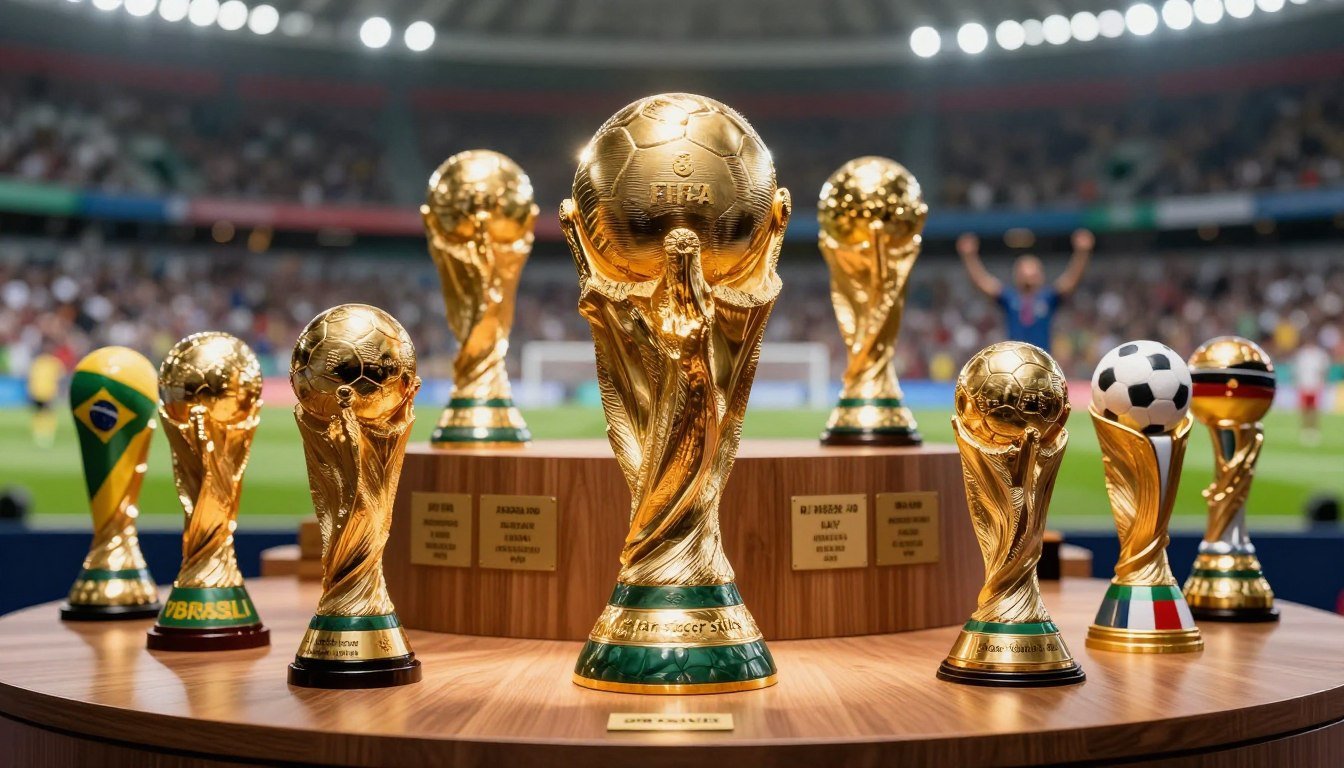
The history of the world’s biggest soccer event shows a small group of winners at the top. Most of the titles went to teams from South America and Europe, and each country’s record tells its own story.
Key Takeaways
- Brazil has won five FIFA World Cup titles, the most of any country.
- Eight nations have won the title since 1930.
- Germany and Italy have four titles each.
- England won its only title in 1966.
- The record covers 23 tournaments, from 1930 to 2026.
Which country has won the most FIFA World Cups? The title count by country
Brazil leads with five World Cup wins, one more than any other country. Its titles came in 1958, 1962, 1970, 1994 and 2002. No other nation has reached five.
Germany won four titles, in 1954, 1974, 1990 and 2014. Italy also won four, in 1934, 1938, 1982 and 2006. Germany’s 1954, 1974 and 1990 titles were won by West Germany, before the country reunified. A runner-up is the team that loses the final and finishes second in the tournament.
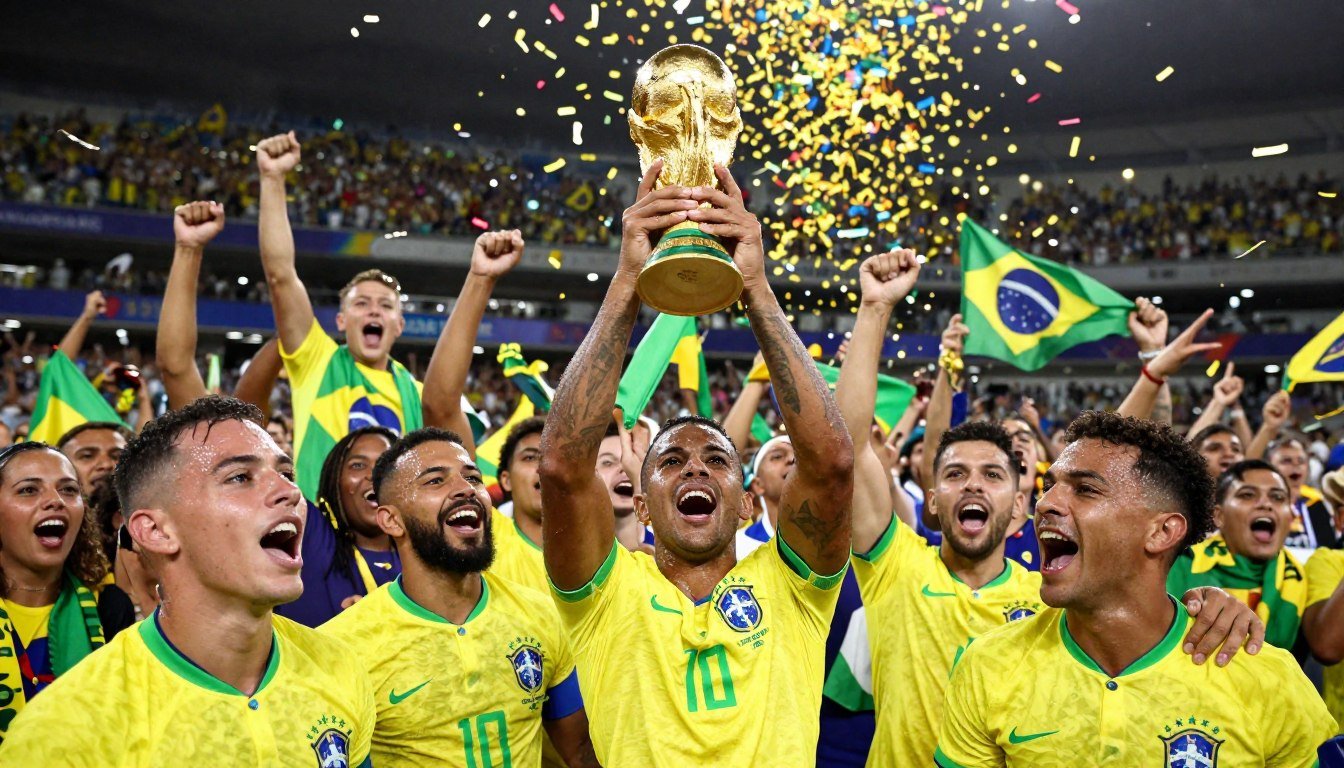
A title belongs to the nation that won it, even if the country’s name changed later.
Argentina won three titles, in 1978, 1986 and 2022. France and Spain each have two, won in 1998 and 2018, and in 2010 and 2026. Uruguay won two, in 1930 and 1950, and England won one in 1966. Germany and Italy share second place with four titles each, so the gap is one title.
How the World Cup title count is ranked and who holds the record
Titles are counted per nation, and a title is a tournament the team won outright. A team that wins the final on penalties still gets the title, because the penalty shoot-out decides the winner. Brazil is the only team to have played in all 23 tournaments.
The FIFA World Cup Trophy weighs 6.175 kg and has been awarded since 1974. Teams that lost the final are listed as runners-up, and that record is kept in the same table as the titles.
Brazil’s record of five titles
Brazil’s five titles cover five different decades, from the 1950s to the 2000s. That spread shows a team that kept winning across generations, not just in one golden period. Its only lost finals came in 1950 and 1998, so most of its trips to the final ended with a trophy.
Brazil reached the final round in its first tournament appearances and kept building a strong squad. Its results since the 1990s show how a national team can stay strong for decades.
Germany and Italy with four titles each
Italy won back-to-back titles in 1934 and 1938. That early double helped Italy build one of the strongest early records in the tournament. Italy then waited 44 years between titles, from 1938 to 1982.
Germany’s record includes three titles as West Germany and one as the unified country. Its four finals lost are the most of any team, and that record includes losses in 1966, 1982, 1986 and 2002.
The eight nations that have won
Eight nations have won the title since the first tournament in 1930. Brazil, Germany, Italy and Argentina hold most of the titles between them. The table below lists each winner, the years it won, and the teams it beat in the final.
| Country | Titles | Years won | Runners-up |
|---|---|---|---|
| Brazil | 5 | 1958, 1962, 1970, 1994, 2002 | 1950, 1998 |
| Germany | 4 | 1954, 1974, 1990, 2014 | 1966, 1982, 1986, 2002 |
| Italy | 4 | 1934, 1938, 1982, 2006 | 1970, 1994 |
| Argentina | 3 | 1978, 1986, 2022 | 1930, 1990, 2014, 2026 |
| France | 2 | 1998, 2018 | 2006 |
| Spain | 2 | 2010, 2026 | None |
| Uruguay | 2 | 1930, 1950 | None |
| England | 1 | 1966 | None |
A team’s name can change over time, as West Germany did before 1990. When you check a count, look at the country that won, not only the name on the old record.
The early tournaments and the first champions
Uruguay won the first World Cup in 1930 in Montevideo, beating Argentina 4-2. Uruguay was the host and won the first title. The early finals show how small the field was and how close the early matches could be.
Four early finals set the first pattern of winners and runners-up. The first two decades had few teams, and most of the early titles stayed in the Americas and Europe.
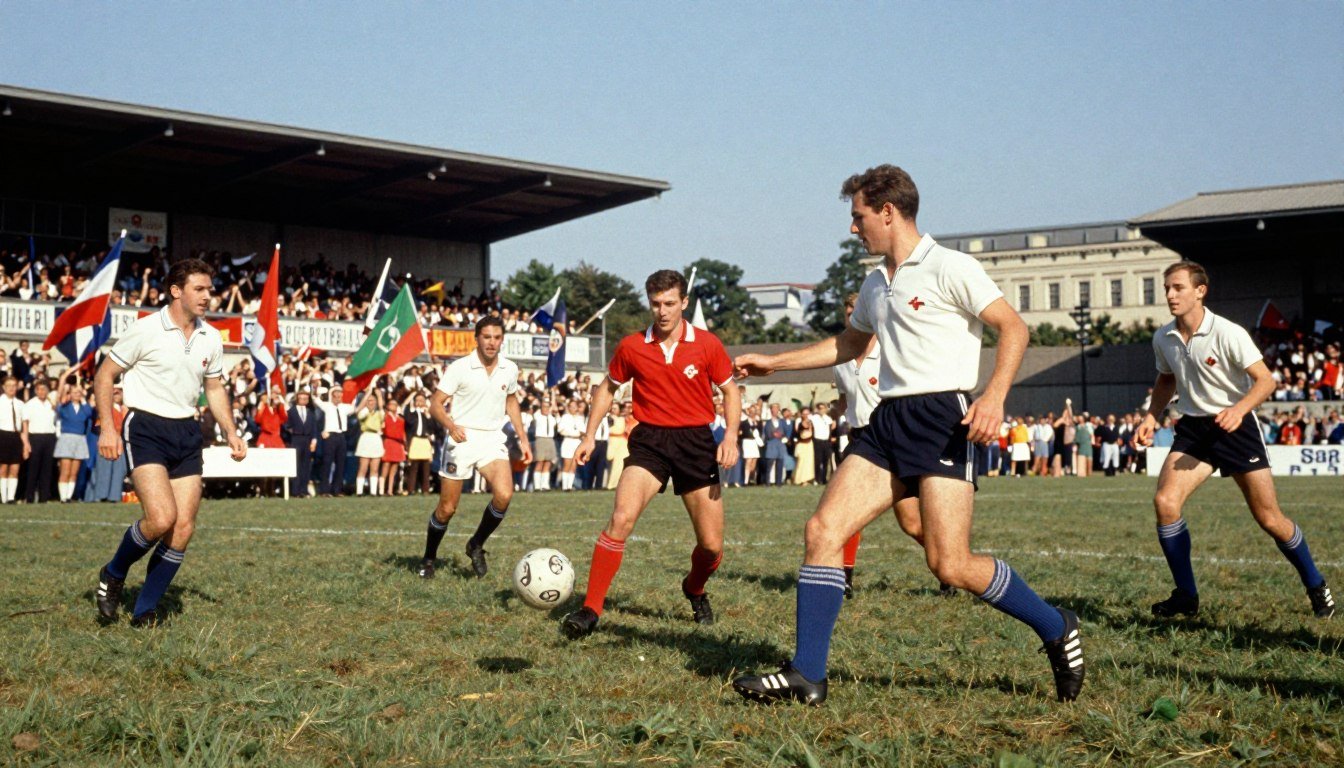
- 1930: Uruguay 4-2 Argentina, in Montevideo.
- 1934: Italy 2-1 Czechoslovakia, after extra time.
- 1938: Italy 4-2 Hungary, in the final.
- 1950: Uruguay 2-1 Brazil, in the decisive match of the final round.
The 1934 final went to extra time, and Italy needed a late goal to win. In 1938, Italy scored four goals against Hungary to repeat its title. The 1950 tournament had 13 teams, and it ended with a match that decided the winner, not a single final.
Italy’s back-to-back titles came before World War II stopped the tournament in 1942 and 1946.
How Brazil, Germany and Italy built their leads
Pelé won three World Cups with Brazil, and his titles carry much of Brazil’s count. The top three countries built their leads in different ways, from one great player to long gaps and divided years.
Pelé is the only player to have won three World Cups. Brazil’s other titles came later, and each one shows a different side of the team’s history.
Pelé and Brazil’s three titles
Pelé won titles in 1958, 1962 and 1970. He was 17 when he won his first title in 1958, which made him the youngest winner at that time. His role in those three wins is recorded in Guinness World Records, which lists him as the player with the most World Cup wins.
Pelé’s three titles are the base of Brazil’s record. The team needed more than one generation to add its last two titles.
Germany’s titles split by the Cold War
West Germany won 1954, 1974 and 1990 while the country was divided into East and West. Those three titles all came from the West German team, not from a single united nation. Germany’s 2014 title was the only one won by the unified country.
The split changed how the country’s record is read. Germany’s count depends on whether a title is credited to West Germany or to the unified nation.
Italy’s early double and its 1982 and 2006 wins
Italy won its first two titles in 1934 and 1938, then waited until 1982 for its third. Its fourth title came in 2006, 24 years after that. Those long gaps kept Italy below Brazil, even though Italy’s titles came at key moments.
Brazil’s margin over Germany and Italy depends on its 1994 and 2002 wins, not only on Pelé’s years.
Which countries have never won, and who came close
Five countries have lost a World Cup final without ever winning the trophy. Losing the final is a painful result, and these five teams know it well. A team needs to win the final, not just reach it, to earn a title.
The five teams below each lost at least one final. Some reached the final more than once, and the Netherlands lost three of them.
- Netherlands: 3 lost finals, in 1974, 1978 and 2010.
- Czechoslovakia: 2 lost finals, in 1934 and 1962.
- Hungary: 2 lost finals, in 1938 and 1954.
- Sweden: 1 lost final, in 1958.
- Croatia: 1 lost final, in 2018.
Many other nations have never reached a final at all. Most of them were eliminated in the group stage or the early knockout rounds. For those teams, getting to the final would be a big step forward.
The Netherlands is the team with the most lost finals and no title, three in all.
What the 1950 to 2026 finals show about the current record
Spain won the 2026 World Cup final, its second title, beating the defending champion Argentina 1-0 after extra time. Spain now has two titles, the same as France and Uruguay. The recent finals show how close the top teams are.
Recent champions and their titles
France won in 1998 and again in 2018, which gave it two titles in two decades. Germany won in 2014 with a 1-0 extra time win over Argentina. Argentina won in 2022 after a 3-3 draw with France.
The 2026 tournament had 48 teams, so the winner had to win more matches than any earlier champion. That bigger field did not change the finals much, and the top teams still reached the last game.
Results of the finals since 1998
Five finals since 1998 were decided by a single goal, a draw with a penalty shoot-out, or a large win. The table lists each one, with the winner and the runner-up.
| Year | Winner | Runner-up | Score |
|---|---|---|---|
| 1998 | France | Brazil | 3-0 |
| 2014 | Germany | Argentina | 1-0 (extra time) |
| 2018 | France | Croatia | 4-2 |
| 2022 | Argentina | France | 3-3, Argentina won 4-2 on penalties |
| 2026 | Spain | Argentina | 1-0 (extra time) |
A final decided by a penalty shoot-out still gives the title to the winner, with no split credit.
Brazil’s five titles would take a team several finals to match. No other team has more than four, so the lead is still a long way ahead.
Conclusion
Brazil remains the country with the most FIFA World Cup wins. Its five titles stand above every other nation’s record, and its long run of appearances helped build that lead.
The teams behind Brazil are close, and a single new final can shift the order. Keep an eye on the results of each tournament as they arrive.
Look up the official FIFA records after each tournament, since a new final can change second place.
FAQ
Has Brazil won 5 World Cups?
Who won more cups, Brazil or Argentina?
How many World Cups did Pelé win?
Which country has never won the World Cup?
Who are the top 5 World Cup winners?
Sources
- Pelé: Most wins of the FIFA World Cup by a player – It records Pelé’s three World Cup wins with Brazil in 1958, 1962 and 1970 as a player record.