How many teams compete in the expanded 48-team World Cup?
Have you ever wondered how a tournament can grow without losing its shape? The answer starts with one number. Forty-eight national teams compete in the 2026 World Cup, up from 32 in the previous format.
The 2026 tournament runs from June 11 to July 19, 2026. Three host nations share the games: the United States, Canada and Mexico.
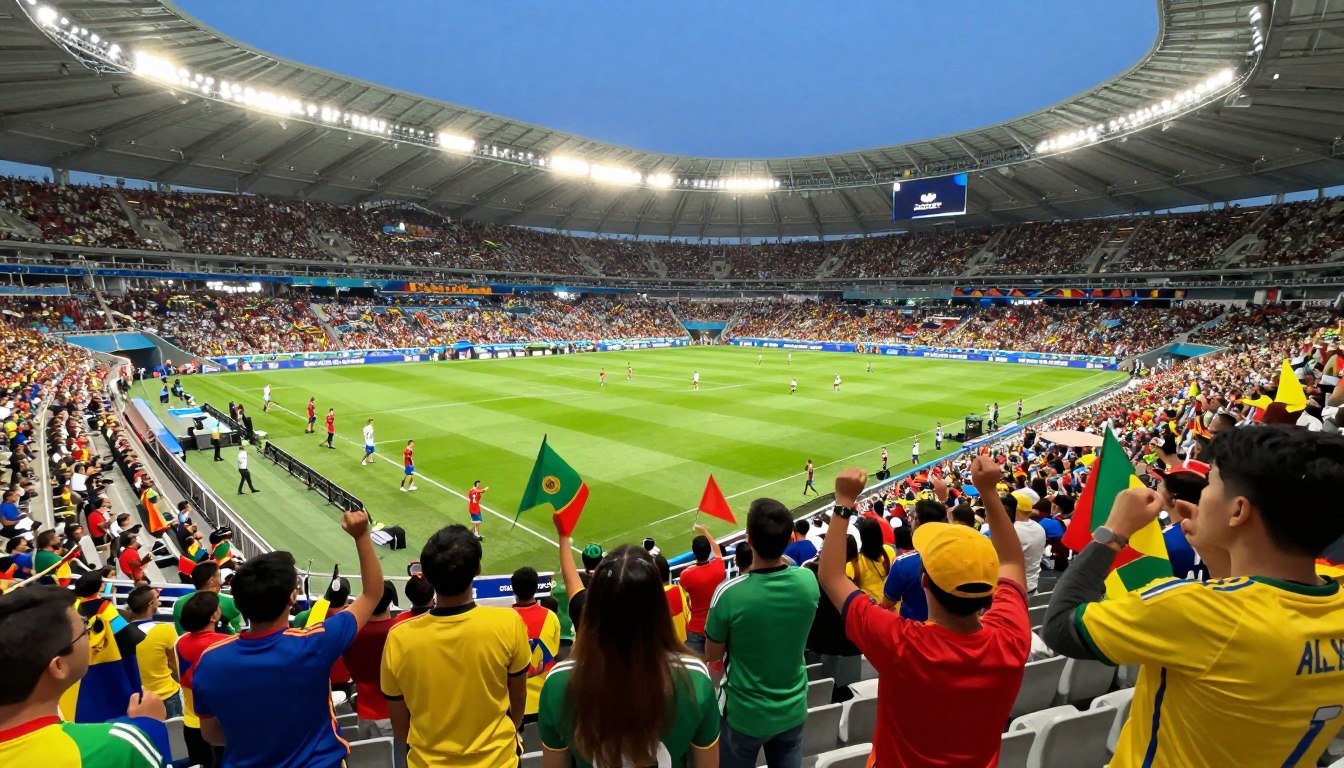
The opening match on June 11, 2026 was Mexico vs. South Africa in Mexico City. We use a few key terms in this guide, so you know them from the start.
The best third-placed teams are the eight teams with the most points among the twelve third-place finishers. They are ranked by points, goal difference and goals scored, and the top eight advance to the Round of 32.
Key Takeaways
- The 2026 World Cup has 48 national teams, up from 32.
- Three host nations share the tournament: the United States, Canada and Mexico.
- The tournament runs from June 11 to July 19, 2026.
- The 48 teams play in 12 groups of four.
- Top two finishers in each group advance, plus the eight best third-placed teams.
The rest of this guide explains how the 48 teams are arranged. Keep the number 48 in mind, since every later rule in this guide is built on it.
Why the field grew from 32 to 48 teams
Smaller football nations had long complained that qualifying spots favored Europe and South America. The 48-team format gave those nations more places to win. The 32-team format used eight groups of four, which left little room for newcomers.
FIFA expanded the field to give more nations access to elite competition. The change also opened new broadcast and commercial opportunities for the tournament.
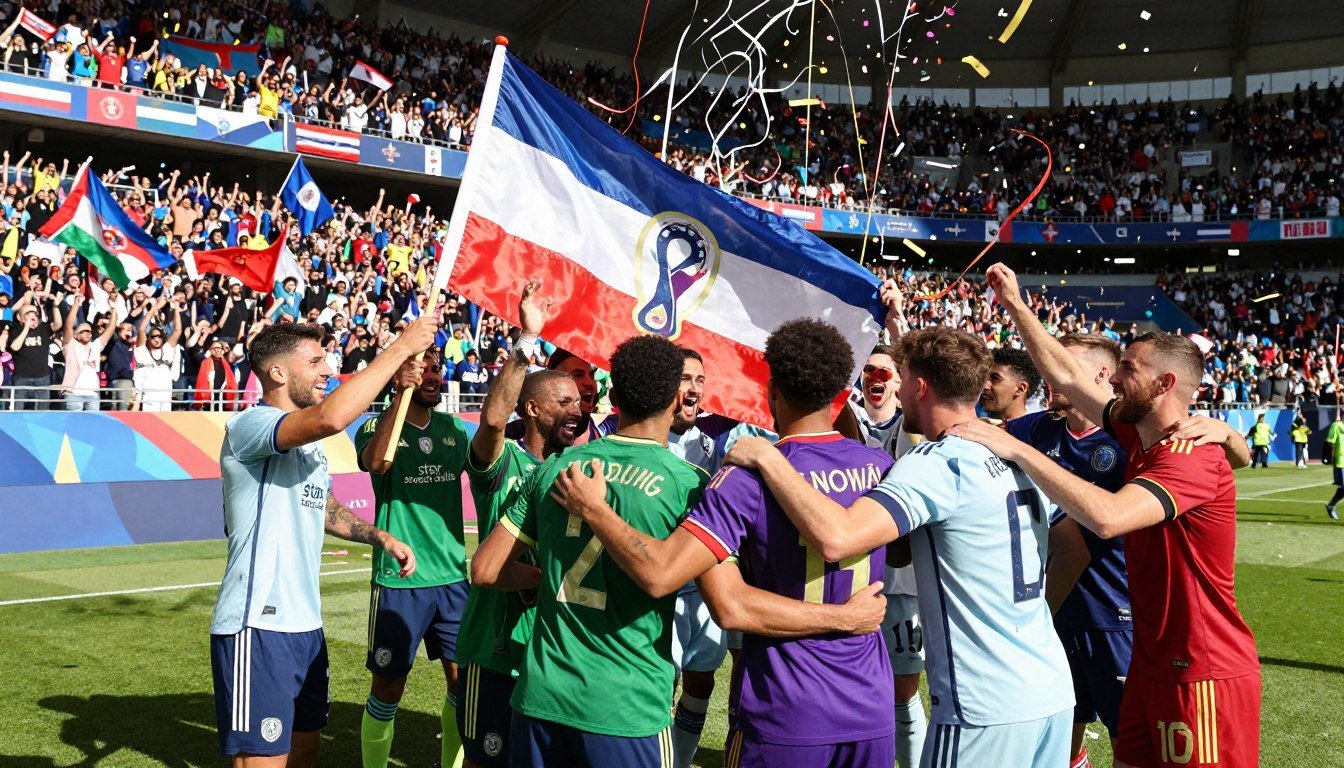
Several nations had improved for years and still never reached a World Cup. Jordan, Uzbekistan, Cape Verde and Curaçao are examples of teams that were close to the finals before the change.
FIFA also considered a 64-team field. The hosting problem was too large, so the idea was set aside.
A 64-team field was judged impractical because 128 games in one region over about six weeks was too many to host.
The table below shows how the two formats compare.
| Feature | 2022 format | 2026 format |
|---|---|---|
| Teams | 32 | 48 |
| Groups | 8 groups of four | 12 groups of four |
| Group-stage matches | 48 | 72 |
| Total matches | 64 | 104 |
Expansion gave more nations a realistic route to the tournament. That is why the field now includes teams that would have been shut out before.
How many teams qualify and how the field is set
Three places go to the host nations before any qualifying begins. The United States, Canada and Mexico qualify automatically, so the other 45 places are decided through continental qualifying.
The 45 remaining places are split among six confederations. Europe, South America, Africa, Asia, North and Central America and the Caribbean, and Oceania each receive a set number of places. Africa has 10 representatives in the 48-team field.
The number of places for each confederation sets how many teams a region can send. CONCACAF representation rose by about 50 percent over the old 32-team tournament. That change gave the region far more room than before.
Qualifying for each confederation runs in its own competition. Some confederations hold direct qualifying matches, while others use playoffs for the last few places.
Check the confederation allocation first when you want to know how a particular country qualified. The allocation tells you whether a nation came through direct qualifying or a playoff.
How the 48 teams are grouped and how many games each plays
Each team plays exactly three matches in its group. The 48 teams are divided into 12 groups, labeled A through L, with four teams in each group.
There are 72 group-stage matches in total. That is a clear jump from the 48 group matches in the 32-team era.
Twelve groups of four teams
The group stage is a round-robin. Every team in a group meets each of the other three teams once. Each group has four teams, so each group has six matches in total.
Three matches for every team
In the opening round, the first and second teams in a group meet, and the third and fourth teams meet. In the second round, the first and third teams meet, and the second and fourth teams meet. In the last round, the first and fourth teams meet, and the second and third teams meet.
A win earns 3 points, a draw earns 1 point and a loss earns 0 points. The points decide who moves on from the group.
Group stage match totals
Count three matches per team and you have the whole group stage in front of you. Twelve groups of six matches each give 72 matches. Keep that count in mind when you plan which games to watch.
Which teams advance to the knockout stage
Thirty-two of the 48 teams move on, so even finishing third can be enough. The top two teams in each group advance automatically, giving 24 teams. The eight best third-placed teams fill the other eight places.
In total, 32 teams advance, which is 66.7 percent of the field. Under the old format, 16 of 32 teams advanced, which is 50 percent.
Top two finishers in each group
The top two finishers in each group go straight into the knockout stage. This gives 24 teams that advance by finishing first or second in their group.
The eight best third-placed teams
The twelve third-place finishers are ranked against each other. The eight best advance to the Round of 32. They are ranked in this order:
- Points
- Goal difference
- Goals scored
A third-placed team with four points can still advance. That happens when enough other third-placed teams finish with fewer points, so track the other groups on the final matchday.
Tiebreakers in the group stage
When two teams finish level on points, goal difference comes next. Head-to-head results come after points and goal difference in the tiebreakers. These rules decide the last places in the knockout bracket.
What the new knockout bracket looks like
The Round of 32 is the new first knockout round. It replaces the Round of 16 as the starting point of the bracket, and every match is single elimination.
A team that loses one knockout match is out of the tournament. The bracket has 32 matches in total, including the third-place match.
The Round of 32 and what it replaces
The bracket runs from the Round of 32 to the Round of 16, quarter-finals, semi-finals, the third-place match and the final. Eight teams reach the quarter-finals. The table below shows each round.
| Round | Teams entering | Matches |
|---|---|---|
| Round of 32 | 32 | 16 |
| Round of 16 | 16 | 8 |
| Quarter-finals | 8 | 4 |
| Semi-finals | 4 | 2 |
| Final and third-place match | 4 | 2 |
How many matches a champion plays
A finalist plays eight matches. That is one more than in previous tournaments, when a finalist played seven. The extra match comes from the Round of 32.
Count the rounds from the start and you will see why the champion plays eight matches. Three group matches come first, then five knockout matches.
Dates, length and the schedule
The tournament lasts 39 days, longer than the 29 days of Qatar 2022. The window is wider because the field is bigger and the schedule has more matches to fit in.
A 39-day window means teams must manage fatigue across more than a month. The longer tournament also gives fans more days to follow their team.
The 39-day window
The 39 days include group matches, the Round of 32 and the rounds that follow. Each team may play on a different schedule than its fans expect. Check the match days for your team early.
Why longer means more travel and recovery
Players already play 50 or 60 matches a season at their clubs. A longer tournament adds to that workload. Travel between host cities in three countries adds more strain, since teams must fly long distances between games.
Fans should plan around the longer window, not just the match days they care about. Book flights and hotels for the full span of the tournament.
Opening match and host cities
The opening match was played in Mexico City on June 11, 2026. It started a tournament that spreads matches across three countries.
The 2026 World Cup uses 16 host cities across Canada, Mexico and the United States. Matches are spread across all three countries, so travel between cities is part of the plan.
Mexico vs. South Africa in Mexico City
Mexico vs. South Africa opened the tournament in Mexico City. That match set the tone for a schedule that moves across the three host nations.
The sixteen host cities
The United States hosts 11 cities: Atlanta, Boston, Dallas, Houston, Kansas City, Los Angeles, Miami, New York New Jersey, Philadelphia, San Francisco Bay Area and Seattle. Canada hosts Toronto and Vancouver. Mexico hosts Guadalajara, Mexico City and Monterrey.
Check which host city your team plays in before booking travel. A team’s group matches may sit in cities far apart, so plan each trip around the venue list.
Common mistakes when reading the format
Many fans assume a third-place finish is always a dead end. In the 48-team format, that is not true.
A team with four points can be eliminated or advance, depending on the other groups. The bracket changes depending on which third-placed teams qualify.
Take a team with four points as an example. If its group rivals all finish with more points, it goes home. If enough other third-placed teams finish with fewer points, it moves into the Round of 32.
Three mistakes come up often when people read the format:
- Confusing the 32 advancing teams with the 16 of the old format.
- Assuming third place always means elimination.
- Ignoring goal difference in tiebreakers.
Check the standings of every group before deciding a result is decisive. A single group result can change the whole third-place table.
How the format affects teams and players
A team that has already qualified can rest players without much risk. The team still has to plan for the knockout stage that follows.
Players who already play 50 or 60 matches a season face higher injury risk in a longer tournament. Coaches must balance rest with the need to keep form.
A longer tournament puts more strain on the same players, and that strain builds over the weeks.
Squad rotation often shows up in the final group matches. A team that has already secured a place may use fresh players, while a team that still needs points keeps its best eleven on the field.
The format also affects emerging nations. A team with a realistic route to the knockout stage gains experience against stronger opponents, and that experience can help its players for years after the tournament.
Watch the final matchday rotations, since they often decide who advances.
Conclusion
The 2026 World Cup has 48 teams, twelve groups and a Round of 32. The format trades a longer tournament for more nations, and that trade gives many teams their first real chance at the finals.
Your next step is simple. Read the group tables on each matchday to follow who advances, and watch the third-place standings as the last round nears.
FAQ
Who will play first in the 2026 World Cup?
How many teams advance from each group?
How many matches does each team play in the group stage?
How many matches does the champion play?
How long is the 2026 World Cup?
Sources
- FIFA eyes World Cup format expansion from 48 to 64 teams: Should the US be the permanent host? – reports FIFA President Gianni Infantino’s comments about discussing further expansion after the tournament, and how a 64-team format would demand about 128 matches and around 20 large venues.
Leave a Reply