How often is the FIFA World Cup held?
Have you ever wondered how long you must wait between big soccer tournaments? The men’s World Cup is held every four years. Fans can plan around that gap, and it has stayed the same for decades.
The 2026 FIFA World Cup ran from June 11 to July 19 across Canada, Mexico and the United States. It was the most recent edition, and it brought the event to three host countries at once. The women’s tournament follows the same four-year cycle as every World Cup held by FIFA. The next tournament after 2026 comes in 2030, so the wait between finals is four years.
Key Takeaways
- The tournament is held every four years.
- The 2026 edition ran from June 11 to July 19 in three countries.
- The women’s World Cup uses the same four-year cycle.
- The next men’s finals come in 2030.
- Youth World Cups for U-17 and U-20 men are held every two years.
Why the World Cup Is Held Every Four Years
Host preparation and qualifiers take years, so FIFA spaces the finals four years apart. The governing body sets that gap, and it gives every host and team time to get ready. FIFA sets the gap between finals, and the qualifiers run over the three years before the finals.
The gap also protects the work that comes before the first match. Each host country may need new stadiums, airports, roads and hotels. Teams need time to build a squad, play friendly matches and test new players.
The four-year gap gives hosts and teams the time they need.
The qualification phase, called the qualifiers, means the matches over the preceding three years that decide which national teams reach the finals. Many nations enter, so the qualifiers can take a long time to finish. Only a small share of the entrants reach the finals.
The women’s tournament keeps the same four-year cycle, so both events share a steady calendar. Plan around the four-year gap when you look ahead to any World Cup.
How the World Cup Started and Where It Has Been Held
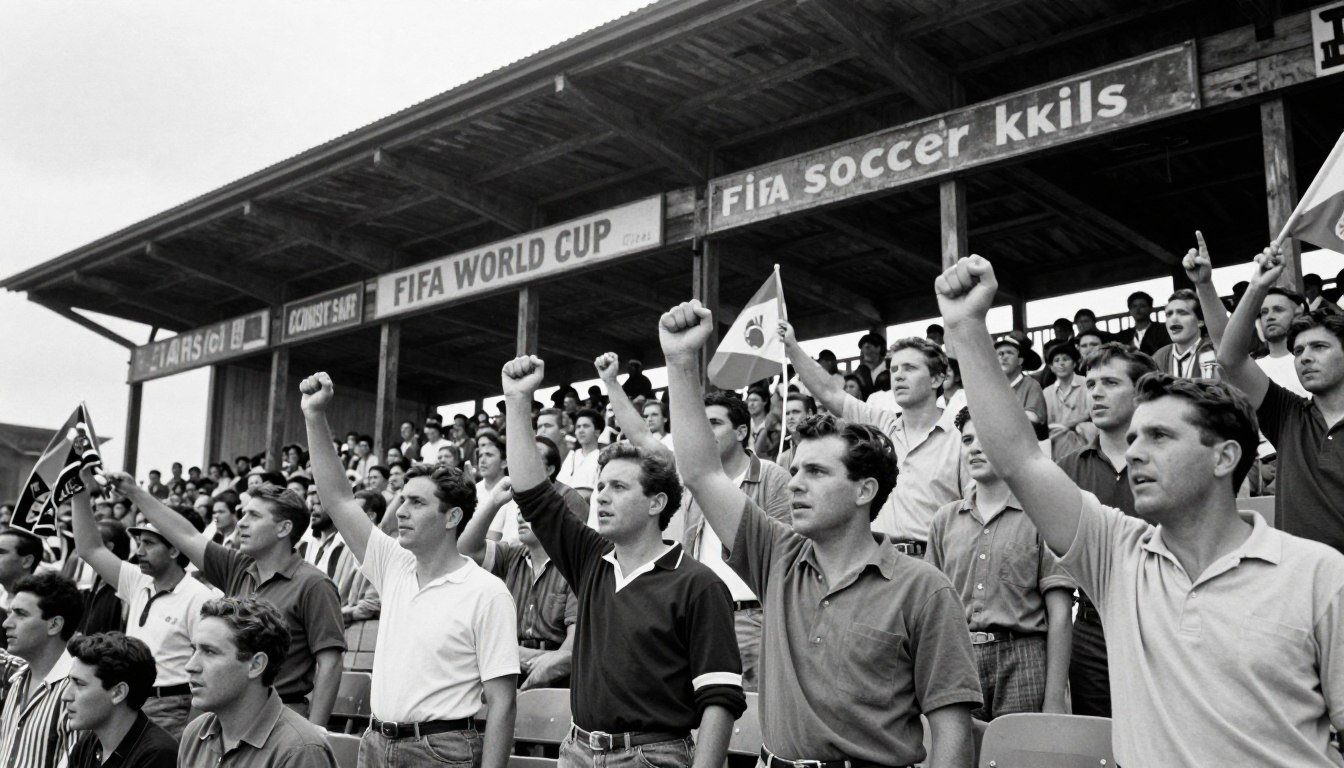
Uruguay hosted the first FIFA World Cup in 1930. Thirteen teams took part in that first tournament, and the early world cups were small compared with today’s events. The 1942 and 1946 editions were canceled because of World War II.
| Year | Host | Teams |
|---|---|---|
| 1930 | Uruguay | 13 |
| 1950 | Brazil | 13 |
| 2002 | Japan and South Korea | 32 |
| 2026 | Canada, Mexico and the United States | 48 |
Early Tournaments From 1930 to 1950
Brazil hosted in 1950 at the Maracanã, a stadium built for about 200,000 spectators. That tournament ended with a final round rather than a single match. The stadium became one of the most famous venues in football history.
Hosts Since 2002
The 2002 edition was the first co-hosted tournament, shared by Japan and South Korea. The last FIFA World Cup before 2026 was held in Qatar in 2022. Nineteen countries have hosted previous FIFA World Cups, and Mexico is the only country that has hosted three times, in 1970, 1986 and 2026.
Qualification and Tournament Phases
The World Cup has two phases, qualifiers and finals. The qualifiers pick the teams, and the finals decide the title. Qualifiers decide which teams reach the 2026 finals, and 48 teams made the cut.
The qualifiers can run for three years, and each region uses its own route to the finals. Once the teams are set, the finals start with group matches. Each team plays three group matches, and a win earns 3 points while a draw earns 1 point.
The finals move through several rounds. Each round removes teams until one team is left standing. The stages are listed below in the order they are played.
- Group stage
- Round of 32
- Round of 16
- Quarterfinals
- Semifinals
- Final
How Matches Are Played and Decided
A knockout match tied after 90 minutes goes to 30 minutes of extra time. The two extra-time periods are each 15 minutes long, and play continues until a winner appears or the period ends. Each match has two halves of 45 minutes each.
If the score is still level after extra time, penalty kicks decide the winner. Each side takes five penalty kicks, and the team with more goals moves on. If the count is still level, the shootout continues one kick at a time.
Group ties are settled by points first, then goal difference and goals scored. Each group team plays three matches, so a points tie often goes to goal difference. That rule rewards teams that win big and avoid heavy losses.
Records, Totals and Trophy Facts
Winners and Titles
Five titles is the record, and Brazil holds it. Germany and Italy have four titles each, and Argentina has three. Uruguay won the world cup first tournament in 1930 by beating Argentina in the final.
The most titled nations are listed below.
- Brazil: 5 titles
- Germany: 4 titles
- Italy: 4 titles
- Argentina: 3 titles
- France: 2 titles
- Uruguay: 2 titles
The Trophy
The current trophy is made of 18-carat gold and weighs about 13.6 pounds. Winners hold the original trophy only until the post-match celebration. The trophy is the most recognized prize in world football, and it shows the winner’s name on its base.
Argentina won the 2022 final in Qatar, its third title. That win came after a penalty shootout with France, which made the match one of the most watched in the sport’s history.
Previous Host Countries and Locations
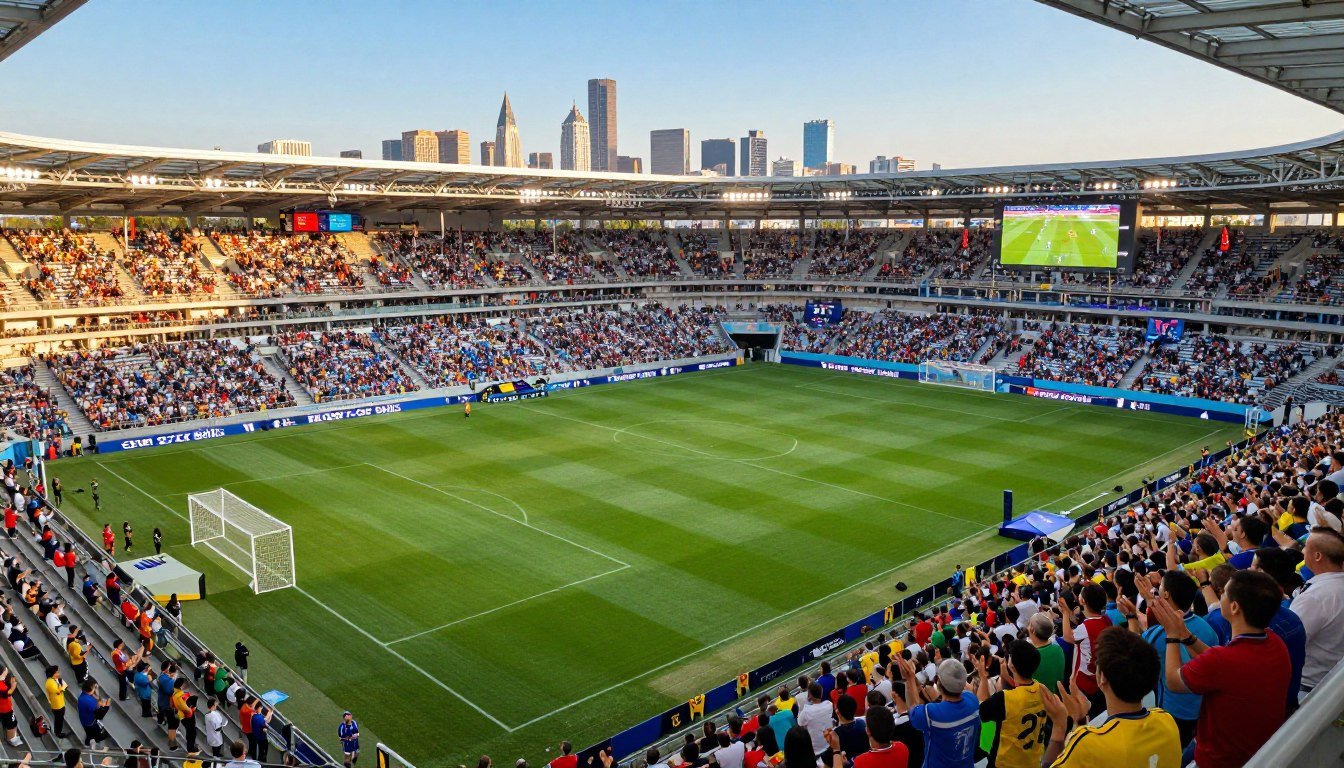
The tournament has moved across most continents. Previous World Cups were held in Europe, South America, North America, Asia and Africa. Nineteen countries have hosted the event so far.
| Year | Host country | Teams |
|---|---|---|
| 2014 | Brazil | 32 |
| 2018 | Russia | 32 |
| 2022 | Qatar | 32 |
| 2026 | Canada, Mexico and the United States | 48 |
Qatar held its 2022 edition in November and December because of summer heat. That change in timing was unusual for the event. Hosts before that had used the summer months, and the switch became a major talking point.
Morocco, Portugal and Spain host the 2030 finals.
Next Tournaments and Where to Watch
The next men’s World Cup is set for 2030. Morocco, Portugal and Spain host the 2030 men’s finals. The United States, Canada and Mexico hosted the most recent edition, which started on June 11, 2026.
The next FIFA World Cup after 2026 is the Women’s event in 2027. Brazil hosts the Women’s World Cup in 2027, which follows the women’s four-year pattern. Fans can plan trips for several events in the coming years.
- 2026 men’s World Cup: Canada, Mexico and the United States
- 2027 Women’s World Cup: Brazil
- 2030 men’s World Cup: Morocco, Portugal and Spain
Dates can shift, so look at FIFA’s own pages first. The official list is the most reliable place to check.
Women’s World Cup and Youth Tournaments
The Women’s Tournament
The women’s tournament has run on a four-year cycle since it began. The Women’s World Cup has been held every four years since 1991. The event is a senior tournament, and it uses the same four-year gap as the men tournament.
The women’s event has its own host list and its own qualifiers. Each women’s finals gets a fresh set of teams and matches. Fans of the women’s game often follow both events with the same level of interest.
Youth World Cups Every Two Years
FIFA also runs youth events for players under 17 and under 20. Those tournaments follow a shorter two-year pattern. The youth men’s events are much smaller than the senior tournaments, and they focus on young players who may become stars later.
Youth events are the only FIFA World Cups held every two years.
Quick Comparison of FIFA Tournament Cycles
Two FIFA events run on a four-year schedule, and two youth events run every two years. Only the two youth events run on a two-year cycle. The table below shows each event, its cycle and its most recent edition.
| Tournament | Cycle | Last edition |
|---|---|---|
| Men’s senior World Cup | Every four years | 2026 |
| Women’s World Cup | Every four years | 2023 |
| U-20 men’s World Cup | Every two years | 2025 |
| U-17 men’s World Cup | Every two years | 2025 |
Each youth world cup every two years serves a different age group. The senior events use a longer gap because they need more time for qualifiers and host work. Keep the cycles separate when counting years between events.
Common Questions About World Cup Scoring
The record for most goals in a single match is five. Oleg Salenko scored five goals for Russia against Cameroon in 1994. That match was one of the most lopsided in the event’s history, and the record still stands.
Here are a few scoring facts to know.
- Most goals in one match: five, by Oleg Salenko of Russia in 1994
- Goals in the 2022 edition: 172
- Teams in the 2022 edition: 32
- Matches in the 2026 edition: 104
Scoring totals rise with the team count. A larger field means more matches, and more matches usually bring more goals.
Planning Around the Four-Year Schedule
Two years is a good head start for a trip to the finals. The 2026 tournament had 104 matches and drew more than 6.6 million fans in person. Those numbers show how fast seats and rooms can fill in a host country.
Use the steps below to plan a trip around the cycle. Each step gives a rough time frame before the event.
| Step | When | What to do |
|---|---|---|
| 1 | About two years before | Note the target year and the host country |
| 2 | About one year before | Compare host cities and travel options |
| 3 | After the schedule is confirmed | Book travel and lodging |
Fans who plan early usually have more choice of cities and routes. Book travel after the official schedule is confirmed.
Tournament Formats Compared
48-Team Format
The 2026 format doubled the knockout field from 16 teams to 32. The 2026 finals had 48 teams in 12 groups of four. Each group played its own matches before the teams moved into the round of 32.
The bigger field gave more countries a chance to play on the world stage. It also meant more matches for the host countries to organize. Stadium schedules had to fit a longer list of games.
Earlier 32-Team Format
The 2022 finals had 32 teams, split into eight groups of four. Only 16 teams reached the knockout rounds. That smaller setup kept the schedule shorter and the path to the final simpler.
Both formats send the top two from each group forward, and the 2026 format also adds eight best third-placed teams.
Notable World Cup Moments
The largest attendance on record came at Maracanã in 1950. The 1950 final drew an official 173,850 spectators. That crowd remains one of the biggest ever gathered for a football match.
A few more moments stand out from recent editions.
- The 2026 edition drew more than 6.6 million fans in person.
- The 2022 final ended 3-3 after extra time, and Argentina won 4-2 on penalty kicks.
- The 1950 final took place at Maracanã in Brazil.
Records keep changing with each edition.
Key Takeaways for Fans
Fans should expect a four-year wait between finals. The men’s World Cup comes around in that rhythm, and the schedule rarely shifts. The next men’s finals after 2026 are set for 2030.
Watching the sport well means knowing the rhythm of each cycle. The men’s and women’s events run on four-year gaps, while the youth events run every two years. Keep those cycles apart when you count down to a big match.
The men’s World Cup comes around every four years, so the next finals after 2026 are in 2030.
A long wait can still reward careful planning. Fans who save early and track the calendar often have the most options. Watch for news from the official site as the 2030 date gets closer.
Conclusion
The men’s World Cup returns every four years, and that steady rhythm makes planning easier. Keep the cycle in mind when you count down to the next finals.
Leave a Reply