Have you ever wondered how a shirt number turned into a worldwide name? The answer starts with a footballer and a short code that fans know well.
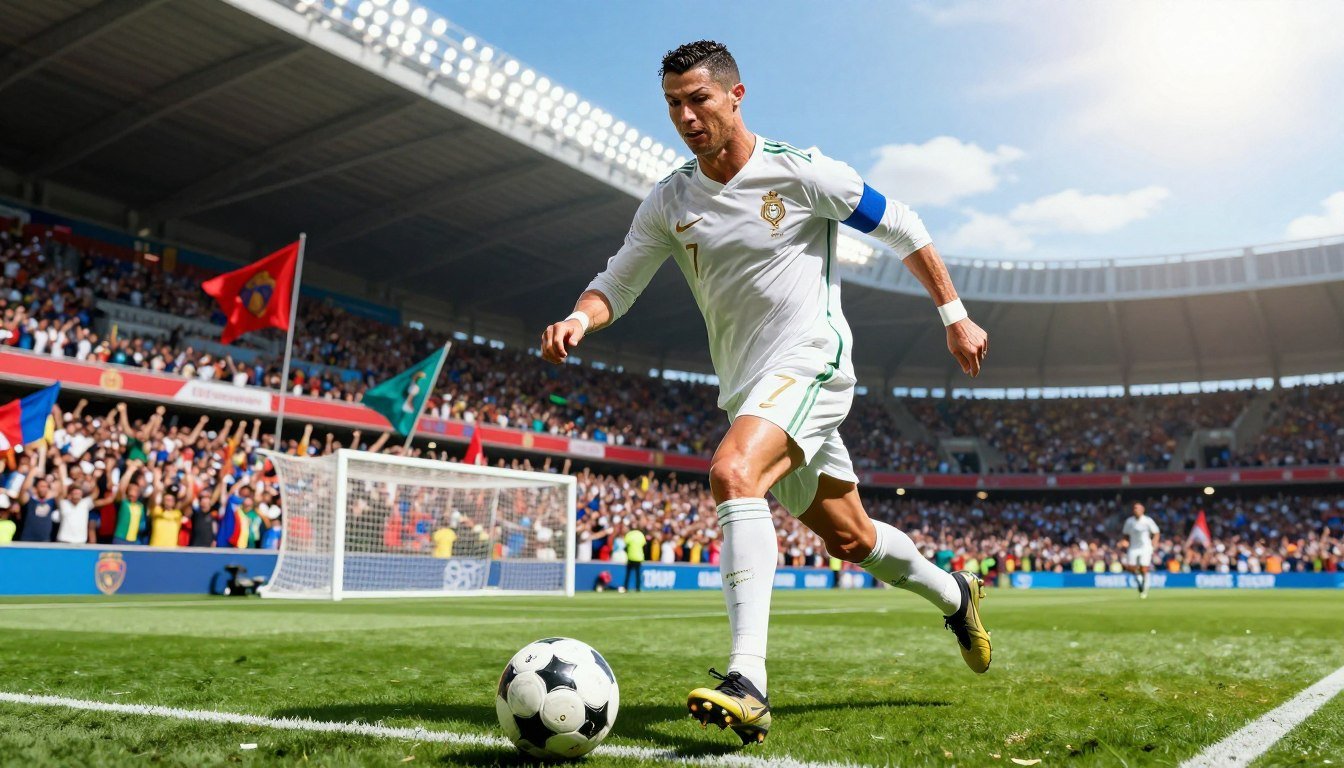
CR7 is Cristiano Ronaldo’s initials joined to the number 7 he has worn at most of his clubs. The C stands for Cristiano, the R stands for Ronaldo, and the 7 is his favorite jersey number. Ronaldo is a Portuguese forward who has played for several big clubs.
A squad number is the number a player wears for a club. The club assigns it, and the player cannot simply choose any number he likes. The nickname has since become a brand, and fans and the media in the United States and worldwide use it often.
The sections below trace where the number came from and what the name now covers.
Key Takeaways
CR7 combines Cristiano Ronaldo’s initials with the number 7.
The number 7 shirt came to him at Manchester United.
Ronaldo has played for five clubs, and the number stayed with him.
He had scored 982 senior career goals by 23 October 2026.
The nickname grew into the CR7 brand, which covers a museum, hotels and a galaxy.
How the number 7 shirt became his nickname
When Ronaldo arrived at Manchester United in 2003, he asked for the number 28. He had worn it at Sporting CP, but the club gave him the number 7 shirt instead. The number 7 shirt became the core of his name.
The number 7 had a long history at the club. George Best, Eric Cantona and David Beckham had all worn it before him. Cristiano Ronaldo calls himself CR7 because the name joins his initials to the number 7 shirt he wore for years in his career.
The club decides the squad number, not the player.
The number 28 he asked for and the number 7 he received
Ronaldo later said that wearing the number 7 gave him motivation. He did not pick the shirt for its look or its history. The club picked it, and he chose to make it his own.
Why Manchester United’s number 7 mattered to him
Manchester United’s number 7 carried a lot of history, so the shirt came with high expectations. Ronaldo wore it through his years at the club. When he joined Real Madrid in 2009, Raúl still held the number 7, so Ronaldo wore the number 9 instead.
The Nike R9 boots that set the pattern
In 1998 Nike sold Mercurial boots worn at the World Cup, and they were named R9 after the Brazilian Ronaldo Nazário. The boots showed that a name built from initials and a number could work. The number has stayed with Ronaldo at each club since, and it became the core of the nickname.
Which clubs did Cristiano Ronaldo play for?
Ronaldo has played for five clubs: Sporting CP, Manchester United, Real Madrid, Juventus and Al-Nassr. Five clubs, one name. The CR7 name went with him through every move.
He helped Real Madrid win four UEFA Champions League titles, the most at any one club. He has won five UEFA Champions League titles in total. He has also won five Ballon d’Or awards as of 23 October 2026.
Spanish fans also know him as El Bicho, a name coined by the Spanish radio commentator Manolo Lama. The name held through every move, so the nickname was never tied to one team. It travels with him around the world.
How many goals has Cristiano Ronaldo scored?
By 23 October 2026, Ronaldo had scored 982 senior career goals. That total covers both club and country. He played 1,342 senior matches and recorded 291 assists in the same period.
Category
Goals
Appearances
Assists
Club goals
836
Included in total
Included in total
Portugal goals
146
Included in total
Included in total
Senior career total
982
1,342
291
Of the 982 goals, 836 came for clubs and 146 came for Portugal. The 146 goals for Portugal are the record for most men’s international goals. Scoring at this level is one reason the name CR7 is linked to records.
Fans follow his career goals closely, and the Champions League is one of the stages where he has scored often. The total is the main reason the name is used worldwide.
What the CR7 name covers beyond football
The CR7 museum and hotels in Madeira and Lisbon
The CR7 name now appears on a museum, a hotel group and a galaxy. The brand reaches far beyond the pitch.
The museum CR7 idea became real in 2013, when the Museu CR7 opened in Funchal, Madeira. The brand grew from that first building into a wider range of places and products.
A nickname can outgrow the sport that created it.
Pestana CR7 Hotels operate in Funchal and Lisbon, in partnership with the Pestana Hotel Group. The hotel group also plans hotels in New York, Madrid and Marrakech.
CR7 clothing, fragrance and underwear
Fans can buy CR7 fragrance and underwear, and the brand offers clothing too. Nike sells a CR7 range of football boots, balls and training gear. The range gives fans a way to wear the name on and off the pitch.
Museu CR7 in Funchal, Madeira
Pestana CR7 Hotels in Funchal and Lisbon
CR7 fragrance
CR7 underwear
Nike CR7 merchandise
Galaxy CR7
The galaxy named after him
The most unusual item on the list is a galaxy. In 2015 a galaxy called Cosmos Redshift 7 was named Galaxy CR7 after Ronaldo. The brand grew from a number on a shirt into a business that fans can visit, wear and buy from.
Conclusion
The name CR7 comes from two things: his initials and the number 7 shirt he was given at Manchester United. He kept the number through his clubs, and that choice grew into a brand. Today the CR7 brand includes a museum, hotels and products that fans use.
FAQ
Why does Cristiano Ronaldo call himself CR7?
He calls himself CR7 because the name joins his initials to the number 7 shirt. The C and R stand for Cristiano Ronaldo, and the 7 is the shirt he first wore at Manchester United. Ronaldo has kept the number at most of his clubs since then, so fans and the media know him by it. The nickname is now used in the United States and worldwide.
How many goals has Cristiano Ronaldo scored?
As of 23 October 2026, Ronaldo had scored 982 senior career goals. Of those, 836 came for clubs and 146 came for Portugal, in 1,342 appearances. The 146 goals for Portugal are the record for most men’s international goals. The total counts official senior matches, so it covers both club and country.
Which clubs did Cristiano Ronaldo play for?
Ronaldo played for five clubs: Sporting CP, Manchester United, Real Madrid, Juventus and Al-Nassr. He helped Real Madrid win four UEFA Champions League titles, and he has five in total. He has also won five Ballon d’Or awards as of 23 October 2026. The number 7 went with him to every club after Manchester United.
Why does the soccer match clock keep running after 90 minutes? A match is 90 minutes of play, but the ball moves for only part of that time.
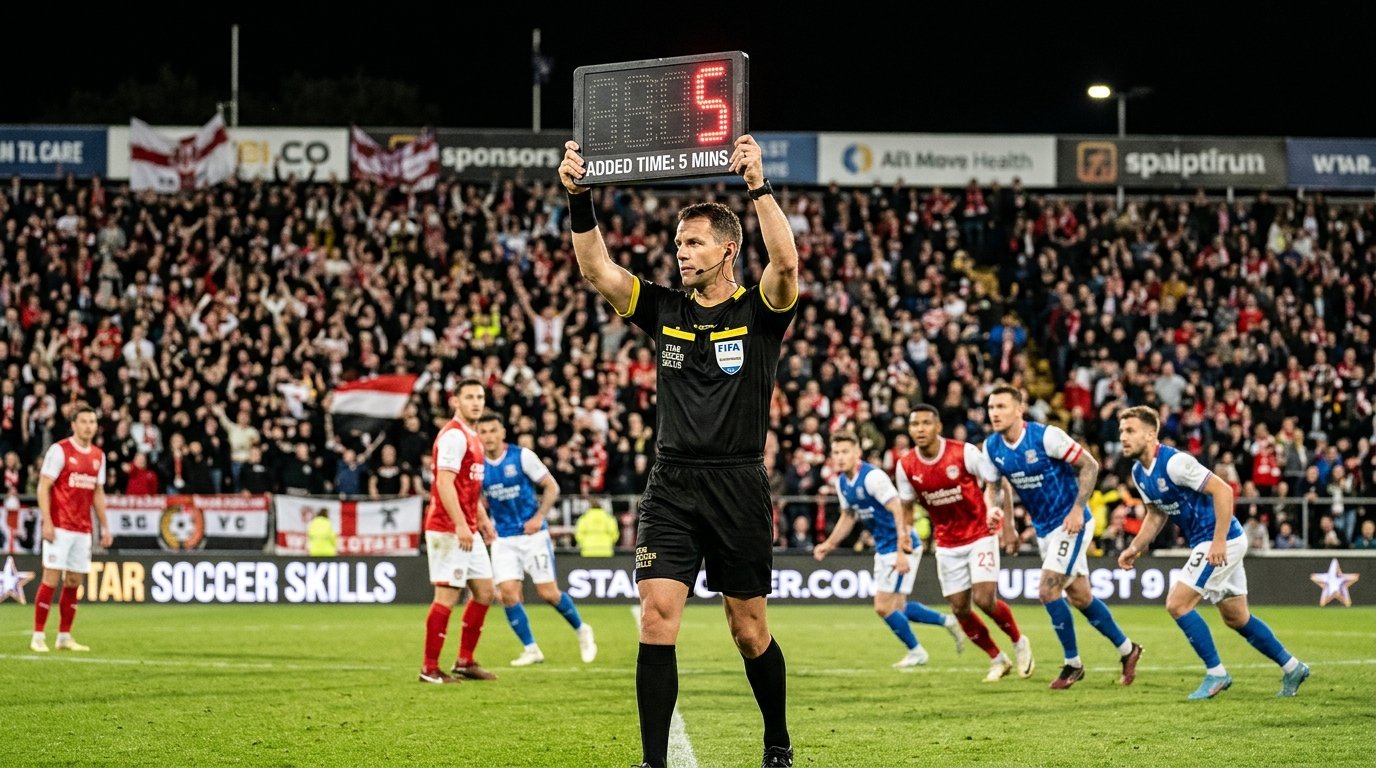
Referee decisions set how many lost minutes come back as stoppage time, also called added time or injury time. Dead time is any moment the ball is not in play, such as a substitution, injury, or goal celebration.
Extra time is different. It is a separate 30-minute period, played only when a knockout match is tied after 90 minutes.
Fans watching a match often mix up these two terms. Below, we explain how the minutes are counted and how extra time works.
Key Takeaways
A match is 90 minutes of play, but the clock keeps running through pauses.
Stoppage time is the referee’s added minutes at the end of each half.
Extra time is two 15-minute periods in knockout matches tied after 90 minutes.
Stoppage time can also apply at the end of each extra time period.
The fourth official shows the added minutes for each half.
Stoppage time and extra time are different things, and mixing them up is the most common source of confusion on match day.
How Is Stoppage Time Determined in Soccer?
Stoppage time in soccer is calculated by adding up every pause in play during the half. The referee keeps a running tally and turns it into one number at the end.
The usual end-of-half figure on the board is three to five minutes. Pauses such as a long injury or a VAR review can push the number much higher.
Once the fourth official shows the added minutes, the referee cannot reduce them.
What the Referee Counts
The referee counts every stoppage that takes the ball out of play. The main items are:
Substitutions
Injuries, including the time medical staff need to reach a player
Goal celebrations
VAR reviews
Hydration breaks
Deliberate time wasting
A substitution must be finished within ten seconds of the signal. If it is not, the substitute waits until the first stoppage after one minute has passed.
How the Fourth Official Shows the Number
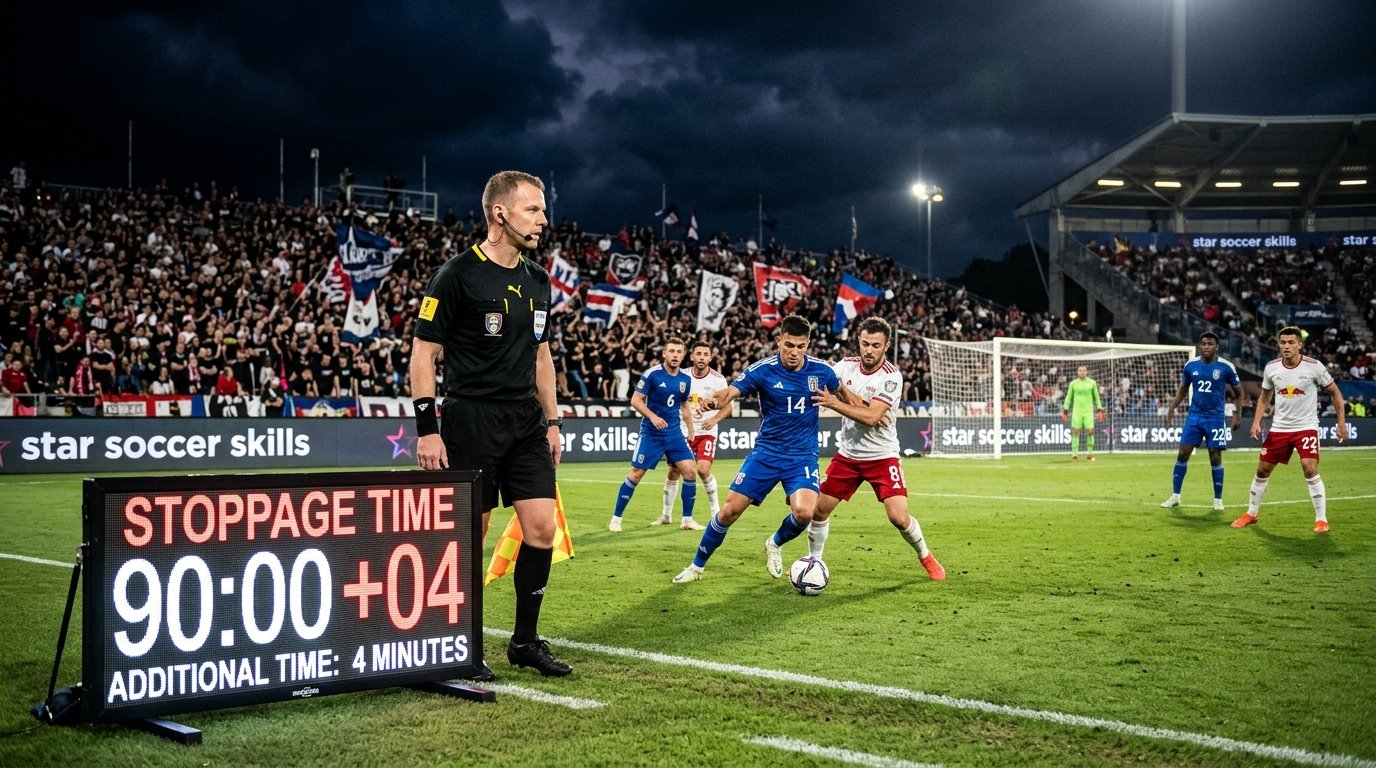
The fourth official holds up the electronic board that displays the added minutes for the half. The board usually appears in the final minutes, so fans in the stands and at home can see the number.
Why the Final Whistle Can Come Later
There is no fixed cap on added minutes, so a serious injury can add many more than the board shows. Stoppages during added time also add minutes, which means injury time can grow after the number is shown.
Check the board when a half reaches its final minute. A number that rises after the board appears means a new stoppage has occurred.
Why Stoppage Time Can Run Longer Than Expected
A five-minute board figure does not guarantee five minutes of play, because stoppages can happen inside the added time itself. Pauses that start after the board appears push the match clock past the posted number.
Each new pause adds its own minutes, so the final whistle can come well after the board number runs out.
Stoppages Inside Stoppage Time
Stoppage time during stoppage time happens when a new pause begins after the board shows its number. Injury time, substitutions, and other pauses can all stretch the total. Situations that stretch added time include:
A player injured early in the added minutes
A VAR check
A delayed substitution
A time-wasting card
A hydration break
Say a player is hurt in the first seconds of a five-minute addition, and treatment takes five minutes. The clock still runs the full five minutes, so almost no live play may happen after the injury.
Records for Longest Added Time
The record for the longest added time in a professional match is 28 minutes. It came in a 2019 Carabao Cup game between Burton Albion and Bournemouth, after an electrical failure.
The longest added time at a World Cup is 24 minutes, in England vs Iran in 2022. World Cup hydration breaks last three minutes each, so every half includes at least three minutes of added time.
Expect added time to run long in a match with several VAR checks, since each one is added to the total.
How Is Extra Time Calculated in Knockout Matches?
Extra time in football is a fixed 30-minute period, not a count of lost minutes. It is played only when a knockout match is level after 90 minutes. They calculate it as two equal 15-minute periods, added on top of the regular match.
A level score after 120 minutes goes to a penalty shootout. A standard match is 90 minutes, so a full knockout game with extra time runs 120 minutes plus added time.
Part
What it is
When it is played
Length
Who decides the length
Regular time
The 90-minute match in two 45-minute halves
In every match
90 minutes
The match rules
Stoppage time
Added minutes for pauses in play
At the end of each half
Usually three to five minutes
The referee
Extra time
Two 15-minute periods after a tied knockout match
Only in knockout matches level after 90 minutes
30 minutes, plus stoppage time
The match format
Penalty shootout
Kicks from the penalty spot
Only if still level after 120 minutes
Ends when a winner is found
The match format
Length of Each Extra Time Period
Each extra time period lasts 15 minutes. Stoppage time still applies at the end of each period if delays happen. The main difference in stoppage time vs extra time in soccer is that one depends on delays and the other is fixed.
What Happens If the Score Is Still Level
If the score is still level after extra time, the match goes to a penalty shootout. Extra time is played only in knockout rounds or competitions that need a winner.
Stoppage Time Inside Extra Time
A penalty kick awarded just before the end of a half extends that half until the kick is complete. The same rule applies to a penalty kick in either 15-minute extra time period. Added time can be shown at the end of each period, just as it is in regular time.
Check whether a match uses extra time before kickoff, since group-stage games end level and do not play it.
How Stoppage Time and Extra Time Affect Betting Markets
A regular-time soccer bet usually settles on the 90 minutes plus the stoppage time the referee adds, and not on extra time. Extra time, which is two 15-minute periods, is generally excluded from regular-time outcomes. Most soccer betting markets follow this pattern.
Extra time goals do not count in a regular-time market.
What Counts in a Regular-Time Bet
A regular-time market counts the full 90 minutes of play. It also counts the stoppage time the referee adds at the end of each half. Any goal scored during that added time counts too.
What Stays Out of a Regular-Time Bet
Penalty shootouts stay out of a regular-time market, because they are not part of play in the 90 minutes. Read the bet terms of the platform you use before placing a wager, since each one sets its own exact rules.
Confirm the market name before betting, since “to win” and “to win in regulation” can settle differently in a knockout game.
Conclusion
Stoppage time follows the referee’s count, while extra time follows the match format. Stoppage time is the added minutes at the end of each half. Extra time is a fixed 30-minute period in knockout matches that are level after 90 minutes.
Knowing both helps fans follow the clock with confidence. Before kickoff, check the match format, and at the end of each half, check the board.
FAQ
How long is extra time normally?
Extra time is normally 30 minutes, made of two equal 15-minute periods. Stoppage time can be added at the end of each period, so the total can run longer. Extra time is played only in knockout matches that are level after 90 minutes. If the score is still level after extra time, the match goes to a penalty shootout.
Does extra time count as second half?
No. Extra time is a separate period that starts after the 90-minute match ends level. It is not a continuation of the second half. Each extra time period can add its own stoppage time, so the total depends on delays in each period.
What time does extra time end?
Extra time ends after two 15-minute periods, which is 30 minutes of play, plus any stoppage time the referee adds. If the score is still level when it ends, the match goes to a penalty shootout. A knockout match with extra time runs about 120 minutes before any added time is counted.
Ever wondered why Americans say soccer when most of the world says football? Americans say soccer because the word came from England and was adopted to tell the game apart from American football.
Association football is the form of the game run by the Football Association. Its rules were first adopted in 1863, and players may not carry the ball by hand. Americans use the word football for a different game, the gridiron game with helmets and pads.
The word is English in origin, so the US usage is not a foreign error.
Key Takeaways
The word soccer began as English student slang in the 1880s and 1890s.
Association football rules were first adopted in 1863.
American football took the name football through the 1876 college rulebook.
US soccer bodies used the word soccer in their names for most of the twentieth century.
Canada and the United States still say soccer.
Most other countries say football.
Where the Word Soccer Began
The word came from students at Oxford in the 1880s and 1890s who clipped association and added -er. They shortened association to soc, made an in-between form called assoccer, and then landed on soccer.
The word was never an official name for the game. Soccer stayed a student habit, and the game’s governing body kept using football. Rugby football was called rugger at the time, so the -er habit fit sports well.
The word soccer was never an official name for the game.
Students in England used the word in conversation long before it appeared in print. English school magazines printed soccer or socker in late 1885. In 1905, the New York Times explained the trend as a fad among students.
Americans call it soccer because the word began as English student slang. Americans say soccer instead of football because they kept that student word after football came to mean their own game. Soccer was a British slang word long before it was an American habit.
How American Football Got Its Name
The 1869 Rutgers and Princeton game was the first American football contest, played under rules close to soccer. Those early rules were based on soccer rules of the time, not on rugby. The name does not come from the ball’s size, even though many people think a foot long ball explains it.
The game moved away from soccer-style rules and toward rugby-style rules. Rugby allowed players to carry the ball, which is why players in the American game now pick it up and run with it. That shift is also why you play it with your hands.
The word football stuck to the new game as the rules changed. The rugby influence made hand play normal in the American game, and the name followed the rules.
By 1876 the rulebook had made football the name of the American game.
Soccer and Football Around the World
US soccer bodies used the word soccer in their names for most of the twentieth century. The United States Football Association was founded in 1913 as the organizing body of American soccer.
The United States Football Association changed its name to the United States Soccer Football Association in 1945. In 1974, that body became the United States Soccer Federation, according to U.S. Soccer’s official historical timeline.
Each country names the sport by its own habit, and the name often tracks the national body.
Country
Common term
Reason
United States
Soccer
Bodies adopted it to separate the game from American football
England
Football
The Football Association named the game football
Australia
Football
The national body switched from soccer in 2005
Canada
Soccer
It follows the usage in the United States
Check the name of the national federation when you need the official term for the world game in a given country.
What Other Countries Call It
Canada and the United States are the main countries that still say soccer. In Europe, most countries call the game football, and the word soccer is rarely used.
Australia renamed its association football body from soccer to football in 2005. New Zealand followed in 2006.
Canada: soccer
United States: soccer
England: football
Australia: football
New Zealand: football
Outside North America, football is the safer word.
A traveler who says football in Sydney or Auckland will be understood.
Conclusion
Soccer comes from England, and Americans kept it. The word began as English student slang and was used to tell the game apart from American football.
FAQ
Is soccer the same as football?
Yes, in most of the world both words name association football, the game played with a round ball and no carrying by hand. In the United States, football usually means American football, the gridiron game with helmets and pads. That is why Americans use soccer for the round-ball game. Outside the US, the two words point to the same sport, so context tells you which game is meant.
Sources
TIMELINE – U.S. Soccer’s official historical timeline, which sets out the federation’s name changes.
Who has won the most Ballon d’Or awards? Lionel Messi has won it more often than any other player, eight times.
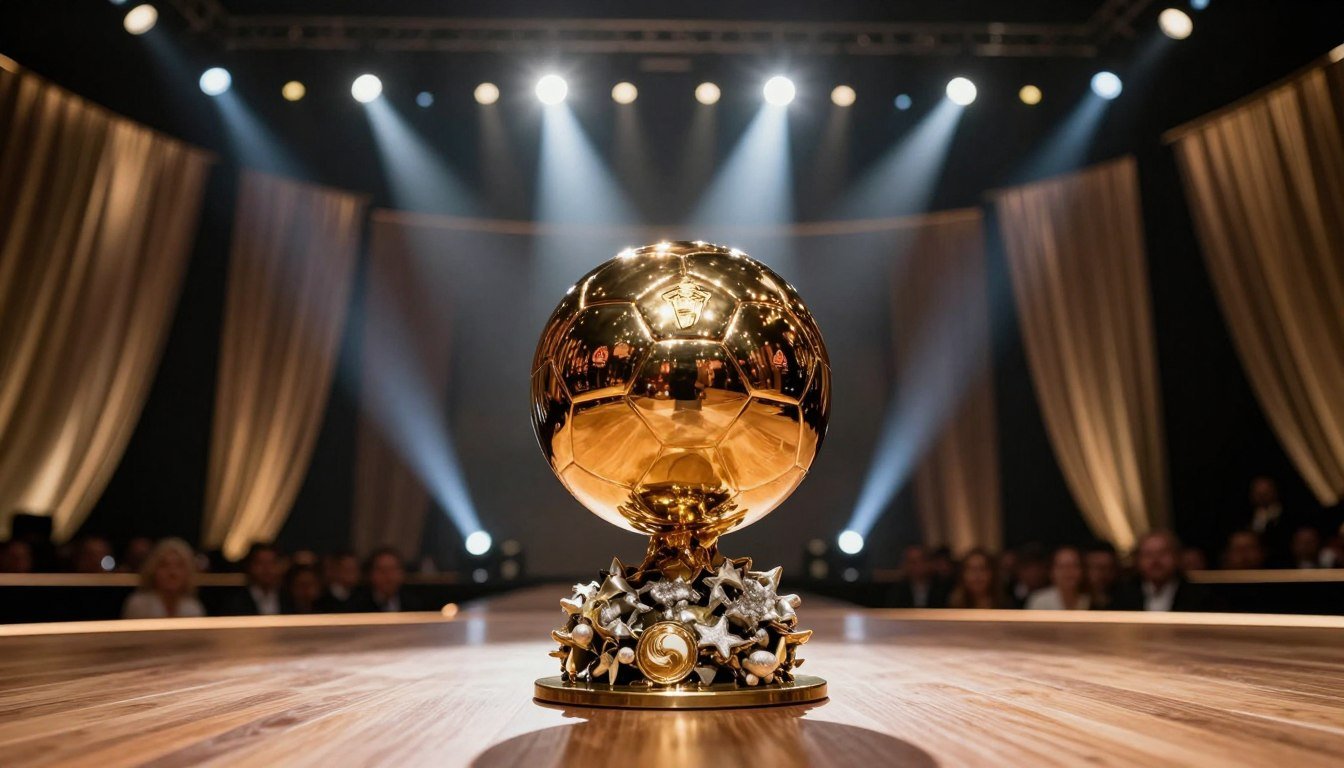
The Ballon d’Or is the annual award, presented by France Football, for the player judged to have performed best over the previous season. It was first given on December 18, 1956. Many fans treat the winner as the best player in the world, and the soccer award is the prize most people mean. Cristiano Ronaldo has five wins, far behind Messi. The ranking below covers the top winners and explains how the prize developed.
Key Takeaways
France Football presents the award every year.
The first award was given in 1956.
Ousmane Dembélé won the 2025 award.
Since 2022, the award covers a football season, not a calendar year.
A separate prize, the Ballon d’Or Féminin, honors women players.
Check the year of each win before quoting a total, since the count changed hands with the 2022 rule change.
How the Ballon d’Or Is Decided Today
The winner is chosen by a jury of journalists, with one voter from each of the top 100 countries in the FIFA Men’s World Ranking. This international jury sits at the center of Ballon d’Or voting, and its rules shape who can win.
A jury of specialized journalists makes the final choice, not a fan poll. Each voter takes part in the same process, so the result reflects many national views.
Since 2022, the award covers a football season rather than a calendar year.
The selection criteria for the Ballon d’Or 2026 are individual performances, team performances and achievements, and class and fair play. The 2026 shortlist covers performances from August 3, 2025 to July 19, 2026.
Who Votes and How the Jury Works
Voters rank their choices, and the award uses a points system to count them. Ties are settled under the published rules, so every vote has a clear path to the final order.
Critics say the vote leans toward attacking players, who score goals and win headlines. They also argue that the award singles out one person in a team sport, which can hide the work of teammates.
Supporters reply that a prize for one player needs one name, so a single winner is the point of the award. That debate is one reason the rules have changed several times since 1956.
The Three Criteria and Their Order
The jury weighs three criteria, listed here in the order the rules give them:
Individual performances
Team performances and achievements
Class and fair play
Read the criteria as a ranking, since individual performance comes first and fair play last.
Who Has Won the Most Ballon d’Or Awards
Lionel Messi has eight wins, more than any other player in the award’s history. Messi’s eight wins are the most of any player. The player with the most Ballon d’Or wins is Messi, and the gap is clear in the table below.
Cristiano Ronaldo has five wins, in 2008, 2013, 2014, 2016 and 2017. He also holds the record for nominations, with 18, which shows how often he reached the final vote.
Player
Wins
Years Won
Lionel Messi
8
2009, 2010, 2011, 2012, 2015, 2019, 2021, 2023
Cristiano Ronaldo
5
2008, 2013, 2014, 2016, 2017
Michel Platini
3
1983, 1984, 1985
Johan Cruyff
3
1971, 1973, 1974
Marco van Basten
3
1988, 1989, 1992
Messi won the award while playing for three clubs: Barcelona, Paris Saint-Germain and Inter Miami. Platini, Cruyff and Marco van Basten each won three times, but none has more than Messi.
Count wins by year, not by season label, since the 2020 award was not given.
Which Countries Have Produced the Most Winners
Among countries with most Ballon d’Or wins, Argentina and France share the lead with eight each. Since 1995, only six countries have supplied winners.
Argentina’s eight wins all belong to Lionel Messi. France’s eight wins come from five players, and the most recent is Ousmane Dembélé’s 2025 award.
France Ballon d’Or winners include Raymond Kopa, Michel Platini, Jean-Pierre Papin, Zinedine Zidane and Ousmane Dembélé. Spain has four wins, and its latest came from Rodri in 2024.
Country
Wins
Players
Most Recent Winner
Argentina
8
1
Lionel Messi (2023)
France
8
5
Ousmane Dembélé (2025)
Portugal
7
3
Cristiano Ronaldo (2017)
Netherlands
7
3
Marco van Basten (1992)
Germany
7
5
Jürgen Klinsmann (1995)
Count a country’s wins by the player’s nationality in the year of the award, since some winners played for clubs abroad.
Eligibility Changes and the Years Without a Winner
The award was open only to European players until 1995. Eligibility has widened in steps, from European players to a global award. The Super Ballon d’Or, a one-time prize, is the one exception that stands apart from the regular rules.
From European Players to a Global Award
Five changes shaped the award into its current form. Each one widened who could win or changed how the prize is run.
1956: The award is first presented on December 18, 1956.
1995: Players of any origin who are active at European clubs become eligible.
2007: The award becomes a global award.
2010 to 2015: The award merges with FIFA’s World Player of the Year as the FIFA Ballon d’Or.
2020: No award is given because of the COVID-19 pandemic.
The Super Ballon d’Or was a special prize, and Alfredo Di Stéfano won it on December 24, 1989. It honored the best player of the previous three decades, chosen by viewers and readers, a France Football judges’ panel and former winners.
The 2020 Cancellation and the FIFA Merger
The COVID-19 cancellation left a gap in the record, so the list of winners skips that year. The merger years from 2010 to 2015 created a second name for the same prize, which caused confusion.
Treat the FIFA Ballon d’Or years as shared winners, since both organizations count them.
Records, Firsts and Oldest Winners
Ronaldo Nazário was 21 years and 96 days old when he won the 1997 award. He is the youngest Ballon d’Or winner, and his record has stood for decades.
Ronaldo Nazário is the youngest winner, at 21 years and 96 days in 1997. Several other records stand out in the list below.
Oldest winner: Stanley Matthews, who was the first winner in 1956 at 41 years and 321 days.
Youngest winner: Ronaldo Nazário, in 1997.
First African winner: George Weah, in 1995, and the only African winner so far.
Only goalkeeper to win: Lev Yashin, in 1963.
Only defender to win twice: Franz Beckenbauer, in 1972 and 1976.
Check the age on the award date, not the ceremony date, when comparing winners.
The Ballon d’Or Féminin and Its Winners
Aitana Bonmatí has three women’s wins, the most in the award’s short history. Ada Hegerberg was the first winner, in 2018. The Ballon d’Or Féminin is the women’s soccer award that honors the best women players each year.
Alexia Putellas won in 2021 and again in 2022. Her two wins came in the early years of the prize, when the field was still taking shape.
2018: Ada Hegerberg, the first winner.
2019: Megan Rapinoe.
2023: Aitana Bonmatí.
2024: Aitana Bonmatí.
2025: Aitana Bonmatí.
Barcelona supplied the winner four years running, from 2021 to 2024.
That run came from one club, but it did not come from one player. Putellas and Bonmatí shared the honor, which shows how deep the squad was.
Compare women’s winners only with women’s winners, since the two awards run on separate votes.
Conclusion
The short answer stays the same: Lionel Messi has won the most. The record holder is a clear answer, and it sits inside a longer Ballon d’Or history that began in 1956.
The award now runs on a jury and a football season instead of a single calendar year. That shift changed how the best player in the world is chosen, so the rules matter as much as the names.
Check the official winners list on the award’s website before citing any count.
FAQ
Who has the most Ballon d’Or in FIFA history?
Lionel Messi has the most, with eight wins in 2009, 2010, 2011, 2012, 2015, 2019, 2021 and 2023. Cristiano Ronaldo follows with five. Counts that include the FIFA Ballon d’Or years from 2010 to 2015 treat those winners as shared, so the totals stay the same for each player.
What are the selection criteria for the Ballon d’Or 2026?
The criteria are individual performances, team performances and achievements, and class and fair play, in that order. The jury judges one football season, and the 2026 shortlist covers play from August 3, 2025 to July 19, 2026. Read in order, the criteria put individual play first and fair play last.
Who is the 2 youngest Ballon d’Or winner?
Ronaldo Nazário is the youngest winner, at 21 years and 96 days old when he won the 1997 award. He was a Brazilian striker playing in Europe at the time. His age is counted on the award date, which is the standard used for every comparison.
How many Ballon d’Or does Cristiano Ronaldo have?
Cristiano Ronaldo has five Ballon d’Or wins, in 2008, 2013, 2014, 2016 and 2017. He also holds the record for nominations, with 18. A nomination is not a win, so his win total stays at five no matter how often he reached the final vote.
Which countries have won the most Ballon d’Or awards?
Argentina and France have won the most, with eight awards each. All of Argentina’s eight belong to Lionel Messi. France’s eight come from five players, including Zinedine Zidane and Ousmane Dembélé, whose 2025 win is the most recent for France.
Have you ever watched Lionel Messi stroll while the whole game rushed past him?
A player who walks through most of a match can still decide it. Messi is the clearest case. Near the center line, he waits while play moves around him, then moves at exactly the right second.
The habit is not new. It has run through his career since his Barcelona years, long before Inter Miami. Many fans think he has stopped trying, but the walk is part of how he plays.
A pocket of space is an open area between the defensive lines where a player can receive the ball without a direct marker. Messi uses walking to find these pockets.
Key Takeaways
Messi walks for long stretches, and the walk is a tactical choice.
His walking share is measured by distance, not by minutes.
He studies the defensive shape early in each match.
He saves energy for short, decisive bursts.
Opponents must choose between marking him and holding their line.
Watching where he stands shows the habit at work.
Below, we cover energy management, match awareness, and the timing of his entry into play. Watch his first ten minutes next time and track where he stands, not where the ball is.
How Much Does Messi Walk in a Game?
Messi walks for roughly 64% of his distance at the 2026 World Cup. That means most of the ground he covers in games is at a walking pace, not a run.
Walking share is a simple number to check. It turns a feeling that he is not running into a figure you can compare.
Walking share tells us where a player’s effort goes.
Walking Share Across a Tournament
On average, he covered about five miles per match. That total is the lowest among outfield players who played at least 90 minutes.
The low total does not mean he is idle. He spends his walking time choosing where to stand, and that choice shapes each attack.
Fans often compare players by goals and assists. Those numbers say little about how far a player walks, so the walking share adds a second view.
Distance Compared With Teammates
In his last eight games, Messi walked about 4.6 km per match. That is about 80% of his playing time.
Attacking teammates walked about 2.9 km per match, or about 40% of their time. The gap is wide, even among players on the same side.
For a fan watching at home, the easiest check is to count how often Messi jogs between plays. Compare any player’s walking share against the distance they cover, since minutes alone hide how little they actually run.
Why Messi Walks During Games: Reading the Game
Messi’s walking is a form of study, not rest, and it feeds his match awareness. Walking is how he reads the defense. While he moves slowly, he watches where defenders stand and where the gaps open.
Messi has said that walking helps him study how opponents position themselves. It also lets him move away from his marker when a counterattack starts.
Scanning the Defense Early
The first minutes of a match are the scanning phase, the early study of positions. A club official has described this stage as the time when Messi builds his picture of the pitch. Pep Guardiola said Messi has a map in his eyes and brain after five or ten minutes of play.
That map tells him where the space is. He looks for the half-space pocket between the defensive lines, where a pass can arrive without a direct marker.
Timing the Burst
Timing decides the moment he gets involved. He may jog back onside as a teammate advances, then sprint once the pass is coming.
When the ball is won back, the walk turns into a run. The player who studied the shape is already a step ahead.
In the 2022 World Cup, Messi walked more than three miles per game, the most of any player at that tournament. Watch where a walking player’s head turns, because that shows what he is reading.
How Messi Saves Energy for Key Moments
Messi sprints about half as often as his attacking teammates. Over his last eight games, he sprinted for about 4% of a match, while Argentina’s attacking players sprinted for about 8%.
Energy is limited, so he spends it only on short, decisive bursts. A quick run past a defender matters more than a long chase across the pitch. Many of his passes come under pressure, so the burst arrives at the right second.
Player group
Walking share
Sprint share
Distance per match
Messi
About 80%
About 4%
About 4.6 km
Argentina attacking players
About 40%
About 8%
About 2.9 km
In a World Cup qualifier against Ecuador, Messi played 97 minutes and completed four times fewer sprints than Ángel Correa, who played 25 minutes.
Since joining MLS, Messi’s dribbling has fallen by over 20%. Fewer sprints and less dribbling fit one pattern: he picks his moments rather than running all game.
Count sprints per 90 minutes rather than total distance to judge a forward’s real output.
What Opponents and Teammates Do When Messi Walks
Defenders face a choice every time Messi drifts into space. Following him pulls a defender out of position, and staying put leaves him free.
In his last eight games, 83% of Messi’s completed passes came under opponent pressure, compared with 72% for Ángel Di María. Messi gains about 1.33 meters per pass, the only attacking Argentine who gains ground with his passes.
Defenders cannot cover Messi and hold their shape at the same time.
Here is how the match tends to unfold when he walks.
Opponents double or triple-mark him when he receives the ball.
The defensive line must decide whether to step up or hold its position.
Teammates run into the open space he creates behind the defense.
Short passes break lines: 90% (104/115) of his line-breaking passes are short.
He does not defend, so Argentina covers with nine field players while Lautaro Martínez presses to help.
Teammates who time their runs well turn that gap into a chance. If a defender follows him too far, the space behind the line opens for a teammate.
Conclusion
Messi’s walking works because he is always thinking. It is a tactical choice tied to reading space, not a sign that he has stopped working.
The habit shows that a player does not need constant motion to shape a match. Coaches can use that lesson by asking their forwards to study the shape before they move.
Pick one player in your next match and track how often he walks before a key moment.
FAQ
How much does Messi walk during a game?
About 64% of Messi’s distance at the 2026 World Cup was at walking pace. Across his last eight games, he spent about 80% of his playing time walking and covered about 4.6 km per match. Attacking teammates walked about 40% of their time, so his share stands out. Walking is a regular part of his game, not an occasional rest.
What is Messi’s weakness in football?
The clearest weakness is his limited defensive work, since he does not defend much and sprints far less than his attacking teammates. Argentina covers for him with nine field players, and Lautaro Martínez presses to help. That setup works for a team that builds attacks around his passing, but it asks more of everyone else. Limited defense is a cost of the style, not a flaw he hides.
Have you ever wondered how the penalty shootout rule settles a tied soccer match? The penalty spot sits 12 yards, or 11 meters, from the goal line.
A penalty shootout decides the winner of a knockout match that is still level after extra time. The referee runs the shootout on the field, and every kick follows the same set rules.
The penalty spot is also called the penalty mark. The penalty arc is the curved line drawn 10 yards (9.15 m) from the penalty mark. Every other player must stand outside it until the ball is in play.
Key Takeaways
The penalty spot sits 12 yards (11 meters) from the goal line.
A penalty shootout decides a knockout match still level after extra time.
The referee runs the penalty shootout from the first coin toss to the final kick.
The penalty arc sits 10 yards (9.15 m) from the penalty mark.
Only the kicker and goalkeepers may stand near the mark during a kick.
Where the Penalty Spot Sits on the Field
Measure from the middle of the goal line, not from a post, and the spot is 12 yards out. The penalty mark is 12 yards, or 36 feet, from the midpoint of the goal line.
The penalty area is the large box in front of each goal. Its side lines sit 16.5 m (18 yd) from the inside of each goalpost, and they run 16.5 m (18 yd) into the field.
The penalty mark never moves, so every penalty kick is taken from the same spot.
The Penalty Mark Measurement
A penalty kick is taken 36 feet from the goal line. Use a tape measure from the midpoint, and check both sides before you paint the mark. The table below shows the main field sizes in yards, feet and meters.
Measurement
Yards
Feet
Meters
Penalty mark to goal line
12 yd
36 ft
11 m
Penalty area depth
18 yd
54 ft
16.5 m
Goal width between posts
8 yd
24 ft
7.32 m
The Penalty Area Lines
The penalty area lines show where a foul must happen for a penalty to be awarded. The box runs 54 feet into the field from the goal line. The goal itself is 8 yards, or 24 feet, wide between the posts.
Mark the spot with a dot about 6 inches across so the ball can sit on its center.
Why a Penalty Is Awarded
A penalty is a free kick that the attacking team earns when a defender fouls inside their own box. The foul must be a direct free kick offense committed inside the penalty area while the ball is in play.
The offense counts anywhere inside the penalty area, even when the ball is outside it. Referees look at the defending team’s actions in that zone, not at where the ball sits.
Common offenses that lead to a penalty include:
Tripping an opponent
Pushing an opponent
Holding an opponent
Making a careless tackle
Handling the ball as a defender
Throwing an object at an opponent
The penalty arc keeps defenders a fixed distance from the mark during the kick. That gives the kicker a clear shot and gives the goalkeeper a fair chance.
Referees judge whether the contact was careless, reckless, or excessive. Identical contact outside the box is only a free kick.
Rules for the Kicker and the Kick
The kicker has one touch, and the first rule is that the ball must not move before the kick. The ball must be stationary before the kick, with no movement before the player strikes it.
The rules of a penalty in football cover the ball, the kicker, and the other players. Each step has a set order, and the referee checks each one before the penalty kick is taken.
Ball Placement and Who Can Stand Where
Part of the ball must touch or overhang the center of the penalty mark. Every player other than the kicker and goalkeeper must stand at least 10 yards from the penalty mark.
Follow these steps for a legal kick:
Identify the kicker before the kick begins.
Place the ball on the penalty mark.
Wait for the referee’s signal.
Kick the ball forward. A backheel is allowed if the ball moves forward.
Do not touch the ball again until another player touches it.
Touching the Ball Again and Feints
A kicker who touches the ball again before another player does gives the defending team an indirect free kick. A kicker who feints after the run-up is cautioned.
The kick is complete when the ball stops moving, goes out of play, or the referee stops play for an offense. A rebound off the post or crossbar still cannot be touched by the kicker until another player touches it.
Goalkeeper Limits During a Penalty Kick
The goalkeeper has to stay on the line until the ball is struck. Leaving the line early is a common reason for a retake.
At the kick, the goalkeeper must keep at least part of one foot touching, in line with, or behind the goal line. The penalty rules for goalkeepers in football center on where the feet stand until the kick. A soccer goalie can use their hands inside the penalty area, but not after a teammate’s deliberate kick or direct throw-in.
A goalkeeper must follow these rules during the kick:
Face the kicker.
Stay between the goalposts on the goal line.
Do not touch the posts or the crossbar.
Avoid any delaying tactic.
Move freely once the ball is kicked.
A goalkeeper who offends causes a retake when the kick is saved or missed. The first offense in the game brings a warning, and later offenses bring a caution. A save also counts as the touch that frees the kicker.
If the goalkeeper moves early and the kick goes in, the goal still counts. The referee still acts on the offense.
How a Penalty Shootout Works
A shootout starts with a coin toss, not with a kick. A penalty shootout follows only a drawn match after extra time, and only when competition rules require a winner.
The referee tosses a coin to choose the goal. The winning team then picks whether to take the first or second kick in the penalty shootout.
Setting Up the Shootout
Each team takes five alternating kicks. The referee keeps the order and records each result. The table shows each stage in order.
Stage
What happens
Rule
Coin toss
The referee tosses a coin to choose the goal
The winning team picks first or second kick
First kick choice
The winning team picks who kicks first
The choice is made before any kick is taken
Five alternating kicks
Each team takes five kicks, one after another
Players sent off cannot take a kick, and each kicker must be different until all eligible players have kicked
Sudden death rounds
Kicks continue if the score is still level
Repeat rounds until one team scores more from the same number of kicks
Early finish
The shootout ends once one team cannot catch up
The result is decided at that point
Kick Order and Sudden Death
Eligible players must stay in the center circle, except the kicker and goalkeepers. If the teams are still level after five kicks each, the kicks continue until one team has scored more from the same number of kicks.
Early Finish
A shootout can end before every player has kicked. Warnings and cautions from the match do not carry into the shootout.
When a Retake Is Ordered
Most infringements change the restart, but the outcome depends on which team committed the offense. If both teams commit an offense, the kick is retaken.
Encroachment means a player moves too early, before the ball is kicked. A goalkeeper can pick up the ball after touching it with the feet, but only if no teammate has kicked it back.
The result depends on the offense. Use this list to see which outcome applies:
Goal: no offense affects the kick and the ball scores.
Retake: both teams offend, or an outside agent touches the ball on its forward path.
Retake: a defender enters early and the kick is missed or saved.
Goal disallowed: an attacker enters early and the ball scores, so the defending team gets an indirect free kick.
Check which team committed the offense first, since that decides the result. A goal is only lost when the attacking team caused the problem. A kick is never retaken for a goal that the offense did not affect.
How Goalkeepers Read the Kick
Goalkeepers have less time than it seems, so most of the save happens before the ball is struck. A goalkeeper has only a fraction of a second to react to the kick.
A penalty shootout in football tests how well a goalkeeper reads the kicker. A shot from 12 yards arrives quickly, and a shot aimed high and central carries the highest risk of going over the bar.
A planned guess beats a delayed read.
Reading the Kicker’s Approach
Goalkeepers can watch the kicker’s hips and plant foot. These body parts often give clues about the direction before the ball is struck.
Goalkeepers can also use notes on a kicker’s past kicks. Patterns across several shootouts can help a goalkeeper choose a side before the kick.
Distraction and Delay
Legal delay before the kick is another option, but only within limits. A short pause on the line can unsettle a kicker, as long as the goalkeeper stays within the rules.
A goalkeeper who delays the kick too long risks a caution.
Conclusion
The penalty spot sits 12 yards from the goal line, and a shootout is the tiebreaker after a drawn knockout match. The penalty shootout rules also set how each kick is taken and who may stand where.
The next step is to read the official rules before your next match. Knowing the steps for the kicker and goalkeeper will help you follow each kick with confidence.
FAQ
How far is the penalty kick spot from the goal line?
The penalty spot sits 12 yards, or 36 feet, or 11 meters, from the midpoint of the goal line. Measuring from the middle of the line, not from a goalpost, puts the spot in the right place. The goalkeeper stays on the goal line while the kicker places the ball on the mark and takes the kick.
What happens if a soccer game is tied after 90 minutes?
Extra time is played first, which is two 15-minute periods. If the score is still level after extra time, a penalty shootout decides the winner in a knockout match. Each team takes five alternating kicks, and sudden death follows if the teams are still level. Leagues that do not need a winner may simply record a draw.
Can a goalkeeper move during a penalty kick?
Yes, a goalkeeper can move once the ball is kicked. Before the kick, at least part of one foot must touch, line up with, or stay behind the goal line. The goalkeeper must also stay between the goalposts and face the kicker. A first offense in the game brings a warning, and later offenses bring a caution.
Can the penalty taker touch the ball twice?
No, the kicker cannot touch the ball again until another player touches it. A save by the goalkeeper counts as that touch, so the kicker may then play the ball again. If the kicker touches the ball twice first, the defending team gets an indirect free kick. Rebounds off the post or crossbar follow the same rule.
Is a penalty kick the same as a penalty shootout?
No, a penalty kick is a restart during a match, while a penalty shootout is a series of kicks that decides a drawn knockout match. A penalty kick is awarded after a foul inside the penalty area. A shootout starts only after extra time, when the competition needs a winner. Both use the same kick rules.
Can a goal count when a player scores it with his hand? At the 1986 world cup, one goal made that question famous. The Hand of God was a handball goal that Diego Maradona scored for Argentina against England.
The goal came on June 22, 1986, in a quarter-final at Estadio Azteca in Mexico City. Argentina won the match 2-1 over England. The referee did not see the handball, so the goal was allowed to stand.
Maradona punched the ball with his left hand, and neither the referee nor the linesman saw it. VAR, or the video assistant referee, is a review system that lets officials check goals and fouls on video. VAR did not exist in 1986, so no one could check the play that way.
Maradona later said the goal came a little from his head and a little from the hand of God. That phrase gave the goal its name. The controversy has lasted for decades, and the goal is still part of soccer history.
Key Takeaways
Diego Maradona used his left hand to score against England at the 1986 world cup.
Argentina won the quarter-final 2-1 at Estadio Azteca on June 22, 1986.
The referee and linesman missed the handball, and no VAR existed to check it.
Maradona admitted the handball on Argentine television in 2005.
Under today’s rules, VAR would likely disallow the goal.
How the Goal Happened on the Pitch
Six minutes into the second half, the ball dropped into the England penalty area. Maradona went up against goalkeeper Peter Shilton, who stood about 8 inches taller. Several players jumped for the ball in the crowded box.
Maradona’s left arm was the one detail nobody saw clearly. The play moved fast, and the contact happened in a crowd of bodies. These steps show the order of the play:
Steve Hodge tried to clear the ball, but it looped high toward the England goal.
Maradona rose with his left arm stretched out while Shilton came off his line.
The ball hit Maradona’s fist, and he kept running toward the ball.
The ball dropped over Shilton and into the net.
Maradona ran off and glanced at the referee and linesman.
The ball touched Maradona’s fist before it went in, and that touch decides the whole goal.
Maradona’s raised arm is easy to miss in real time. Check the replays from behind the play in soccer, because the hand is hidden from that angle.
Why Maradona Called It the Hand of God
Maradona’s first answer, given to reporters after the game, is where the name came from. First words matter here, because the phrase stuck and is still used for any goal scored with a hand. The name comes from Maradona’s own words, not from fans or reporters.
Maradona’s First Words After the Match
Maradona said the goal came a little with the head of Maradona and a little with the hand of God. He is called Hand of God because of that phrase. The words were spoken in Spanish, and English reporters carried them into the wider world.
The Admission Years Later
In 2005, Maradona admitted on the Argentine television program La Noche del 10 that he had scored with his hand. Peter Shilton rejected the apology as too late. The admission did not change the score, but it changed how people talk about the goal.
In his later autobiography, Maradona wrote that the hand belonged to Diego, not to God. Treat the 2005 admission as the final word on what happened on the pitch.
Why the Goal Was Allowed to Stand
The goal counted because the referee and linesman did not see the handball. Under the 1986 rules, no review system existed to check it. Did not see is the whole reason, and the rest of the story follows from it.
In 1986, the referee could only rely on what he and his linesman saw during the play. That meant the goal was allowed to stand, even though the hand had touched the ball.
What the Referee and Linesman Saw
Referee Ali Bin Nasser was close to the play, but the angle hid the hand from his view. The linesman was not in a good position to see the contact. Officials relied on sight alone, and sight missed the fist.
The Offside Question and the Rules of the Time
Maradona would have been offside in the normal sense, but offside was not called. Under the 1986 offside rule, a player was not offside when the ball last came off an opponent. The ball came off an England player, so the offside question did not apply.
Check
1986 rules
Today with VAR
Video review
None, officials relied on sight
VAR can check goals on video
Handball in the build-up
Not reviewed, so the goal stood
VAR may review a possible attacking handball
Offside
Not offside when the ball last came off an opponent
Same principle, checked with video
Final say
Referee on the field
Referee keeps final authority
Why There Was No Review
England protested to the referee after the goal. He spoke with the second linesman, who confirmed the goal, so it stood. No one could replay the moment on a screen during the game.
Remember that the offside question was resolved by the ball’s last touch, not by the position of the players.
The Goal of the Century Four Minutes Later
Four minutes after the first goal, Maradona picked up the ball near his own half and ran the length of the field. The second goal came from the same player and the same match, but it was built on skill alone. Few goals in soccer are remembered this clearly.
A 2002 FIFA poll voted this second goal the Goal of the Century. The run covered about 60 yards, and Maradona passed several England defenders on the way.
He turned in a pirouette near the edge of the box and then sprinted past the last defenders. The goalkeeper could not stop him, and he finished the goal past him. The stadium went silent for a moment, then the crowd burst into cheers.
Some English fans also celebrated the goal, which says a lot about how much the run impressed people. Argentina’s lead grew on the strength of that single moment. Compare the two goals side by side before you decide which one you remember.
The Falklands War and the Symbolic Revenge
Four years before the match, Argentina and Britain had fought the Falklands War. That conflict gave the match extra feeling for fans on both sides. The rivalry between Argentina and England was already sharp before June 1986.
The Falklands War was fought in 1982. It ended with a defeat for Argentina, and many Argentine people felt the loss for years. The war made every meeting between the two teams more than a game.
Maradona later described the goal as a kind of symbolic revenge for the war. He did not say that the goal changed anything in the conflict. His words showed how deeply the war still stayed with him.
Maradona’s later writing about the English players showed the same anger. Fans in both countries held the rivalry for years after the match. Keep the political context separate from the handball question when you judge the goal.
What Would Happen to the Goal Today
Today the goal would be disallowed, because VAR checks for handball before a goal stands. Disallowed is the key word, because the review happens before the restart. A goal scored with the fist is called handball, and VAR can call it off.
How VAR Would Have Handled It
VAR may review a goal for a possible attacking-team handball in the build-up, but only when there is a clear and obvious error or a serious missed incident. The referee makes the first decision and keeps final authority. A replay from behind the play would show the fist touching the ball, which the officials missed in 1986.
Other Handball Rule Changes
The modern handball rules also look at more than the touch itself. Officials check the following points when they judge a handball:
Whether the hand or arm movement was deliberate
Whether the arm made the body bigger than it was
Whether the arm was above shoulder height
Whether the touch led straight to a goal or a scoring chance
An accidental touch close to the body is treated very differently from a hand thrown into the ball. A review of the Maradona goal would focus on the fist and the arm position. Expect a review to take time, but the answer to a handball check is usually clear on replay.
Other Handball Goals Compared With the Hand of God
Lionel Messi scored a handball goal for Barcelona on June 9, 2007, in a match against Espanyol. That goal is the closest club example to the Hand of God, and it also stood as a goal. Club matches and world cup matches followed different review rules in that era.
Several handball incidents in later years show how much the review system changed. The table below lists the cases with the year, the player, the match and the result.
Player
Year
Match
Outcome
Diego Maradona
1986
Argentina vs England, World Cup quarter-final
Goal stood
Lionel Messi
2007
Barcelona vs Espanyol
Goal stood
Thierry Henry
2010
France vs Ireland, World Cup play-off
France qualified
Luis Suárez
2010
Uruguay vs Ghana, World Cup quarter-final
Red card, Ghana missed the penalty
Messi and Henry in Europe
Messi’s goal came in a league-style match, and the goal counted under the rules of that time. Thierry Henry’s cross in the 2010 World Cup play-off was handled before it led to a goal. France went on to qualify, and the handball became one of the best-known cases in European football.
Suárez and the Modern Hand of God
Luis Suárez stopped a goal with his hand in the 2010 World Cup quarter-final against Ghana. He was sent off with a red card, and Ghana missed the penalty that followed. The handball was not a goal, but it was a deliberate act that changed the match.
Compare these incidents by whether a review existed, since that is what separates them most.
The Shirt and Ball Sales
The shirt Maradona swapped with Steve Hodge in the tunnel became one of the most valuable pieces of sports memorabilia. The swap happened after the match, when the players shook hands and traded kits. Valuable is the word that fits the shirt best.
The shirt sold at auction in May 2022 for £7.1 million. At the time, that set a record price for sports memorabilia, and fans around the world noticed the sale.
The match ball had a different path. An earlier auction for the ball failed to sell it, and the ball was later offered again. It had once belonged to referee Ali Bin Nasser, which adds to its interest for collectors.
The ball sold in August 2026 for $3.3 million. Treat auction prices as a sign of the goal’s fame, not as a judgment of the play.
Why the Goal Still Matters to Fans
Few goals still produce strong feelings decades later, and this one does. The phrase Hand of God has spread into other sports, where people use it for any goal that comes through an unfair act. Spread is the right word, because the phrase now lives beyond soccer.
The 1986 world cup was Argentina’s second title. That win is one reason the goal stays close to the hearts of Argentine fans, who still speak about it with pride.
English fans feel differently. Many still resent the handball, yet some respect the run that followed. Their mixed feelings are part of why the goal stays in the news.
Maradona died in 2020 at age 60. Many fans now say his skill was the greater story, and the second goal is the proof. Watch the goal and the second goal together to see why both still matter.
A Fan’s View From the Stands
The crowd rose to its feet before anyone knew what had happened on the pitch. Noise filled the stadium as the ball went in, and fans began to cheer. Before anyone agreed on what had happened, the celebration had already begun.
The match was played at Estadio Azteca in Mexico City, a stadium that had been a refuge after the 1985 earthquake. Many people in the crowd had lived through that disaster, so the match felt like a moment of release.
The Stadium Atmosphere
Fans in the stands saw the goal from a distance and could not see the hand clearly. The confusion lasted for a short time, and the crowd kept cheering. The table below shows the key moments in order.
Moment
Time
Crowd reaction
First goal
Six minutes into the second half
Loud cheers from Argentina’s fans
Second goal
Four minutes later
Stunned silence, then loud cheers
Final whistle
End of the match
Argentina’s fans celebrated the 2-1 win
Hearing the Goal Argued Over
Fans still argue about the first goal in pubs, online and at family dinners. Some call it cheating, and others call it a clever act of luck. Many fans who were at the stadium say the second goal ended the argument for them.
Recall the second goal as the moment the whole stadium agreed.
What to Take Away From the Hand of God
The Hand of God shows how one moment can carry both a rule breach and great skill. Both facts stay true, even when fans want to pick only one. Judge the illegal goal and the Goal of the Century separately.
The match gives three lessons that still matter in football today:
Rules are judged by the standards of the time, so the 1986 decision was made under 1986 rules.
A review system gives officials a second chance to get a key call right.
Skill and cheating can happen in the same match, and fans should judge each separately.
A goal can break a rule and still be a great goal, and fans can judge each part on its own.
The history of the match will stay with fans for a long time. Each lesson leads back to the same question about fairness and skill. Judge the two goals separately before deciding how to remember the match.
Conclusion
The Hand of God and the second goal together made one match unforgettable. One goal broke the rules of its day, and the other still stands as a great run.
FAQ
Did Diego Maradona admit to the hand of God?
Yes. In 2005, on the Argentine television program La Noche del 10, Maradona said he had scored with his hand. Before that, he had described the goal as partly the work of the hand of God. Peter Shilton rejected the apology as too late, and the admission did not change the 2-1 result for Argentina.
Did Messi score a Hand of God?
Yes. Lionel Messi scored a handball goal for Barcelona against Espanyol on June 9, 2007. The goal was similar in kind to Maradona’s, because a hand touched the ball before it went in. The goal counted under the rules of that time, and no video review existed to check it.
Why did Maradona’s Hand of God goal count?
The referee and linesman did not see the handball, so the goal stood. Referee Ali Bin Nasser allowed it after England protested and the second linesman confirmed the goal. In 1986, no video review existed, so officials could only use what they saw on the pitch. Today, VAR could check the handball and disallow it.
Was Maradona offside Hand of God?
Yes, Maradona would have been offside in the normal sense, but offside was not called. The ball last came off an England player, and under the 1986 rules that meant he was not offside. The officials judged the play under those rules, so the goal counted.
Video Assistant Referee (VAR) protocol – Sets out how VAR may review a goal for a possible attacking-team handball, with the referee keeping final authority.
Could you name the country with the most FIFA World Cup wins? Brazil has won the most FIFA men’s World Cups, five times. Eight nations have won the title in total, and our list runs from Brazil’s five titles down to England’s single title.
The record we rank covers 23 tournaments, from 1930 to 2026. The 2026 tournament had 48 teams, which made it the biggest field so far. Brazil is the only team to have played in every tournament, which explains part of its lead.
The history of the world’s biggest soccer event shows a small group of winners at the top. Most of the titles went to teams from South America and Europe, and each country’s record tells its own story.
Key Takeaways
Brazil has won five FIFA World Cup titles, the most of any country.
Eight nations have won the title since 1930.
Germany and Italy have four titles each.
England won its only title in 1966.
The record covers 23 tournaments, from 1930 to 2026.
Which country has won the most FIFA World Cups? The title count by country
Brazil leads with five World Cup wins, one more than any other country. Its titles came in 1958, 1962, 1970, 1994 and 2002. No other nation has reached five.
Germany won four titles, in 1954, 1974, 1990 and 2014. Italy also won four, in 1934, 1938, 1982 and 2006. Germany’s 1954, 1974 and 1990 titles were won by West Germany, before the country reunified. A runner-up is the team that loses the final and finishes second in the tournament.
A title belongs to the nation that won it, even if the country’s name changed later.
Argentina won three titles, in 1978, 1986 and 2022. France and Spain each have two, won in 1998 and 2018, and in 2010 and 2026. Uruguay won two, in 1930 and 1950, and England won one in 1966. Germany and Italy share second place with four titles each, so the gap is one title.
How the World Cup title count is ranked and who holds the record
Titles are counted per nation, and a title is a tournament the team won outright. A team that wins the final on penalties still gets the title, because the penalty shoot-out decides the winner. Brazil is the only team to have played in all 23 tournaments.
The FIFA World Cup Trophy weighs 6.175 kg and has been awarded since 1974. Teams that lost the final are listed as runners-up, and that record is kept in the same table as the titles.
Brazil’s record of five titles
Brazil’s five titles cover five different decades, from the 1950s to the 2000s. That spread shows a team that kept winning across generations, not just in one golden period. Its only lost finals came in 1950 and 1998, so most of its trips to the final ended with a trophy.
Brazil reached the final round in its first tournament appearances and kept building a strong squad. Its results since the 1990s show how a national team can stay strong for decades.
Germany and Italy with four titles each
Italy won back-to-back titles in 1934 and 1938. That early double helped Italy build one of the strongest early records in the tournament. Italy then waited 44 years between titles, from 1938 to 1982.
Germany’s record includes three titles as West Germany and one as the unified country. Its four finals lost are the most of any team, and that record includes losses in 1966, 1982, 1986 and 2002.
The eight nations that have won
Eight nations have won the title since the first tournament in 1930. Brazil, Germany, Italy and Argentina hold most of the titles between them. The table below lists each winner, the years it won, and the teams it beat in the final.
Country
Titles
Years won
Runners-up
Brazil
5
1958, 1962, 1970, 1994, 2002
1950, 1998
Germany
4
1954, 1974, 1990, 2014
1966, 1982, 1986, 2002
Italy
4
1934, 1938, 1982, 2006
1970, 1994
Argentina
3
1978, 1986, 2022
1930, 1990, 2014, 2026
France
2
1998, 2018
2006
Spain
2
2010, 2026
None
Uruguay
2
1930, 1950
None
England
1
1966
None
A team’s name can change over time, as West Germany did before 1990. When you check a count, look at the country that won, not only the name on the old record.
The early tournaments and the first champions
Uruguay won the first World Cup in 1930 in Montevideo, beating Argentina 4-2. Uruguay was the host and won the first title. The early finals show how small the field was and how close the early matches could be.
Four early finals set the first pattern of winners and runners-up. The first two decades had few teams, and most of the early titles stayed in the Americas and Europe.
1930: Uruguay 4-2 Argentina, in Montevideo.
1934: Italy 2-1 Czechoslovakia, after extra time.
1938: Italy 4-2 Hungary, in the final.
1950: Uruguay 2-1 Brazil, in the decisive match of the final round.
The 1934 final went to extra time, and Italy needed a late goal to win. In 1938, Italy scored four goals against Hungary to repeat its title. The 1950 tournament had 13 teams, and it ended with a match that decided the winner, not a single final.
Italy’s back-to-back titles came before World War II stopped the tournament in 1942 and 1946.
How Brazil, Germany and Italy built their leads
Pelé won three World Cups with Brazil, and his titles carry much of Brazil’s count. The top three countries built their leads in different ways, from one great player to long gaps and divided years.
Pelé is the only player to have won three World Cups. Brazil’s other titles came later, and each one shows a different side of the team’s history.
Pelé and Brazil’s three titles
Pelé won titles in 1958, 1962 and 1970. He was 17 when he won his first title in 1958, which made him the youngest winner at that time. His role in those three wins is recorded in Guinness World Records, which lists him as the player with the most World Cup wins.
Pelé’s three titles are the base of Brazil’s record. The team needed more than one generation to add its last two titles.
Germany’s titles split by the Cold War
West Germany won 1954, 1974 and 1990 while the country was divided into East and West. Those three titles all came from the West German team, not from a single united nation. Germany’s 2014 title was the only one won by the unified country.
The split changed how the country’s record is read. Germany’s count depends on whether a title is credited to West Germany or to the unified nation.
Italy’s early double and its 1982 and 2006 wins
Italy won its first two titles in 1934 and 1938, then waited until 1982 for its third. Its fourth title came in 2006, 24 years after that. Those long gaps kept Italy below Brazil, even though Italy’s titles came at key moments.
Brazil’s margin over Germany and Italy depends on its 1994 and 2002 wins, not only on Pelé’s years.
Which countries have never won, and who came close
Five countries have lost a World Cup final without ever winning the trophy. Losing the final is a painful result, and these five teams know it well. A team needs to win the final, not just reach it, to earn a title.
The five teams below each lost at least one final. Some reached the final more than once, and the Netherlands lost three of them.
Netherlands: 3 lost finals, in 1974, 1978 and 2010.
Czechoslovakia: 2 lost finals, in 1934 and 1962.
Hungary: 2 lost finals, in 1938 and 1954.
Sweden: 1 lost final, in 1958.
Croatia: 1 lost final, in 2018.
Many other nations have never reached a final at all. Most of them were eliminated in the group stage or the early knockout rounds. For those teams, getting to the final would be a big step forward.
The Netherlands is the team with the most lost finals and no title, three in all.
What the 1950 to 2026 finals show about the current record
Spain won the 2026 World Cup final, its second title, beating the defending champion Argentina 1-0 after extra time. Spain now has two titles, the same as France and Uruguay. The recent finals show how close the top teams are.
Recent champions and their titles
France won in 1998 and again in 2018, which gave it two titles in two decades. Germany won in 2014 with a 1-0 extra time win over Argentina. Argentina won in 2022 after a 3-3 draw with France.
The 2026 tournament had 48 teams, so the winner had to win more matches than any earlier champion. That bigger field did not change the finals much, and the top teams still reached the last game.
Results of the finals since 1998
Five finals since 1998 were decided by a single goal, a draw with a penalty shoot-out, or a large win. The table lists each one, with the winner and the runner-up.
Year
Winner
Runner-up
Score
1998
France
Brazil
3-0
2014
Germany
Argentina
1-0 (extra time)
2018
France
Croatia
4-2
2022
Argentina
France
3-3, Argentina won 4-2 on penalties
2026
Spain
Argentina
1-0 (extra time)
A final decided by a penalty shoot-out still gives the title to the winner, with no split credit.
Brazil’s five titles would take a team several finals to match. No other team has more than four, so the lead is still a long way ahead.
Conclusion
Brazil remains the country with the most FIFA World Cup wins. Its five titles stand above every other nation’s record, and its long run of appearances helped build that lead.
The teams behind Brazil are close, and a single new final can shift the order. Keep an eye on the results of each tournament as they arrive.
Look up the official FIFA records after each tournament, since a new final can change second place.
FAQ
Has Brazil won 5 World Cups?
Yes, Brazil has won five FIFA men’s World Cups, in 1958, 1962, 1970, 1994 and 2002. No other country has more than four titles. Brazil is also the only team to have played in every tournament from 1930 to 2026. That long run gave it many chances to win, and it used them well.
Who won more cups, Brazil or Argentina?
Brazil won more cups, with five titles to Argentina’s three. Brazil’s titles came in 1958, 1962, 1970, 1994 and 2002. Argentina won in 1978, 1986 and 2022. The gap is two titles, and Brazil built its lead through a long run of strong teams from the 1950s onward.
How many World Cups did Pelé win?
Pelé won three World Cups, in 1958, 1962 and 1970, all with Brazil. He was 17 when he won his first title in 1958. He is the only player to have won three. Those three titles are a large part of Brazil’s total of five, and Brazil’s other two came in 1994 and 2002.
Which country has never won the World Cup?
Many countries have never won the World Cup. Five teams have reached a final without winning it: the Netherlands, Czechoslovakia, Hungary, Sweden and Croatia. Many other nations have never reached a final at all. The Netherlands has lost three finals, the most of any team without a title.
Who are the top 5 World Cup winners?
The top five are Brazil with five titles, Germany and Italy with four each, and Argentina with three. France, Spain and Uruguay each have two titles. Germany’s 1954, 1974 and 1990 titles were won as West Germany, before reunification. Brazil’s five titles set the record the other nations are chasing.