What is the penalty shootout rule and how far is the penalty spot?
Have you ever wondered how the penalty shootout rule settles a tied soccer match? The penalty spot sits 12 yards, or 11 meters, from the goal line.
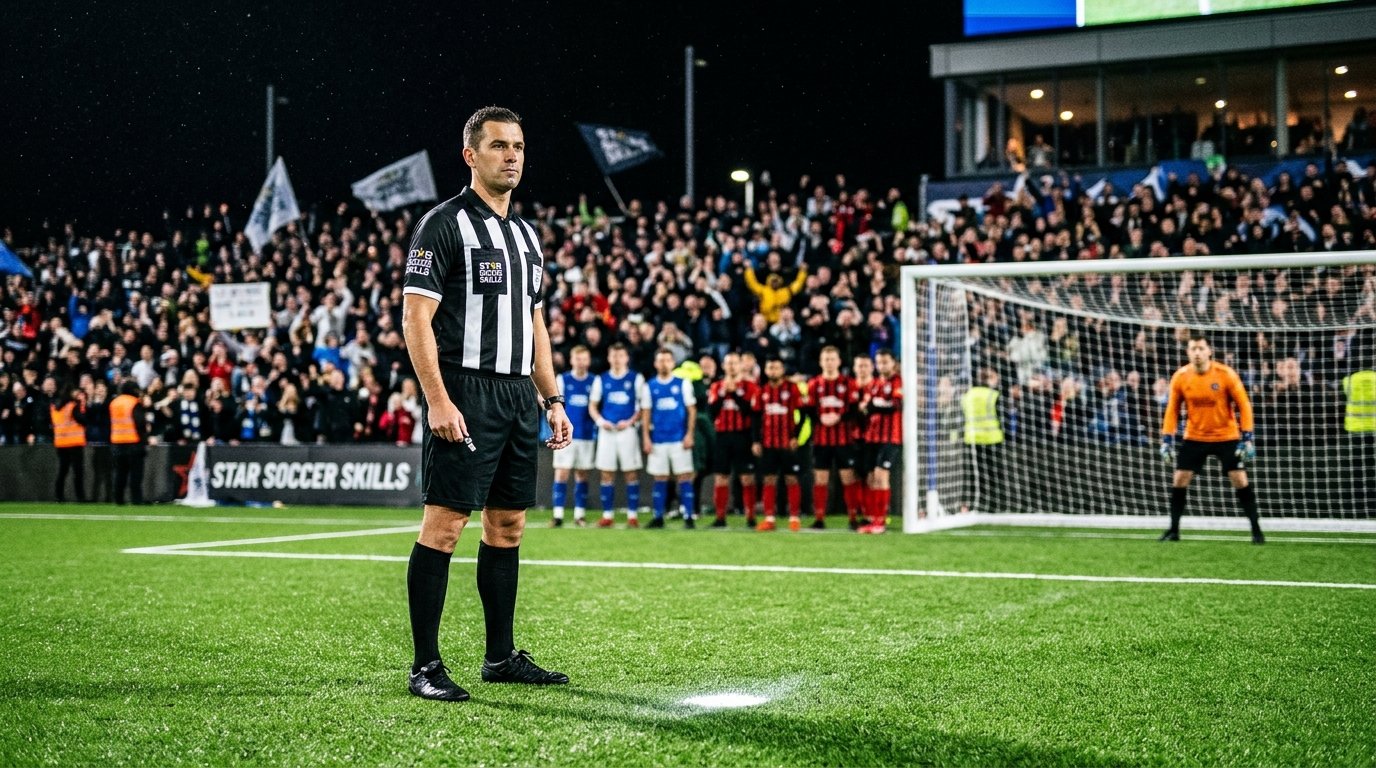
A penalty shootout decides the winner of a knockout match that is still level after extra time. The referee runs the shootout on the field, and every kick follows the same set rules.
The penalty spot is also called the penalty mark. The penalty arc is the curved line drawn 10 yards (9.15 m) from the penalty mark. Every other player must stand outside it until the ball is in play.
Key Takeaways
- The penalty spot sits 12 yards (11 meters) from the goal line.
- A penalty shootout decides a knockout match still level after extra time.
- The referee runs the penalty shootout from the first coin toss to the final kick.
- The penalty arc sits 10 yards (9.15 m) from the penalty mark.
- Only the kicker and goalkeepers may stand near the mark during a kick.
Where the Penalty Spot Sits on the Field
Measure from the middle of the goal line, not from a post, and the spot is 12 yards out. The penalty mark is 12 yards, or 36 feet, from the midpoint of the goal line.
The penalty area is the large box in front of each goal. Its side lines sit 16.5 m (18 yd) from the inside of each goalpost, and they run 16.5 m (18 yd) into the field.
The penalty mark never moves, so every penalty kick is taken from the same spot.
The Penalty Mark Measurement
A penalty kick is taken 36 feet from the goal line. Use a tape measure from the midpoint, and check both sides before you paint the mark. The table below shows the main field sizes in yards, feet and meters.
| Measurement | Yards | Feet | Meters |
|---|---|---|---|
| Penalty mark to goal line | 12 yd | 36 ft | 11 m |
| Penalty area depth | 18 yd | 54 ft | 16.5 m |
| Goal width between posts | 8 yd | 24 ft | 7.32 m |
The Penalty Area Lines
The penalty area lines show where a foul must happen for a penalty to be awarded. The box runs 54 feet into the field from the goal line. The goal itself is 8 yards, or 24 feet, wide between the posts.
Mark the spot with a dot about 6 inches across so the ball can sit on its center.
Why a Penalty Is Awarded
A penalty is a free kick that the attacking team earns when a defender fouls inside their own box. The foul must be a direct free kick offense committed inside the penalty area while the ball is in play.
The offense counts anywhere inside the penalty area, even when the ball is outside it. Referees look at the defending team’s actions in that zone, not at where the ball sits.
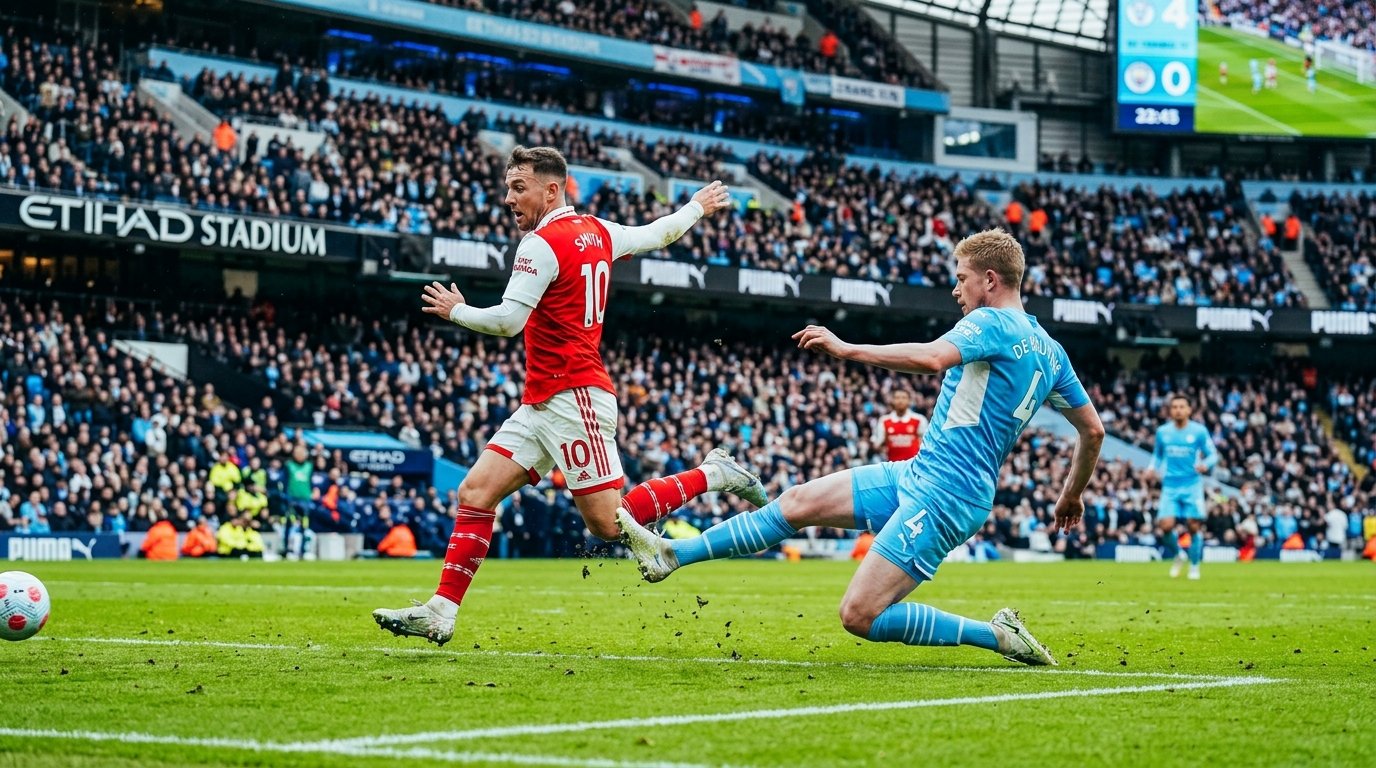
Common offenses that lead to a penalty include:
- Tripping an opponent
- Pushing an opponent
- Holding an opponent
- Making a careless tackle
- Handling the ball as a defender
- Throwing an object at an opponent
The penalty arc keeps defenders a fixed distance from the mark during the kick. That gives the kicker a clear shot and gives the goalkeeper a fair chance.
Referees judge whether the contact was careless, reckless, or excessive. Identical contact outside the box is only a free kick.
Rules for the Kicker and the Kick
The kicker has one touch, and the first rule is that the ball must not move before the kick. The ball must be stationary before the kick, with no movement before the player strikes it.
The rules of a penalty in football cover the ball, the kicker, and the other players. Each step has a set order, and the referee checks each one before the penalty kick is taken.
Ball Placement and Who Can Stand Where
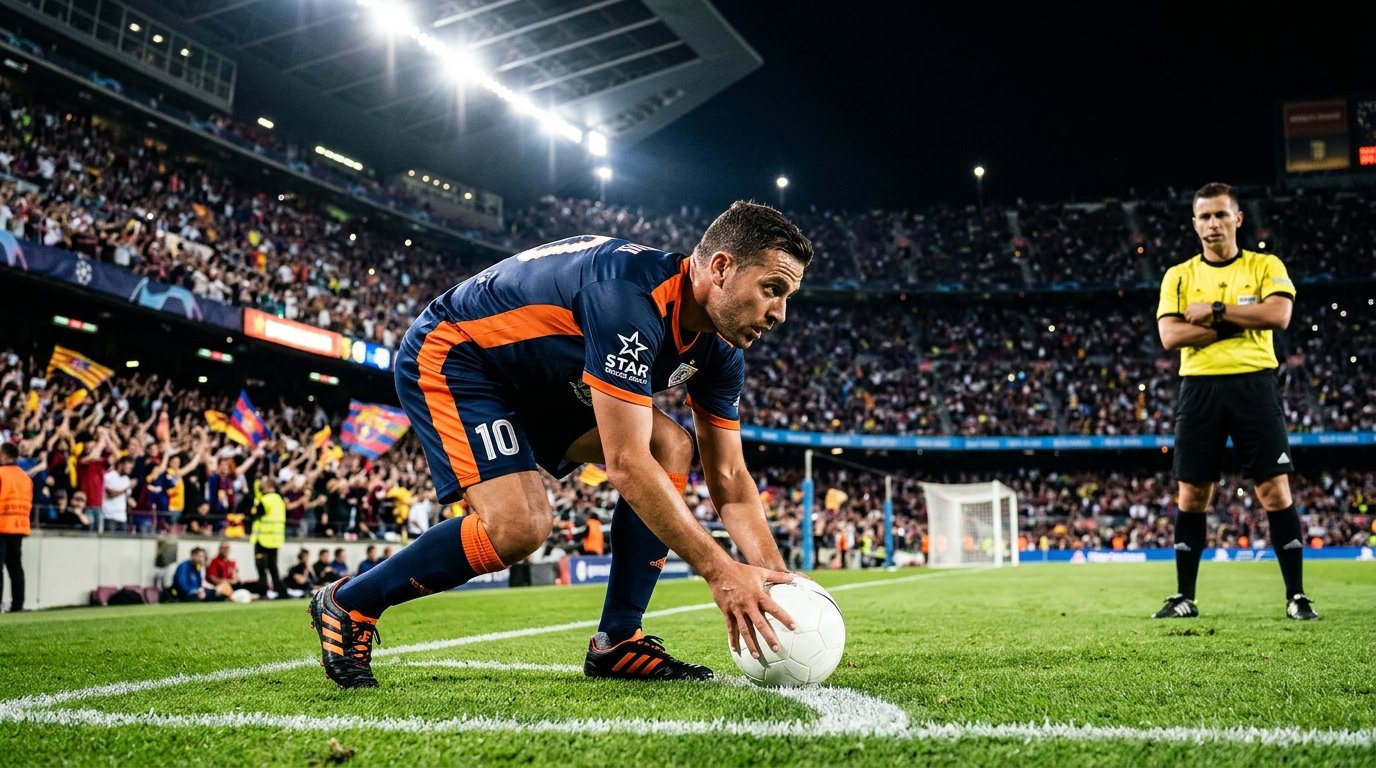
Part of the ball must touch or overhang the center of the penalty mark. Every player other than the kicker and goalkeeper must stand at least 10 yards from the penalty mark.
Follow these steps for a legal kick:
- Identify the kicker before the kick begins.
- Place the ball on the penalty mark.
- Wait for the referee’s signal.
- Kick the ball forward. A backheel is allowed if the ball moves forward.
- Do not touch the ball again until another player touches it.
Touching the Ball Again and Feints
A kicker who touches the ball again before another player does gives the defending team an indirect free kick. A kicker who feints after the run-up is cautioned.
The kick is complete when the ball stops moving, goes out of play, or the referee stops play for an offense. A rebound off the post or crossbar still cannot be touched by the kicker until another player touches it.
Goalkeeper Limits During a Penalty Kick
The goalkeeper has to stay on the line until the ball is struck. Leaving the line early is a common reason for a retake.
At the kick, the goalkeeper must keep at least part of one foot touching, in line with, or behind the goal line. The penalty rules for goalkeepers in football center on where the feet stand until the kick. A soccer goalie can use their hands inside the penalty area, but not after a teammate’s deliberate kick or direct throw-in.
A goalkeeper must follow these rules during the kick:
- Face the kicker.
- Stay between the goalposts on the goal line.
- Do not touch the posts or the crossbar.
- Avoid any delaying tactic.
- Move freely once the ball is kicked.
A goalkeeper who offends causes a retake when the kick is saved or missed. The first offense in the game brings a warning, and later offenses bring a caution. A save also counts as the touch that frees the kicker.
If the goalkeeper moves early and the kick goes in, the goal still counts. The referee still acts on the offense.
How a Penalty Shootout Works
A shootout starts with a coin toss, not with a kick. A penalty shootout follows only a drawn match after extra time, and only when competition rules require a winner.
The referee tosses a coin to choose the goal. The winning team then picks whether to take the first or second kick in the penalty shootout.
Setting Up the Shootout
Each team takes five alternating kicks. The referee keeps the order and records each result. The table shows each stage in order.
| Stage | What happens | Rule |
|---|---|---|
| Coin toss | The referee tosses a coin to choose the goal | The winning team picks first or second kick |
| First kick choice | The winning team picks who kicks first | The choice is made before any kick is taken |
| Five alternating kicks | Each team takes five kicks, one after another | Players sent off cannot take a kick, and each kicker must be different until all eligible players have kicked |
| Sudden death rounds | Kicks continue if the score is still level | Repeat rounds until one team scores more from the same number of kicks |
| Early finish | The shootout ends once one team cannot catch up | The result is decided at that point |
Kick Order and Sudden Death
Eligible players must stay in the center circle, except the kicker and goalkeepers. If the teams are still level after five kicks each, the kicks continue until one team has scored more from the same number of kicks.
Early Finish
A shootout can end before every player has kicked. Warnings and cautions from the match do not carry into the shootout.
When a Retake Is Ordered
Most infringements change the restart, but the outcome depends on which team committed the offense. If both teams commit an offense, the kick is retaken.
Encroachment means a player moves too early, before the ball is kicked. A goalkeeper can pick up the ball after touching it with the feet, but only if no teammate has kicked it back.
The result depends on the offense. Use this list to see which outcome applies:
- Goal: no offense affects the kick and the ball scores.
- Retake: both teams offend, or an outside agent touches the ball on its forward path.
- Retake: a defender enters early and the kick is missed or saved.
- Goal disallowed: an attacker enters early and the ball scores, so the defending team gets an indirect free kick.
Check which team committed the offense first, since that decides the result. A goal is only lost when the attacking team caused the problem. A kick is never retaken for a goal that the offense did not affect.
How Goalkeepers Read the Kick
Goalkeepers have less time than it seems, so most of the save happens before the ball is struck. A goalkeeper has only a fraction of a second to react to the kick.
A penalty shootout in football tests how well a goalkeeper reads the kicker. A shot from 12 yards arrives quickly, and a shot aimed high and central carries the highest risk of going over the bar.
A planned guess beats a delayed read.
Reading the Kicker’s Approach
Goalkeepers can watch the kicker’s hips and plant foot. These body parts often give clues about the direction before the ball is struck.
Goalkeepers can also use notes on a kicker’s past kicks. Patterns across several shootouts can help a goalkeeper choose a side before the kick.
Distraction and Delay
Legal delay before the kick is another option, but only within limits. A short pause on the line can unsettle a kicker, as long as the goalkeeper stays within the rules.
A goalkeeper who delays the kick too long risks a caution.
Conclusion
The penalty spot sits 12 yards from the goal line, and a shootout is the tiebreaker after a drawn knockout match. The penalty shootout rules also set how each kick is taken and who may stand where.
The next step is to read the official rules before your next match. Knowing the steps for the kicker and goalkeeper will help you follow each kick with confidence.