What Was Diego Maradona’s Hand of God Goal?
Can a goal count when a player scores it with his hand? At the 1986 world cup, one goal made that question famous. The Hand of God was a handball goal that Diego Maradona scored for Argentina against England.
The goal came on June 22, 1986, in a quarter-final at Estadio Azteca in Mexico City. Argentina won the match 2-1 over England. The referee did not see the handball, so the goal was allowed to stand.
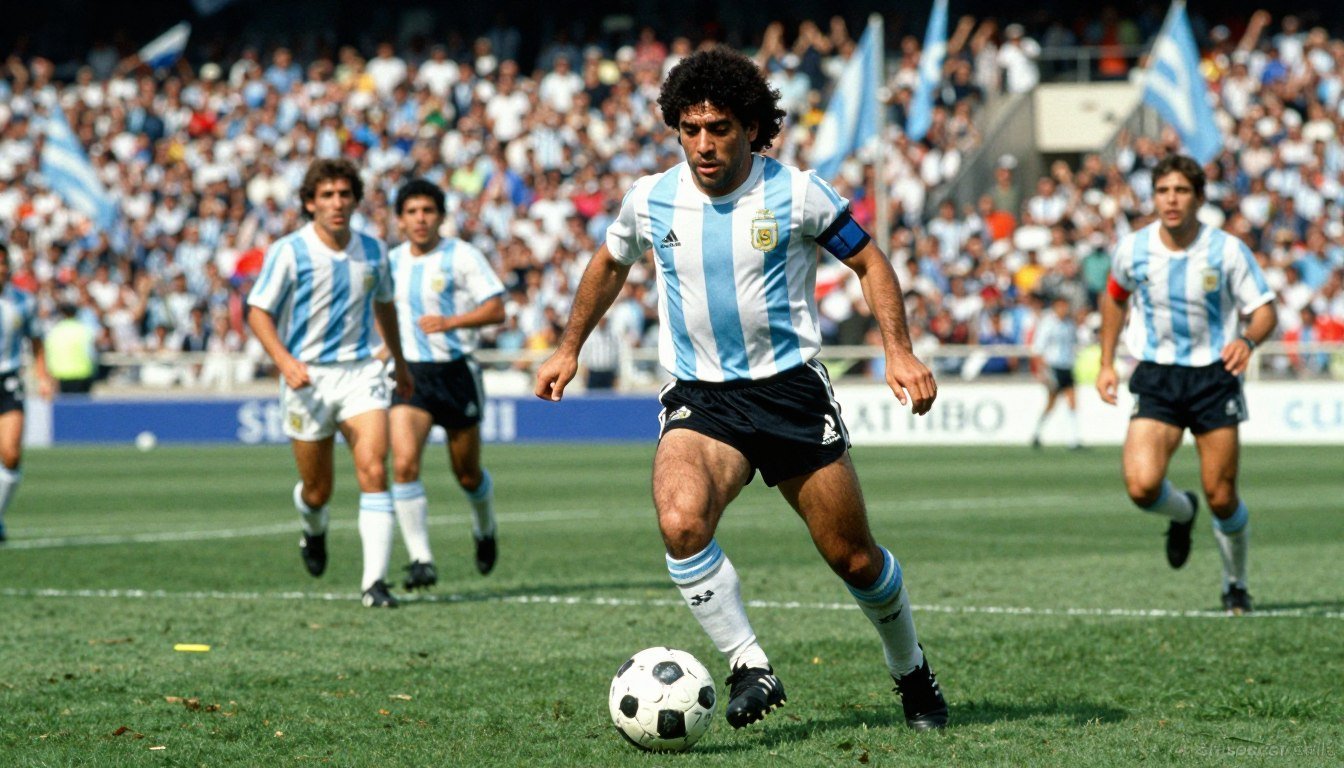
Maradona punched the ball with his left hand, and neither the referee nor the linesman saw it. VAR, or the video assistant referee, is a review system that lets officials check goals and fouls on video. VAR did not exist in 1986, so no one could check the play that way.
Maradona later said the goal came a little from his head and a little from the hand of God. That phrase gave the goal its name. The controversy has lasted for decades, and the goal is still part of soccer history.
Key Takeaways
- Diego Maradona used his left hand to score against England at the 1986 world cup.
- Argentina won the quarter-final 2-1 at Estadio Azteca on June 22, 1986.
- The referee and linesman missed the handball, and no VAR existed to check it.
- Maradona admitted the handball on Argentine television in 2005.
- Under today’s rules, VAR would likely disallow the goal.
How the Goal Happened on the Pitch
Six minutes into the second half, the ball dropped into the England penalty area. Maradona went up against goalkeeper Peter Shilton, who stood about 8 inches taller. Several players jumped for the ball in the crowded box.
Maradona’s left arm was the one detail nobody saw clearly. The play moved fast, and the contact happened in a crowd of bodies. These steps show the order of the play:
- Steve Hodge tried to clear the ball, but it looped high toward the England goal.
- Maradona rose with his left arm stretched out while Shilton came off his line.
- The ball hit Maradona’s fist, and he kept running toward the ball.
- The ball dropped over Shilton and into the net.
- Maradona ran off and glanced at the referee and linesman.
The ball touched Maradona’s fist before it went in, and that touch decides the whole goal.
Maradona’s raised arm is easy to miss in real time. Check the replays from behind the play in soccer, because the hand is hidden from that angle.
Why Maradona Called It the Hand of God
Maradona’s first answer, given to reporters after the game, is where the name came from. First words matter here, because the phrase stuck and is still used for any goal scored with a hand. The name comes from Maradona’s own words, not from fans or reporters.
Maradona’s First Words After the Match
Maradona said the goal came a little with the head of Maradona and a little with the hand of God. He is called Hand of God because of that phrase. The words were spoken in Spanish, and English reporters carried them into the wider world.
The Admission Years Later
In 2005, Maradona admitted on the Argentine television program La Noche del 10 that he had scored with his hand. Peter Shilton rejected the apology as too late. The admission did not change the score, but it changed how people talk about the goal.
In his later autobiography, Maradona wrote that the hand belonged to Diego, not to God. Treat the 2005 admission as the final word on what happened on the pitch.
Why the Goal Was Allowed to Stand
The goal counted because the referee and linesman did not see the handball. Under the 1986 rules, no review system existed to check it. Did not see is the whole reason, and the rest of the story follows from it.
In 1986, the referee could only rely on what he and his linesman saw during the play. That meant the goal was allowed to stand, even though the hand had touched the ball.
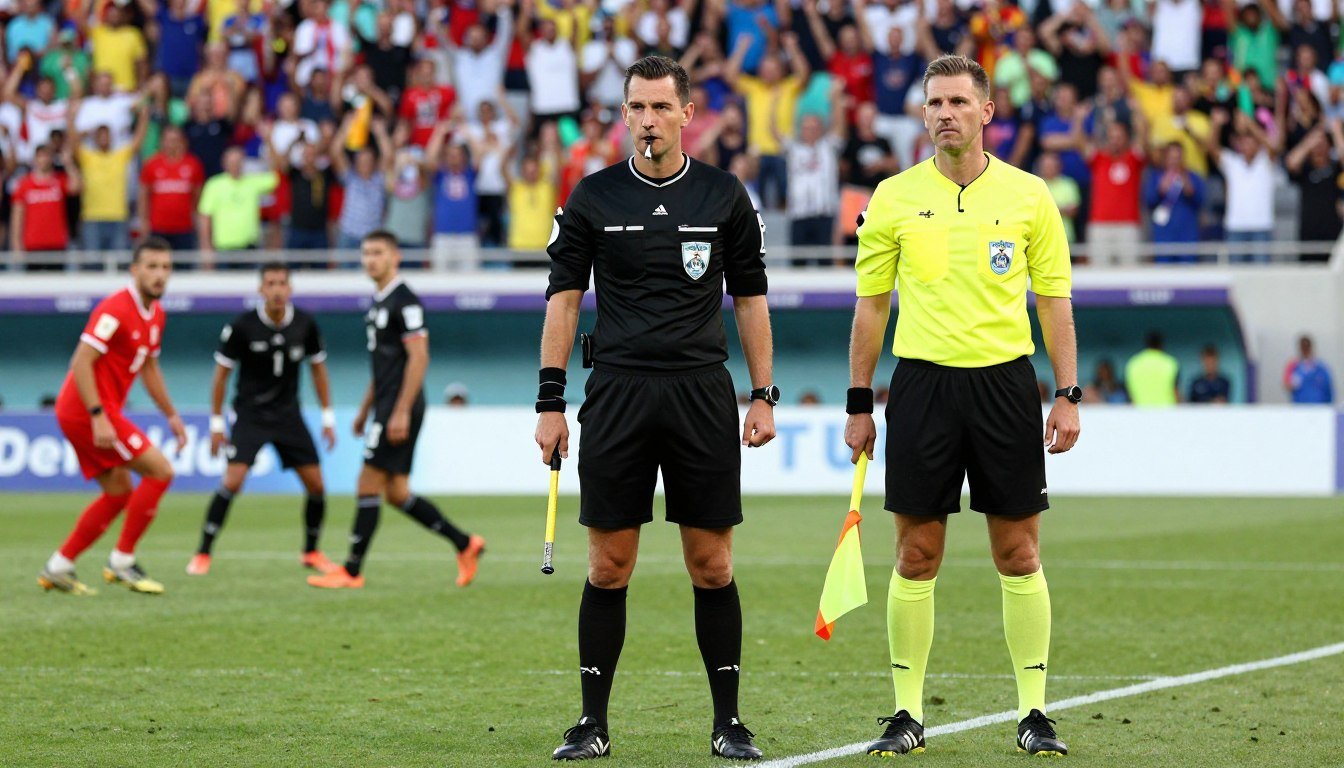
What the Referee and Linesman Saw
Referee Ali Bin Nasser was close to the play, but the angle hid the hand from his view. The linesman was not in a good position to see the contact. Officials relied on sight alone, and sight missed the fist.
The Offside Question and the Rules of the Time
Maradona would have been offside in the normal sense, but offside was not called. Under the 1986 offside rule, a player was not offside when the ball last came off an opponent. The ball came off an England player, so the offside question did not apply.
| Check | 1986 rules | Today with VAR |
|---|---|---|
| Video review | None, officials relied on sight | VAR can check goals on video |
| Handball in the build-up | Not reviewed, so the goal stood | VAR may review a possible attacking handball |
| Offside | Not offside when the ball last came off an opponent | Same principle, checked with video |
| Final say | Referee on the field | Referee keeps final authority |
Why There Was No Review
England protested to the referee after the goal. He spoke with the second linesman, who confirmed the goal, so it stood. No one could replay the moment on a screen during the game.
Remember that the offside question was resolved by the ball’s last touch, not by the position of the players.
The Goal of the Century Four Minutes Later
Four minutes after the first goal, Maradona picked up the ball near his own half and ran the length of the field. The second goal came from the same player and the same match, but it was built on skill alone. Few goals in soccer are remembered this clearly.
A 2002 FIFA poll voted this second goal the Goal of the Century. The run covered about 60 yards, and Maradona passed several England defenders on the way.
He turned in a pirouette near the edge of the box and then sprinted past the last defenders. The goalkeeper could not stop him, and he finished the goal past him. The stadium went silent for a moment, then the crowd burst into cheers.
Some English fans also celebrated the goal, which says a lot about how much the run impressed people. Argentina’s lead grew on the strength of that single moment. Compare the two goals side by side before you decide which one you remember.
The Falklands War and the Symbolic Revenge
Four years before the match, Argentina and Britain had fought the Falklands War. That conflict gave the match extra feeling for fans on both sides. The rivalry between Argentina and England was already sharp before June 1986.
The Falklands War was fought in 1982. It ended with a defeat for Argentina, and many Argentine people felt the loss for years. The war made every meeting between the two teams more than a game.
Maradona later described the goal as a kind of symbolic revenge for the war. He did not say that the goal changed anything in the conflict. His words showed how deeply the war still stayed with him.
Maradona’s later writing about the English players showed the same anger. Fans in both countries held the rivalry for years after the match. Keep the political context separate from the handball question when you judge the goal.
What Would Happen to the Goal Today
Today the goal would be disallowed, because VAR checks for handball before a goal stands. Disallowed is the key word, because the review happens before the restart. A goal scored with the fist is called handball, and VAR can call it off.
How VAR Would Have Handled It
VAR may review a goal for a possible attacking-team handball in the build-up, but only when there is a clear and obvious error or a serious missed incident. The referee makes the first decision and keeps final authority. A replay from behind the play would show the fist touching the ball, which the officials missed in 1986.
Other Handball Rule Changes
The modern handball rules also look at more than the touch itself. Officials check the following points when they judge a handball:
- Whether the hand or arm movement was deliberate
- Whether the arm made the body bigger than it was
- Whether the arm was above shoulder height
- Whether the touch led straight to a goal or a scoring chance
An accidental touch close to the body is treated very differently from a hand thrown into the ball. A review of the Maradona goal would focus on the fist and the arm position. Expect a review to take time, but the answer to a handball check is usually clear on replay.
Other Handball Goals Compared With the Hand of God
Lionel Messi scored a handball goal for Barcelona on June 9, 2007, in a match against Espanyol. That goal is the closest club example to the Hand of God, and it also stood as a goal. Club matches and world cup matches followed different review rules in that era.
Several handball incidents in later years show how much the review system changed. The table below lists the cases with the year, the player, the match and the result.
| Player | Year | Match | Outcome |
|---|---|---|---|
| Diego Maradona | 1986 | Argentina vs England, World Cup quarter-final | Goal stood |
| Lionel Messi | 2007 | Barcelona vs Espanyol | Goal stood |
| Thierry Henry | 2010 | France vs Ireland, World Cup play-off | France qualified |
| Luis Suárez | 2010 | Uruguay vs Ghana, World Cup quarter-final | Red card, Ghana missed the penalty |
Messi and Henry in Europe
Messi’s goal came in a league-style match, and the goal counted under the rules of that time. Thierry Henry’s cross in the 2010 World Cup play-off was handled before it led to a goal. France went on to qualify, and the handball became one of the best-known cases in European football.
Suárez and the Modern Hand of God
Luis Suárez stopped a goal with his hand in the 2010 World Cup quarter-final against Ghana. He was sent off with a red card, and Ghana missed the penalty that followed. The handball was not a goal, but it was a deliberate act that changed the match.
Compare these incidents by whether a review existed, since that is what separates them most.
The Shirt and Ball Sales
The shirt Maradona swapped with Steve Hodge in the tunnel became one of the most valuable pieces of sports memorabilia. The swap happened after the match, when the players shook hands and traded kits. Valuable is the word that fits the shirt best.
The shirt sold at auction in May 2022 for £7.1 million. At the time, that set a record price for sports memorabilia, and fans around the world noticed the sale.
The match ball had a different path. An earlier auction for the ball failed to sell it, and the ball was later offered again. It had once belonged to referee Ali Bin Nasser, which adds to its interest for collectors.
The ball sold in August 2026 for $3.3 million. Treat auction prices as a sign of the goal’s fame, not as a judgment of the play.
Why the Goal Still Matters to Fans
Few goals still produce strong feelings decades later, and this one does. The phrase Hand of God has spread into other sports, where people use it for any goal that comes through an unfair act. Spread is the right word, because the phrase now lives beyond soccer.
The 1986 world cup was Argentina’s second title. That win is one reason the goal stays close to the hearts of Argentine fans, who still speak about it with pride.
English fans feel differently. Many still resent the handball, yet some respect the run that followed. Their mixed feelings are part of why the goal stays in the news.
Maradona died in 2020 at age 60. Many fans now say his skill was the greater story, and the second goal is the proof. Watch the goal and the second goal together to see why both still matter.
A Fan’s View From the Stands
The crowd rose to its feet before anyone knew what had happened on the pitch. Noise filled the stadium as the ball went in, and fans began to cheer. Before anyone agreed on what had happened, the celebration had already begun.
The match was played at Estadio Azteca in Mexico City, a stadium that had been a refuge after the 1985 earthquake. Many people in the crowd had lived through that disaster, so the match felt like a moment of release.
The Stadium Atmosphere
Fans in the stands saw the goal from a distance and could not see the hand clearly. The confusion lasted for a short time, and the crowd kept cheering. The table below shows the key moments in order.
| Moment | Time | Crowd reaction |
|---|---|---|
| First goal | Six minutes into the second half | Loud cheers from Argentina’s fans |
| Second goal | Four minutes later | Stunned silence, then loud cheers |
| Final whistle | End of the match | Argentina’s fans celebrated the 2-1 win |
Hearing the Goal Argued Over
Fans still argue about the first goal in pubs, online and at family dinners. Some call it cheating, and others call it a clever act of luck. Many fans who were at the stadium say the second goal ended the argument for them.
Recall the second goal as the moment the whole stadium agreed.
What to Take Away From the Hand of God
The Hand of God shows how one moment can carry both a rule breach and great skill. Both facts stay true, even when fans want to pick only one. Judge the illegal goal and the Goal of the Century separately.
The match gives three lessons that still matter in football today:
- Rules are judged by the standards of the time, so the 1986 decision was made under 1986 rules.
- A review system gives officials a second chance to get a key call right.
- Skill and cheating can happen in the same match, and fans should judge each separately.
A goal can break a rule and still be a great goal, and fans can judge each part on its own.
The history of the match will stay with fans for a long time. Each lesson leads back to the same question about fairness and skill. Judge the two goals separately before deciding how to remember the match.
Conclusion
The Hand of God and the second goal together made one match unforgettable. One goal broke the rules of its day, and the other still stands as a great run.
FAQ
Did Diego Maradona admit to the hand of God?
Did Messi score a Hand of God?
Why did Maradona’s Hand of God goal count?
Was Maradona offside Hand of God?
Sources
- England vs. Argentina History: Every Head to Head Match Between the World Cup Rivals – Lists the dates, competitions and results of England and Argentina meetings, including Argentina’s 2-1 win in the 1986 World Cup quarter-final.
- Video Assistant Referee (VAR) protocol – Sets out how VAR may review a goal for a possible attacking-team handball, with the referee keeping final authority.