Why Messi Walks During Games: A Tactical Breakdown
Have you ever watched Lionel Messi stroll while the whole game rushed past him?
A player who walks through most of a match can still decide it. Messi is the clearest case. Near the center line, he waits while play moves around him, then moves at exactly the right second.
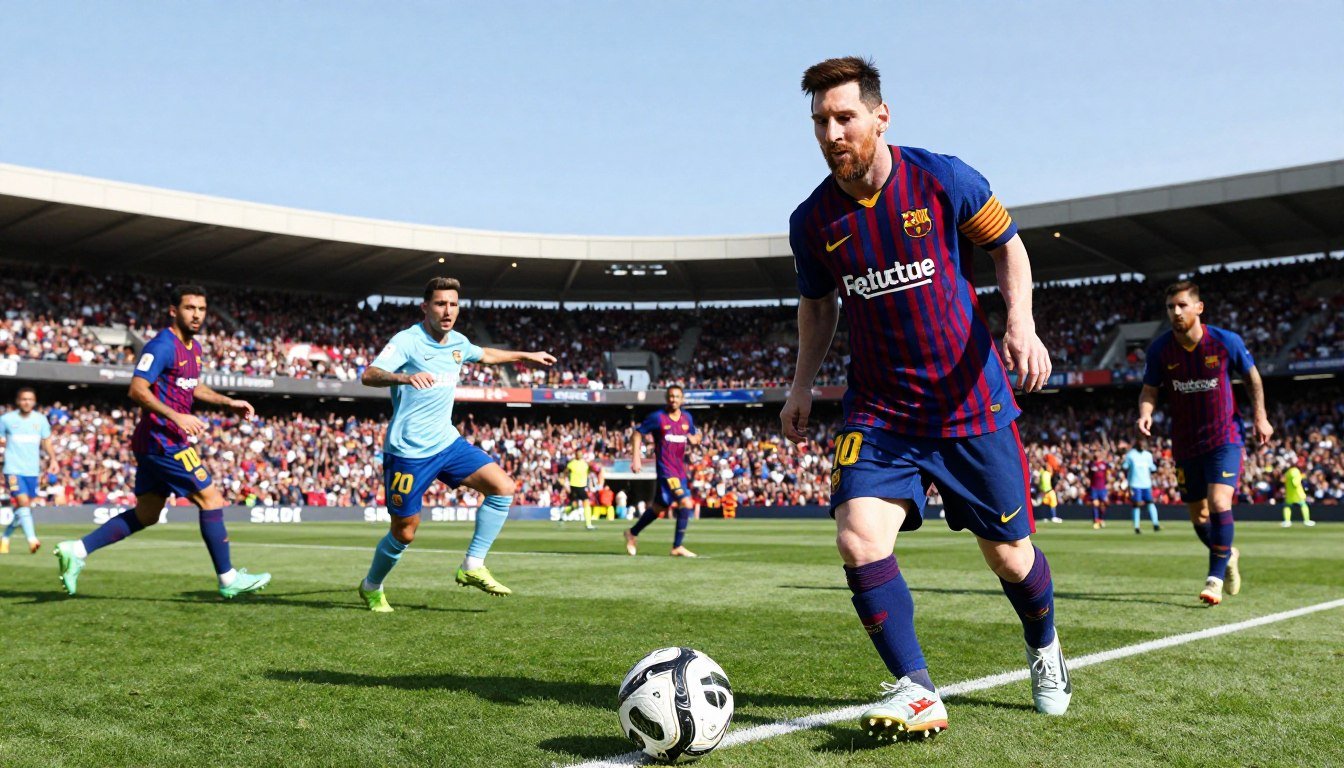
The habit is not new. It has run through his career since his Barcelona years, long before Inter Miami. Many fans think he has stopped trying, but the walk is part of how he plays.
A pocket of space is an open area between the defensive lines where a player can receive the ball without a direct marker. Messi uses walking to find these pockets.
Key Takeaways
- Messi walks for long stretches, and the walk is a tactical choice.
- His walking share is measured by distance, not by minutes.
- He studies the defensive shape early in each match.
- He saves energy for short, decisive bursts.
- Opponents must choose between marking him and holding their line.
- Watching where he stands shows the habit at work.
Below, we cover energy management, match awareness, and the timing of his entry into play. Watch his first ten minutes next time and track where he stands, not where the ball is.
How Much Does Messi Walk in a Game?
Messi walks for roughly 64% of his distance at the 2026 World Cup. That means most of the ground he covers in games is at a walking pace, not a run.
Walking share is a simple number to check. It turns a feeling that he is not running into a figure you can compare.
Walking share tells us where a player’s effort goes.
Walking Share Across a Tournament
On average, he covered about five miles per match. That total is the lowest among outfield players who played at least 90 minutes.
The low total does not mean he is idle. He spends his walking time choosing where to stand, and that choice shapes each attack.
Fans often compare players by goals and assists. Those numbers say little about how far a player walks, so the walking share adds a second view.
Distance Compared With Teammates
In his last eight games, Messi walked about 4.6 km per match. That is about 80% of his playing time.
Attacking teammates walked about 2.9 km per match, or about 40% of their time. The gap is wide, even among players on the same side.
For a fan watching at home, the easiest check is to count how often Messi jogs between plays. Compare any player’s walking share against the distance they cover, since minutes alone hide how little they actually run.
Why Messi Walks During Games: Reading the Game
Messi’s walking is a form of study, not rest, and it feeds his match awareness. Walking is how he reads the defense. While he moves slowly, he watches where defenders stand and where the gaps open.
Messi has said that walking helps him study how opponents position themselves. It also lets him move away from his marker when a counterattack starts.
Scanning the Defense Early
The first minutes of a match are the scanning phase, the early study of positions. A club official has described this stage as the time when Messi builds his picture of the pitch. Pep Guardiola said Messi has a map in his eyes and brain after five or ten minutes of play.
That map tells him where the space is. He looks for the half-space pocket between the defensive lines, where a pass can arrive without a direct marker.
Timing the Burst
Timing decides the moment he gets involved. He may jog back onside as a teammate advances, then sprint once the pass is coming.
When the ball is won back, the walk turns into a run. The player who studied the shape is already a step ahead.
In the 2022 World Cup, Messi walked more than three miles per game, the most of any player at that tournament. Watch where a walking player’s head turns, because that shows what he is reading.
How Messi Saves Energy for Key Moments
Messi sprints about half as often as his attacking teammates. Over his last eight games, he sprinted for about 4% of a match, while Argentina’s attacking players sprinted for about 8%.
Energy is limited, so he spends it only on short, decisive bursts. A quick run past a defender matters more than a long chase across the pitch. Many of his passes come under pressure, so the burst arrives at the right second.
| Player group | Walking share | Sprint share | Distance per match |
|---|---|---|---|
| Messi | About 80% | About 4% | About 4.6 km |
| Argentina attacking players | About 40% | About 8% | About 2.9 km |
In a World Cup qualifier against Ecuador, Messi played 97 minutes and completed four times fewer sprints than Ángel Correa, who played 25 minutes.
Since joining MLS, Messi’s dribbling has fallen by over 20%. Fewer sprints and less dribbling fit one pattern: he picks his moments rather than running all game.
Count sprints per 90 minutes rather than total distance to judge a forward’s real output.
What Opponents and Teammates Do When Messi Walks
Defenders face a choice every time Messi drifts into space. Following him pulls a defender out of position, and staying put leaves him free.
In his last eight games, 83% of Messi’s completed passes came under opponent pressure, compared with 72% for Ángel Di María. Messi gains about 1.33 meters per pass, the only attacking Argentine who gains ground with his passes.
Defenders cannot cover Messi and hold their shape at the same time.
Here is how the match tends to unfold when he walks.
- Opponents double or triple-mark him when he receives the ball.
- The defensive line must decide whether to step up or hold its position.
- Teammates run into the open space he creates behind the defense.
- Short passes break lines: 90% (104/115) of his line-breaking passes are short.
- He does not defend, so Argentina covers with nine field players while Lautaro Martínez presses to help.
Teammates who time their runs well turn that gap into a chance. If a defender follows him too far, the space behind the line opens for a teammate.
Conclusion
Messi’s walking works because he is always thinking. It is a tactical choice tied to reading space, not a sign that he has stopped working.
The habit shows that a player does not need constant motion to shape a match. Coaches can use that lesson by asking their forwards to study the shape before they move.
Pick one player in your next match and track how often he walks before a key moment.
Leave a Reply