Who is the fastest soccer player in the world?
How fast can a soccer player really run during a real match? Kylian Mbappe holds the highest verified top speed at the 2026 World Cup, at 37.6 km/h. The answer depends on which tracking data you trust, so we checked the numbers carefully.
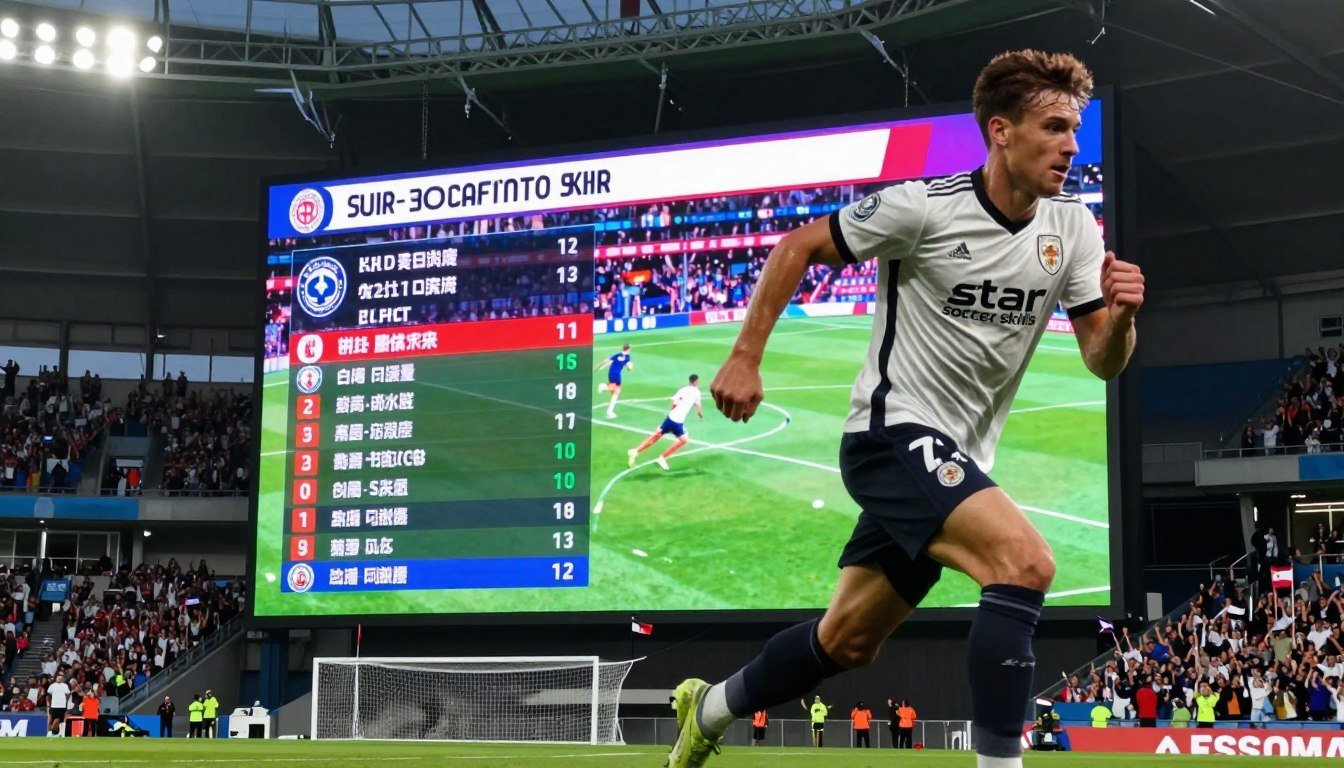
Top speed is the highest speed a player is clocked at during a match, measured in km/h by tracking systems. Speed helps on defense and attack, because a quick defender can recover ground and a quick attacker can beat a defender in a race. This list covers players in the 2025-26 season and the 2026 World Cup.
Key Takeaways
- Mbappe holds the top speed at the 2026 World Cup, at 37.6 km/h.
- Tracking systems measure top speed in km/h during matches.
- Anthony Gordon’s 37.92 km/h is the highest Champions League mark.
- Speed figures from different leagues can differ slightly.
- Compare players only within the same tracking system.
Speed figures from different leagues differ slightly, so compare players within the same tracking system when in doubt.
Who is the fastest soccer player in the world right now
The fastest recorded player right now is Mbappe at the World Cup, while Gordon holds the highest Champions League mark. On paper, Gordon’s number is higher, but the two marks come from different tournaments. Right now, the fastest soccer player in the world is Mbappe, at 37.6 km/h.
We ranked each player by his best confirmed sprint from 2025-26 league or Champions League play. That rule keeps one unusual tracked match from deciding the whole list. Gordon’s 37.92 km/h comes from club-level tracking, not from a World Cup match.
Micky van de Ven leads the Premier League at 37.38 km/h. That mark is the fastest in the Premier League since tracking began in 2020, so it is a strong benchmark for English fans.
Every player is ranked by his best confirmed sprint from the 2025-26 season, never by an average.
Gordon’s figure is above Mbappe’s, but it comes from a different competition and a different tracking setup. A club match and a national team tournament do not always share the same pitch and camera angles. That is why we keep the two marks separate.
Gordon reached his mark at about age 25, which shows that top speed can still grow after the early twenties. Van de Ven, Gordon and Mbappe all show that the fastest names are rarely the youngest.
Check the competition named next to any speed figure before comparing two players.
Who is the fastest player at the 2026 World Cup
Mbappe leads the World Cup at 37.6 km/h, with Bos and Haaland close behind. Close behind is a fair description, since the gap at the top is small. Mbappe leads the field by about 1 km/h.
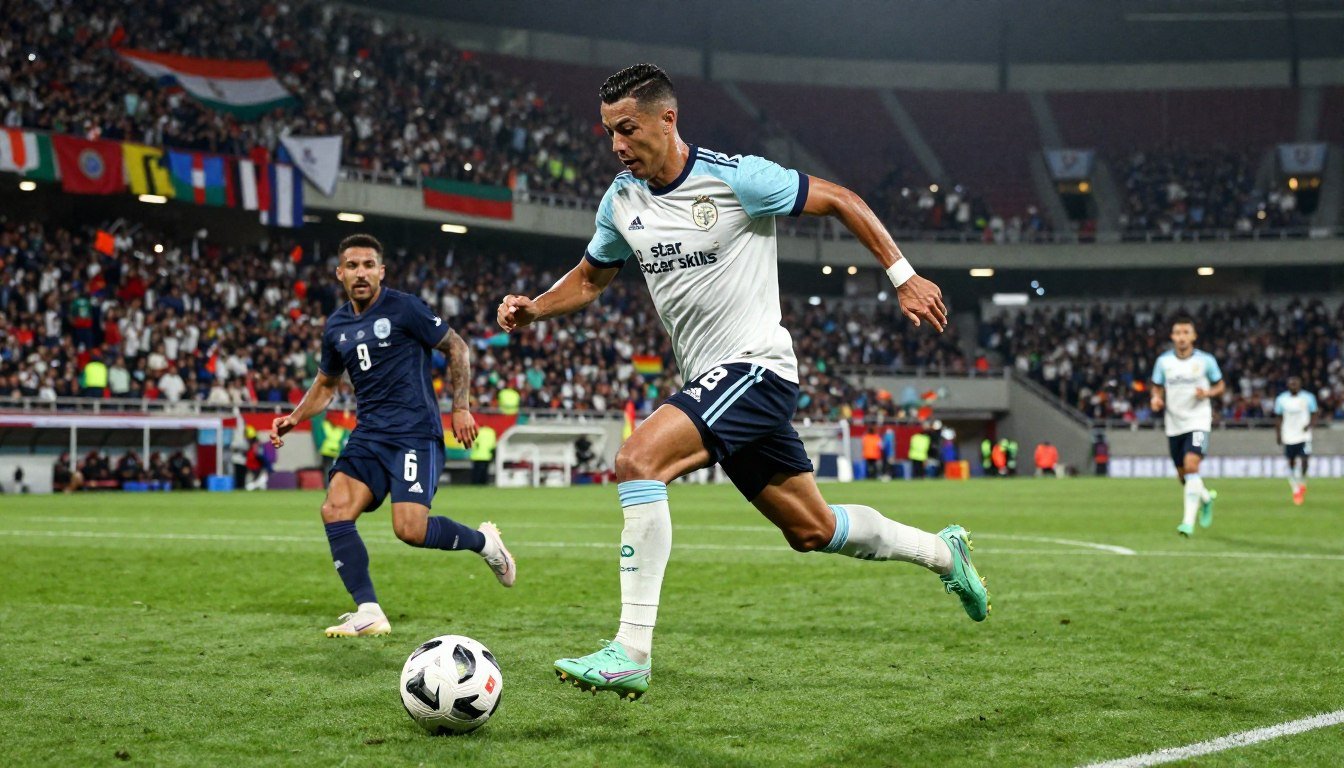
Among soccer players at the World Cup, Mbappe is the fastest, at 37.6 km/h. He reached that speed in the quarterfinal against Morocco, and he scored eight goals in six matches. His mark is the highest verified top speed of the tournament so far.
The top three World Cup sprinters
Jordan Bos reached 36.7 km/h (22.8 mph) against Turkey in the group stage. Erling Haaland reached 36.6 km/h (22.74 mph) against Iraq, which puts him third on our list.
Bos and Haaland both posted their numbers in the group stage, not in a knockout match. That makes their gap to Mbappe look wider than it may be in a close knockout game.
The rest of the tournament leaders
Abdukodir Khusanov recorded 36.5 km/h (22.68 mph), and Jules Kounde reached 36.1 km/h (22.43 mph). Both players sit in the top five for the tournament so far.
Lionel Messi recorded 30.9 km/h at the 2026 World Cup. That figure is far lower than the leaders, and it shows how much the role on the pitch changes the number.
Group-stage speeds are often lower than knockout-stage sprints, so compare like with like.
How the top Premier League and club sprinters compare
Van de Ven holds the Premier League mark at 37.38 km/h. Only a few players reach that level in club football. Gordon’s 37.92 km/h is the best club mark we found in the Champions League.
The table below shows the best club marks we used, with each player’s club and league. The numbers cover club matches, so they do not match the World Cup list.
| Player | Club | League | Top speed (km/h) |
|---|---|---|---|
| Anthony Gordon | Newcastle United | Champions League | 37.92 |
| Micky van de Ven | Tottenham Hotspur | Premier League | 37.38 |
| Vinicius Junior | Real Madrid | La Liga | 36.21 |
| Erling Haaland | Manchester City | Premier League | 36.20 |
| Bazoumana Toure | Hoffenheim | Bundesliga | 35.98 |
Premier League leaders
Van de Ven’s 37.38 km/h is the fastest Premier League mark in our tracking data. Haaland reached 36.20 km/h against Arsenal, which places him high on the English list.
Haaland’s Arsenal sprint is a different match from his World Cup sprint, so the two numbers do not conflict. Each figure is correct for its own game.
Champions League and La Liga entries
Vinicius Junior recorded 36.21 km/h, the fastest mark in La Liga per Mediacoach data. Nuno Mendes reached 36.10 km/h in a Champions League match.
Bazoumana Toure posted 35.98 km/h in the Bundesliga, which is the lowest figure in our table. Even so, it stays above the level most players reach in a full match.
A gap of about 0.5 km/h between two players is small enough that tracking systems can explain it.
What separates a fast winger from a fast defender
A fast defender must recover ground, while a fast winger must beat a defender in a single move. Different jobs need different kinds of speed. Position decides which speed matters most.
We grouped the fastest players into three role types, and each type shows a different use of speed. Hakimi and Van de Ven are the fastest defenders on our list, and both cover long distances to stop a runner.
- Defenders: Hakimi and Van de Ven, who run back to stop a runner behind the line.
- Wingers: Doku, Leao and Williams, the fastest wingers above 36 km/h.
- Strikers: Haaland, who needs open space to reach his top speed.
Hakimi recorded 36.40 km/h in the Champions League and 35.60 km/h in Ligue 1. The gap shows that competition matters, since a fast match in Europe can push a number higher.
Wingers like Doku and Leao win races to the byline, so their first steps often matter more than their peak speed. Their short bursts decide many one-on-one moments.
A striker needs a long run in open space, so top speed matters more than first steps.
Acceleration and top speed are different skills
Acceleration is the first few steps from standing, while top speed is the peak in full stride. Both skills help a player, but they are not the same. Elite acceleration can take a player from standing to near-maximum speed in under three seconds.
Top speed is usually reached after covering 20-30 metres in open space. That is why a player who starts fast may not reach the highest number on a short run.
Vinicius Junior often shows his strength in his first steps, which help him beat a defender in a tight space. Haaland has a longer build, so he tends to build speed over a longer run and reach a high peak in open space.
Acceleration improves through short resisted sprints and explosive strength work. Top speed improves through longer sprint intervals that focus on stride length.
In tight one-on-one moments, acceleration usually decides the winner. A defender rarely has time to reach full speed in a duel.
A player who wins quick duels may still have a modest top speed, so read both numbers.
How football speed gets measured
Top speeds come from cameras or vests that record position many times each second. Many times is the key idea, because a short sampling gap can miss the true peak. Premier League and Champions League figures usually come from optical systems.
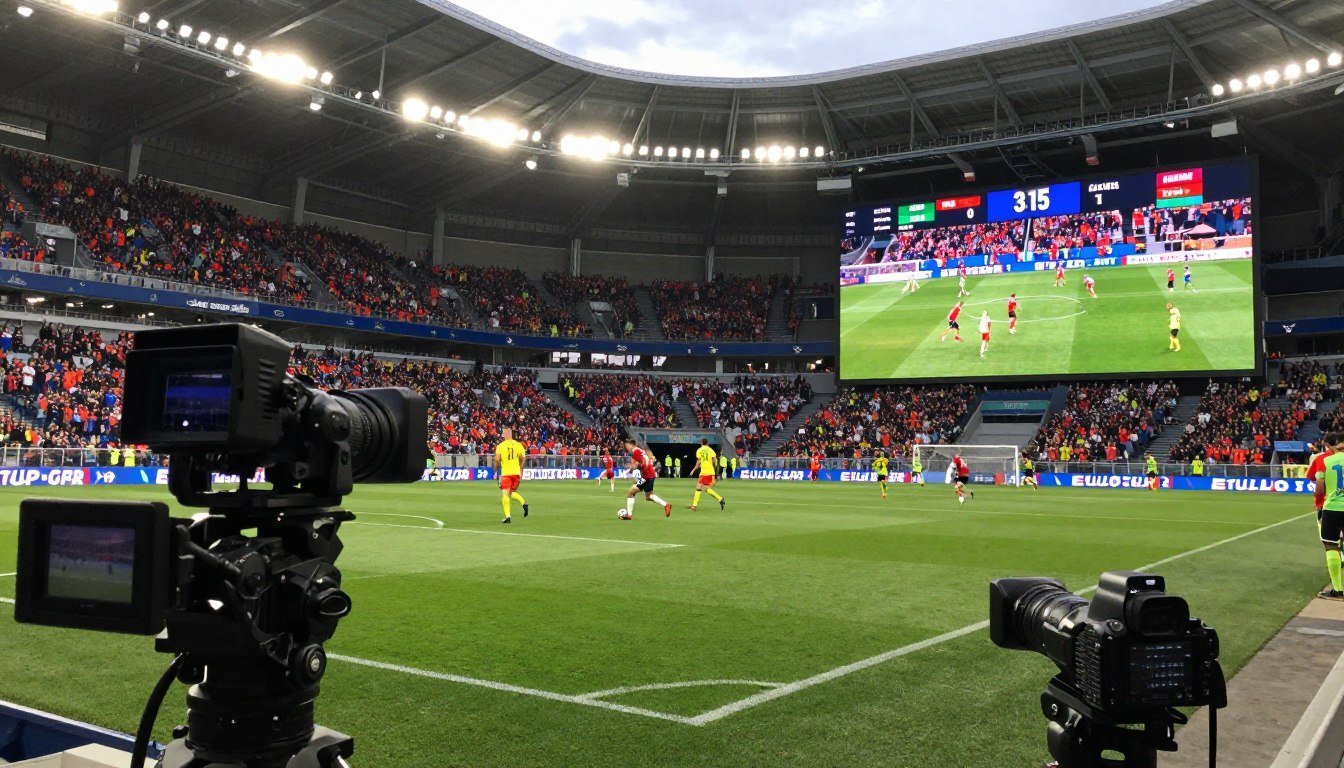
Optical tracking in stadiums
Optical tracking uses cameras around the stadium to follow the ball and every player. The system turns each frame into a position, then calculates speed from the change in position.
Optical systems do not need players to wear anything. That makes them the usual choice for league and Champions League matches, where broadcasters want clean data.
GPS vests and the data providers
A GPS vest is a small unit that sits between the shoulder blades of a player. It logs position several times each second, which gives a direct record of that player’s movement.
Opta and StatsPerform collect tracking data and pass it to broadcasters and leagues. Different providers use different sampling rates and pitch sizes, so one provider’s km/h figure may not match another’s exactly.
Compare figures only when they come from the same provider and competition.
How speed decides modern counterattacks
A counterattack often lasts only seconds, so the first runner needs pace. Seconds is all a team has to turn a loss of the ball into a chance. Transition football rewards speed more than most other attributes.
Counterattacks and pressing
A pressing team wins the ball high up the pitch, then tries to score before the other side settles. A team that presses hard often plays with a high defensive line.
A pressing team may rely on a quick defender who can recover when an attacker gets in behind. A pilot study of 20 professional footballers compared two transition game formats. One format produced higher peak velocity, sprint distance and sprint count, which show how sudden the sprints can be.
Defensive recovery runs
A high defensive line needs defenders who can recover ground when an attacker gets in behind. Without that speed, a single long ball can beat the whole back line.
Some slower teams still win through positioning. They keep their shape tight, so an opponent has fewer lanes to run into, and the lack of pace matters less.
Pace matters most in the first five seconds after a turnover.
Can players run faster than Olympic sprinters?
No footballer has been clocked at the speed of an Olympic sprinter. Clocked is the key word, since sprint records and match tracking use different methods. Elite footballers’ top speeds generally sit in the 34-38 km/h range.
The fastest football player on record in km/h is Mbappe at 37.6 km/h in the 2026 World Cup. That is a strong number for a team sport, but it is still below the best athletics sprints.
Comparing football and athletics speeds
The table compares the two worlds with both units. Athletics speeds come from timed track races, so they are not a direct match for match tracking.
| Athlete | Top speed (km/h) | Top speed (mph) | Setting |
|---|---|---|---|
| Kylian Mbappe | 37.6 | 23.36 | 2026 World Cup match |
| Lionel Messi | 30.9 | 19.2 | 2026 World Cup |
| Usain Bolt | Over 44 | Over 27.3 | Athletics sprint |
Messi and the lower tournament figures
How fast is Messi in mph? His 30.9 km/h at the 2026 World Cup equals about 19.2 mph. That figure reflects his role on the pitch and the tracking window used for that tournament.
Messi often plays a deeper or wider role than a pure sprinter, so he runs fewer long sprints in a match. The lower number does not mean he is slow in every game.
Convert km/h to mph by multiplying by 0.621 to compare with US figures.
Which young players are the fastest to watch
The next generation of fast players is already clocked above 36 km/h. Already is the important word, because these players are not waiting for a future peak. Van de Ven has shown top-speed figures above 36 km/h in recent seasons.
Van de Ven is one of the young players to watch for recovery pace. He can run back fast after his team loses the ball, which helps a high defensive line stay safe.
Anthony Gordon reached 37.92 km/h at about age 25. His strength is the first step, which lets him beat a full back in a short race along the line.
Matheus Nunes has shown strong ground coverage from midfield. He can cover both halves of the pitch, which makes him useful in pressing and in transition.
Track a young player’s top speed across two seasons before judging his pace.
The fastest players in football history
Historical speed claims rest on estimates, not on modern tracking. Estimates are the only option for older matches, since no sensors recorded players then. Tracking was not used in most leagues before 2020.
Three players are often named as the fastest of their generation. Each one has a strong reputation, but the numbers come from memory, video and estimates rather than from tracked data.
- Thierry Henry: a fast striker for Arsenal in the early 2000s, known for his pace in open space.
- Cristiano Ronaldo: a quick forward whose explosive runs were rarely measured in his early career.
- Gareth Bale: posted some of the fastest verified sprint times of the 2010s at Real Madrid.
Verified comparisons with the past are limited, because most older matches have no tracking record. That is why we treat old claims with care.
Treat any old claim as an estimate unless tracking data backs it.
Mbappe against the other fast names
Mbappe is the faster of the two, based on tracked data. Tracked is the reason, since Bale’s best marks come from older sprint records. Mbappe’s top speed matches Tyreek Hill’s 23.24 mph from 2017.
Mbappe versus Bale and Hill
Mbappe’s top speed of 37.6 km/h equals about 23.36 mph. That is close to Tyreek Hill’s 23.24 mph from 2017, so the two numbers sit within a small gap.
Gareth Bale’s verified sprint times were strong in the 2010s, yet Mbappe’s modern tracking gives a clearer picture. That is why our ranking places Mbappe ahead.
Speed in a foot race
Gareth Trainer Sandford analyzed Mbappe’s maximal sprinting speed at 10.19 m/s in the 2022-23 Champions League season. That figure comes from a different season and a different tracking window, so it does not replace the 37.6 km/h mark.
A foot race is decided by acceleration as much as top speed.
Which defenders and midfielders are fastest
Matheus Nunes records the top midfield speed at 36.7 km/h. Midfield speed is rarer than winger speed, so this mark stands out. Nunes is the fastest midfielder in our tracked list.
Top speed alone does not make a midfielder good. A midfielder also needs passing, timing and a sense of space.
Fastest defenders
Kyle Walker is a veteran defender who has played for Manchester City for many years. He shows that a defender can stay useful by reading the play early, even when speed starts to fade.
Walker’s example shows that defenders do not need the top number to be effective. Timing and positioning can make up for a small loss of pace.
Fastest midfielders
The table lists the midfielders with the highest verified top speeds in our data. Each player plays a different role, so the positions differ.
| Player | Club | Position | Top speed (km/h) |
|---|---|---|---|
| Matheus Nunes | Manchester City | Central midfield | 36.7 |
| Ryan Gravenberch | Liverpool | Central midfield | 35.6 |
| Jude Bellingham | Real Madrid | Central midfield | 35.3 |
| Fermin Lopez | Barcelona | Attacking midfield | 35.0 |
A midfielder with pace covers ground in both halves, so check the match context.
Conclusion
Mbappe is the fastest soccer player in the world at the 2026 World Cup, at 37.6 km/h. He leads the tournament, and his mark is the one to beat for now. Gordon’s 37.92 km/h is higher, but it comes from club tracking.
Before you compare any two players, check the competition and the tracking system behind each number. Then pick the rankings that match the question you want to answer. Start with the World Cup list if you want the national team view, or the Premier League table if you follow English club football.
FAQ
Who is the fastest footballer in the world?
Who’s faster than Mbappe?
Is Messi or Mbappe faster?
How fast is Messi mph?
Sources
- Acceleration-speed profile and external load across different transition game formats in professional football players: a pilot study — a study of 20 professional footballers comparing two transition-game formats, where one format produced higher peak velocity, sprint distance and sprint count, while the other produced more high-speed running and intense accelerations.