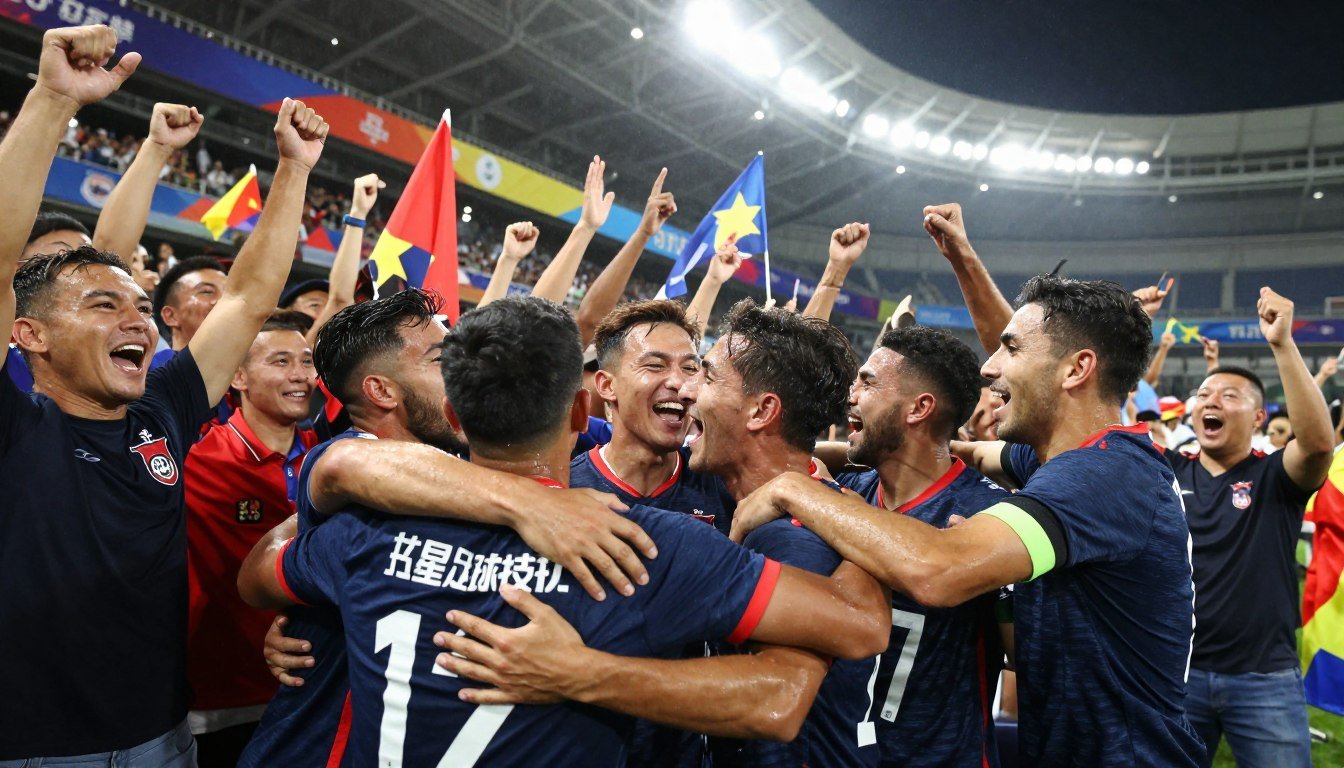
Can one player really sit at the top of every goal list? Cristiano Ronaldo holds the top spot in most current counts, with 982 official senior goals for club and country as of Oct. 23, 2026. He reached that total in 1,342 appearances.
Lionel Messi and Pelé are the next names most fans mention. The order changes from list to list, because statisticians do not count goals the same way. Some add friendlies, while others leave them out.
Check the date and the counting method behind any total you read. The same player can show different numbers from one list to the next.
Key Takeaways
Cristiano Ronaldo leads most counts with 982 official senior goals as of Oct. 23, 2026.
No governing body keeps one official list of career goals.
Friendlies, regional games and wartime matches cause most of the gaps.
Lionel Messi and Pelé are the closest names in most tables.
Always note the date and the method behind any total.
Why no single official record exists
No governing body keeps an official list of career goals. Never has FIFA published a ranking of the highest career goalscorers, so no one body sets the final number. Every total depends on which matches a statistician decides to count.
Three kinds of matches cause most of the disagreement. Friendlies are the first group. Regional competitions and wartime matches make up the other two.
Official goals are goals scored in competitive matches, such as league games, cups, continental competitions and internationals. Friendlies, youth football and reserve football are left out of that count. Some lists add the three disputed groups back in, and others do not.
A reader should expect a range of totals, not one number. The IFFHS top-level table credits Ronaldo with 982 goals as of Oct. 23, 2026, while other lists give him more.
A career total is only as good as the rules that produced it.
Treat any single number as one counting method’s result, not a universal fact.
Ronaldo, Messi and the modern leaders
Ronaldo and Messi are the two active players whose totals drive the debate. Ronaldo is ahead on most lists, but Messi stays close in every table that counts his games.
Both players have strong records for their clubs and their countries. Their totals are useful to compare only when both come from the same list and the same date.
Club and country totals for Ronaldo
Ronaldo had 836 club goals and 146 goals for Portugal as of Oct. 23, 2026. He scored 140 Champions League goals, which is the competition record.
His career rate was 0.73 goals per game across 1,342 games. That rate shows how steady his scoring has been over a long career.
How Messi’s total compares
Messi had 942 career goals in one 2026 report and 936 in the IFFHS table. He scored 126 goals in 208 appearances for Argentina as of Oct. 7, 2026.
In 2026 alone, Messi scored 40 goals in 44 appearances. That short run shows he is still scoring at a high rate.
Ronaldo Messi comparison:
Measure
Cristiano Ronaldo
Lionel Messi
Goals for country
146 for Portugal
126 for Argentina
Total career goals
982 (IFFHS and official senior count)
942 (2026 report) or 936 (IFFHS)
Games counted
1,342 club and country
208 for Argentina
Compare totals only when both come from the same counting method and the same date.
How RSSSF and IFFHS count differently
The RSSSF list puts Erwin Helmchen second because it counts regional and amateur matches. Amateur games are the reason the two tables rank players differently. The RSSSF list includes regional, reserve and amateur leagues and selections.
RSSSF is the all-time official-matches ranking of its kind. It gives Ronaldo 994 goals in 1,366 official matches as of July 19, 2026.
What RSSSF includes
Helmchen is listed with 989 or more goals, placing him just behind Ronaldo. Messi is listed at 948 goals in 1,220 matches.
RSSSF also lists Josef Bican at 950 or more goals. It shows Romário at 785 and Robert Lewandowski at 752 official-match goals.
Where the IFFHS list stops
The IFFHS list is the top-level professional table. It keeps to professional competition and leaves out the lower leagues that RSSSF includes.
Under that rule, Ronaldo has 982 goals and Messi has 936. Bican drops to 722 goals, far below his RSSSF total.
Player
RSSSF official-match total
IFFHS top-level total
Cristiano Ronaldo
994
982
Lionel Messi
948
936
Josef Bican
950 or more
722
Expect the top three names to shift by ten or more goals between the two tables.
Pelé, Bican and the disputed older records
Pelé’s 1,279 goals include exhibition games, so the official total is far lower. Guinness counts exhibition games, and the IFFHS table does not.
Pelé and Bican show why one name can have several totals. Each total comes from a different set of rules.
Pelé and the Guinness career total
Guinness World Records recognizes 1,279 career goals for Pelé in 1,363 games. A Fox Sports report explains that many of those goals came in friendlies and exhibitions, including matches against lower-level teams.
The IFFHS table credits Pelé with 762 goals. That total includes 604 for Brazil and 492 in league play.
Josef Bican and the wartime debate
Bican’s total depends on which list you use. Three counting methods give three very different numbers.
IFFHS table: 722 goals
RSSSF: 950 or more goals
FIFA estimate in 2020: 805 goals
Much of the gap comes from wartime matches in Central Europe. Some lists count them, and others leave them out.
Pelé’s totals differ by more than 500 goals between the IFFHS table and Guinness.
Ronaldo’s path to 1,000 goals
Ronaldo needs 18 more goals on the IFFHS count to reach 1,000. He is at 982 goals, so the mark is close on that list.Close is still not the same as reached.
Ronaldo said in 2024 that he wanted to reach 1,000 career goals before he retires.
Milestones already reached
Ronaldo passed Bican’s estimated 805 goals in March 2022. That moment marked a shift in how close he came to the record.
Club matches make up most of his total. He has 450 goals for Real Madrid in all competitions, including 311 in La Liga as of Oct. 23, 2026.
What still has to happen
Ronaldo must keep scoring at a steady pace to reach 1,000. His club and country matches will decide how fast he closes the gap.
Count only goals from the same source when measuring the gap.
What the record means for the GOAT debate
Totals show scoring volume, not the quality of the matches behind them. A high count shows a player scored often, but it does not show how strong the opponents were.Often is the word that the numbers really prove.
Messi scored 672 goals for Barcelona between 2004 and 2021. That is the highest total listed for a player at a single club. Pelé scored 643 official goals for Santos.
Two players with the same total can have very different careers.
The totals measure five things well:
Club scoring over a long career
National team scoring
Longevity and staying fit
Scoring rate per game
Loyalty to a single club
Judge a player on the era and competition behind the goals.
Conclusion
Ronaldo leads, but the lead depends on the counting method. A fair comparison needs the same rules for every player, not just the largest number on a page.
Pick one source, note its date and method, and use its totals consistently. That habit will keep your comparisons honest, even when new goals change the list.
FAQ
Who has the most goals in soccer in history?
Cristiano Ronaldo has the most in most current counts, with 982 official senior goals for club and country as of Oct. 23, 2026. Those goals came in 1,342 appearances. Other lists show different totals because they count friendlies, regional matches and wartime games in different ways. Check the date and the method behind any total before you compare it.
How many career goals has Lionel Messi scored?
Messi has between 936 and 948 career goals, depending on the list. The IFFHS table credits him with 936, while RSSSF lists 948 official-match goals. One 2026 report gives him 942. The gap comes from which matches count, so pick one source and use it for every comparison.
Did Pelé actually score 1,000 goals?
No, not in the official sense. Guinness World Records credits Pelé with 1,279 career goals, but that total includes exhibition games. The IFFHS table credits him with 762 goals. Many of his goals came in friendlies and exhibitions, so the official total is far lower than the headline number.
Who has more goals, CR7 or Pelé?
Ronaldo has more. In the IFFHS table he has 982 goals, while Pelé has 762. That is a gap of 220 goals. The comparison is fair because both numbers come from the same table and the same counting rules.
Do soccer players wear underwear under their shorts? Most do, and the usual choice is compression shorts. Many players wear a snug base layer under their match shorts, and that layer can be a pair of compression shorts, athletic briefs or a jockstrap.
Some players wear nothing extra. There is no rule that requires underwear under soccer shorts, so the choice is personal. Comfort, fit and position on the field all play a part.
The rest of this article covers what each garment does and which rules apply on match day. We look at the base layer, the groin protection, the layers female players wear and the extra gear some pros use. Each section ends with a tip you can use before kickoff.
What Soccer Players Usually Wear Under Their Shorts
Most players start with compression shorts, which fit snugly against the skin. Players wear them as a base layer under the match shorts, and they are the most common choice at every level of play. Many players also pick athletic briefs, a jockstrap with a cup or, for female players, a sports bra.
Compression shorts usually reach mid-thigh. Many players wear them this way so the fabric covers the top of the leg without riding up. Compression shorts are the most common base layer, and most players wear them under their match shorts.
Most players wear a base layer under their shorts, and the compression shorts are the usual pick.
Many players choose more than one item. A goalkeeper might wear compression shorts plus a cup, while a midfielder might pick briefs for comfort. Players wear these garments over ordinary underwear, not in place of it. The base layer is the only layer that touches the skin, so the fit matters.
Check that the base layer fits without bunching at the waistband before kickoff.
Does the Color of Your Underwear Have to Match Your Shorts?
A referee or official can stop a player for undershorts that do not match. Under the international football laws, undershorts or tights must be the same color as the main color of the shorts, or the lowest part of the shorts. Every player on the same team must wear the same color, so the whole squad looks alike. We call this the color-matching rule.
The rule is strict, and players have paid for breaking it. At Euro 2012, Denmark’s Nicklas Bendtner was fined for wearing green undershorts. In 2011, five Bath City players were sent off from an FA Youth Cup match for non-matching undershorts. A player who breaks the color-matching rule can be fined or sent off.
U.S. high school soccer uses a similar idea. Visible tights and sleeves must be a solid color and similar in length, and they must match across the team. An official may ask a player to change before entering the field if the gear does not match.
Buy base layers in the team color before the season so the whole squad matches.
Why Players Choose Compression Shorts
Compression shorts hold muscles in place and keep sweat off the skin. They are snug, stretch garments worn under match shorts. Their main goal is to help the body handle the strain of running, turning and kicking for 90 minutes. Fit is what makes them work, because loose shorts do little for muscles.
Players wear compression shorts for three main reasons. The fabric supports the thigh, it manages sweat, and some versions add padding. Compression shorts usually fit snugly and sit over the thigh. Here is how the most common lengths compare.
Length
Coverage
Fit
Best use
Short
Upper thigh only
Light and snug
Warm weather and quick play
Mid-thigh
Half of the thigh
Firm and secure
Most matches and training
Long
Thigh to knee
Full support
Cold weather and players who slide
How Compression Shorts Support Muscles During Play
Compression shorts aim to reduce muscle vibration and fatigue. When a player sprints or changes direction, the muscles shake with each step. The snug fabric holds the muscle closer to the bone, which many players say makes the legs feel steadier late in a match. Scientists are still debating how much this helps, so think of it as support, not a cure for tired legs.
Some players also wear compression shorts in cold weather to hold warmth. The tight fabric keeps heat close to the thigh before and after play. That warmth can help players feel ready on a chilly morning kickoff.
Moisture, Warmth and Padding in Compression Shorts
Compression shorts wick sweat away from the skin, so the fabric stays drier. Wet fabric rubs and can cause chafing, so moving sweat away is a real comfort benefit. Many players prefer a synthetic blend that dries fast over cotton.
Padded versions protect the hips and thighs. The padding absorbs some impact from tackles and falls, which helps when a player slides or lands hard on the turf. Choose a length that covers the thigh if you slide often.
How Jockstraps and Athletic Cups Protect the Groin
A jockstrap holds a hard cup over the groin during tackles. The cup is a plastic shell that sits in a pouch, and the jockstrap keeps it firmly in place. Many players use this setup when the risk of a hit is high, because a fall or a kick can cause serious pain.
The athletic cup goes over regular underwear and under the match shorts. The cup is the part that does the protecting, so a loose or cracked cup gives little safety. Some cups can be removed for washing, which makes them easier to clean after training.
Players who usually wear a cup include:
Defenders who go into tackles and challenges
Goalkeepers who dive and collide with players
Midfielders in high-contact roles
Strikers who battle for balls in the box
Replace a cup that has cracks, since a cracked shell gives less protection.
What Female Players Wear Beneath Their Kit
Most female players wear a sports bra over regular underwear, then the match kit. The bra gives support during running and jumping. Many players also add compression shorts or briefs under the match shorts for a smooth, secure fit.
Sports Bras and Layering for Female Players
A sports bra should feel firm but not tight. Some players wear two sports bras for extra support, especially during hard training or heavy contact. Each layer should lie flat so nothing shows under the jersey.
Layering options often include:
A sports bra over regular underwear
A second sports bra for extra support
Compression shorts under the match shorts
Briefs for comfort on warm days
Compression Shorts and Briefs for Female Players
Many female players wear compression shorts or briefs under their match shorts. The fit should stay in place during sprints and slides. A loose pair can ride up or bunch at the waist.
The color-matching rule applies to visible tights as well. If tights show below the shorts, they must match the team color and every teammate’s color.
Test the fit by running and jumping in the full layers before the match.
Do Players Wear Extra Gear Under the Jersey?
Some professional players wear a vest under the jersey to hold a tracking unit. Clubs use these vests to collect movement data during training and matches. Compression sleeves are another common item, and many players wear them for circulation and sun protection.
The tracking technology sits in the unit, not the vest. The vest only holds the unit against the upper back. Youth leagues use some of this gear too, usually in simpler forms.
Gear
Purpose
Typical use
GPS tracking vest
Holds a tracking unit close to the upper back
Professional training and matches
Compression sleeves
Support circulation and protect from sun
Arms and legs in warm or cold weather
Wristbands
Absorb sweat and keep hands dry
Hands and wrists during play
GPS Tracking Vests in Professional Soccer
The New England Revolution use Catapult vests to hold pods close to the body. The vest keeps the pod steady so the data stays accurate during sprints. The club uses the vest to secure the pods only.
Players wear the vest under the jersey, so it stays hidden during play. The vest must fit snugly without digging into the skin.
Arm and Leg Sleeves and Wristbands
Arm and leg sleeves are often worn for circulation and sun protection. They can also keep muscles warm in cold weather. Wristbands absorb sweat and keep hands dry during play.
Check that a tracking vest sits flat, since it moves with the body during sprints.
Conclusion
Most soccer players wear something under their shorts, and the color must match. The usual choice is compression shorts, but briefs, jockstraps and sports bras also have a place. The right choice depends on your position, comfort and the rules of your league.
FAQ
Do football players wear underwear?
Yes, most players wear something under their match shorts, and compression shorts are the most common choice. Briefs and jockstraps are also popular. No rule requires underwear, so players choose based on comfort, fit and position. Defenders and goalkeepers often add a cup for extra protection during tackles and dives.
Do World Cup players wear bras?
Female players wear sports bras over regular underwear, while male players do not wear bras. The sports bra gives support during running and jumping. Some female players wear two sports bras for extra support during hard play. The bra sits under the jersey, so it stays hidden during the match.
What do female football players wear under their shorts?
Many female players wear compression shorts or briefs under their match shorts. A sports bra goes under the jersey, over regular underwear. The layers should fit snugly and stay in place during sprints and slides. Visible tights must match the team color, just like any other base layer.
What kind of underwear is best for soccer?
Breathable, snug compression shorts work well for most players. They wick sweat away from the skin and keep the fit steady during play. Defenders and goalkeepers should add an athletic cup inside a jockstrap for protection. Choose a fabric that dries fast, since wet clothes can cause chafing.
Do undershorts have to match the shorts?
Yes, the undershorts must match the main color of the shorts, and all teammates must wear the same color. Under the international football laws, a referee can stop a player who breaks this color-matching rule. Buy base layers in the team color before the season starts, so the whole squad looks alike.
How fast can a soccer player really run during a real match? Kylian Mbappe holds the highest verified top speed at the 2026 World Cup, at 37.6 km/h. The answer depends on which tracking data you trust, so we checked the numbers carefully.
Top speed is the highest speed a player is clocked at during a match, measured in km/h by tracking systems. Speed helps on defense and attack, because a quick defender can recover ground and a quick attacker can beat a defender in a race. This list covers players in the 2025-26 season and the 2026 World Cup.
Key Takeaways
Mbappe holds the top speed at the 2026 World Cup, at 37.6 km/h.
Tracking systems measure top speed in km/h during matches.
Anthony Gordon’s 37.92 km/h is the highest Champions League mark.
Speed figures from different leagues can differ slightly.
Compare players only within the same tracking system.
Speed figures from different leagues differ slightly, so compare players within the same tracking system when in doubt.
Who is the fastest soccer player in the world right now
The fastest recorded player right now is Mbappe at the World Cup, while Gordon holds the highest Champions League mark. On paper, Gordon’s number is higher, but the two marks come from different tournaments. Right now, the fastest soccer player in the world is Mbappe, at 37.6 km/h.
We ranked each player by his best confirmed sprint from 2025-26 league or Champions League play. That rule keeps one unusual tracked match from deciding the whole list. Gordon’s 37.92 km/h comes from club-level tracking, not from a World Cup match.
Micky van de Ven leads the Premier League at 37.38 km/h. That mark is the fastest in the Premier League since tracking began in 2020, so it is a strong benchmark for English fans.
Every player is ranked by his best confirmed sprint from the 2025-26 season, never by an average.
Gordon’s figure is above Mbappe’s, but it comes from a different competition and a different tracking setup. A club match and a national team tournament do not always share the same pitch and camera angles. That is why we keep the two marks separate.
Gordon reached his mark at about age 25, which shows that top speed can still grow after the early twenties. Van de Ven, Gordon and Mbappe all show that the fastest names are rarely the youngest.
Check the competition named next to any speed figure before comparing two players.
Who is the fastest player at the 2026 World Cup
Mbappe leads the World Cup at 37.6 km/h, with Bos and Haaland close behind. Close behind is a fair description, since the gap at the top is small. Mbappe leads the field by about 1 km/h.
Among soccer players at the World Cup, Mbappe is the fastest, at 37.6 km/h. He reached that speed in the quarterfinal against Morocco, and he scored eight goals in six matches. His mark is the highest verified top speed of the tournament so far.
The top three World Cup sprinters
Jordan Bos reached 36.7 km/h (22.8 mph) against Turkey in the group stage. Erling Haaland reached 36.6 km/h (22.74 mph) against Iraq, which puts him third on our list.
Bos and Haaland both posted their numbers in the group stage, not in a knockout match. That makes their gap to Mbappe look wider than it may be in a close knockout game.
The rest of the tournament leaders
Abdukodir Khusanov recorded 36.5 km/h (22.68 mph), and Jules Kounde reached 36.1 km/h (22.43 mph). Both players sit in the top five for the tournament so far.
Lionel Messi recorded 30.9 km/h at the 2026 World Cup. That figure is far lower than the leaders, and it shows how much the role on the pitch changes the number.
Group-stage speeds are often lower than knockout-stage sprints, so compare like with like.
How the top Premier League and club sprinters compare
Van de Ven holds the Premier League mark at 37.38 km/h. Only a few players reach that level in club football. Gordon’s 37.92 km/h is the best club mark we found in the Champions League.
The table below shows the best club marks we used, with each player’s club and league. The numbers cover club matches, so they do not match the World Cup list.
Player
Club
League
Top speed (km/h)
Anthony Gordon
Newcastle United
Champions League
37.92
Micky van de Ven
Tottenham Hotspur
Premier League
37.38
Vinicius Junior
Real Madrid
La Liga
36.21
Erling Haaland
Manchester City
Premier League
36.20
Bazoumana Toure
Hoffenheim
Bundesliga
35.98
Premier League leaders
Van de Ven’s 37.38 km/h is the fastest Premier League mark in our tracking data. Haaland reached 36.20 km/h against Arsenal, which places him high on the English list.
Haaland’s Arsenal sprint is a different match from his World Cup sprint, so the two numbers do not conflict. Each figure is correct for its own game.
Champions League and La Liga entries
Vinicius Junior recorded 36.21 km/h, the fastest mark in La Liga per Mediacoach data. Nuno Mendes reached 36.10 km/h in a Champions League match.
Bazoumana Toure posted 35.98 km/h in the Bundesliga, which is the lowest figure in our table. Even so, it stays above the level most players reach in a full match.
A gap of about 0.5 km/h between two players is small enough that tracking systems can explain it.
What separates a fast winger from a fast defender
A fast defender must recover ground, while a fast winger must beat a defender in a single move. Different jobs need different kinds of speed. Position decides which speed matters most.
We grouped the fastest players into three role types, and each type shows a different use of speed. Hakimi and Van de Ven are the fastest defenders on our list, and both cover long distances to stop a runner.
Defenders: Hakimi and Van de Ven, who run back to stop a runner behind the line.
Wingers: Doku, Leao and Williams, the fastest wingers above 36 km/h.
Strikers: Haaland, who needs open space to reach his top speed.
Hakimi recorded 36.40 km/h in the Champions League and 35.60 km/h in Ligue 1. The gap shows that competition matters, since a fast match in Europe can push a number higher.
Wingers like Doku and Leao win races to the byline, so their first steps often matter more than their peak speed. Their short bursts decide many one-on-one moments.
A striker needs a long run in open space, so top speed matters more than first steps.
Acceleration and top speed are different skills
Acceleration is the first few steps from standing, while top speed is the peak in full stride. Both skills help a player, but they are not the same. Elite acceleration can take a player from standing to near-maximum speed in under three seconds.
Top speed is usually reached after covering 20-30 metres in open space. That is why a player who starts fast may not reach the highest number on a short run.
Vinicius Junior often shows his strength in his first steps, which help him beat a defender in a tight space. Haaland has a longer build, so he tends to build speed over a longer run and reach a high peak in open space.
Acceleration improves through short resisted sprints and explosive strength work. Top speed improves through longer sprint intervals that focus on stride length.
In tight one-on-one moments, acceleration usually decides the winner. A defender rarely has time to reach full speed in a duel.
A player who wins quick duels may still have a modest top speed, so read both numbers.
How football speed gets measured
Top speeds come from cameras or vests that record position many times each second. Many times is the key idea, because a short sampling gap can miss the true peak. Premier League and Champions League figures usually come from optical systems.
Optical tracking in stadiums
Optical tracking uses cameras around the stadium to follow the ball and every player. The system turns each frame into a position, then calculates speed from the change in position.
Optical systems do not need players to wear anything. That makes them the usual choice for league and Champions League matches, where broadcasters want clean data.
GPS vests and the data providers
A GPS vest is a small unit that sits between the shoulder blades of a player. It logs position several times each second, which gives a direct record of that player’s movement.
Opta and StatsPerform collect tracking data and pass it to broadcasters and leagues. Different providers use different sampling rates and pitch sizes, so one provider’s km/h figure may not match another’s exactly.
Compare figures only when they come from the same provider and competition.
How speed decides modern counterattacks
A counterattack often lasts only seconds, so the first runner needs pace. Seconds is all a team has to turn a loss of the ball into a chance. Transition football rewards speed more than most other attributes.
Counterattacks and pressing
A pressing team wins the ball high up the pitch, then tries to score before the other side settles. A team that presses hard often plays with a high defensive line.
A pressing team may rely on a quick defender who can recover when an attacker gets in behind. A pilot study of 20 professional footballers compared two transition game formats. One format produced higher peak velocity, sprint distance and sprint count, which show how sudden the sprints can be.
Defensive recovery runs
A high defensive line needs defenders who can recover ground when an attacker gets in behind. Without that speed, a single long ball can beat the whole back line.
Some slower teams still win through positioning. They keep their shape tight, so an opponent has fewer lanes to run into, and the lack of pace matters less.
Pace matters most in the first five seconds after a turnover.
Can players run faster than Olympic sprinters?
No footballer has been clocked at the speed of an Olympic sprinter. Clocked is the key word, since sprint records and match tracking use different methods. Elite footballers’ top speeds generally sit in the 34-38 km/h range.
The fastest football player on record in km/h is Mbappe at 37.6 km/h in the 2026 World Cup. That is a strong number for a team sport, but it is still below the best athletics sprints.
Comparing football and athletics speeds
The table compares the two worlds with both units. Athletics speeds come from timed track races, so they are not a direct match for match tracking.
Athlete
Top speed (km/h)
Top speed (mph)
Setting
Kylian Mbappe
37.6
23.36
2026 World Cup match
Lionel Messi
30.9
19.2
2026 World Cup
Usain Bolt
Over 44
Over 27.3
Athletics sprint
Messi and the lower tournament figures
How fast is Messi in mph? His 30.9 km/h at the 2026 World Cup equals about 19.2 mph. That figure reflects his role on the pitch and the tracking window used for that tournament.
Messi often plays a deeper or wider role than a pure sprinter, so he runs fewer long sprints in a match. The lower number does not mean he is slow in every game.
Convert km/h to mph by multiplying by 0.621 to compare with US figures.
Which young players are the fastest to watch
The next generation of fast players is already clocked above 36 km/h. Already is the important word, because these players are not waiting for a future peak. Van de Ven has shown top-speed figures above 36 km/h in recent seasons.
Van de Ven is one of the young players to watch for recovery pace. He can run back fast after his team loses the ball, which helps a high defensive line stay safe.
Anthony Gordon reached 37.92 km/h at about age 25. His strength is the first step, which lets him beat a full back in a short race along the line.
Matheus Nunes has shown strong ground coverage from midfield. He can cover both halves of the pitch, which makes him useful in pressing and in transition.
Track a young player’s top speed across two seasons before judging his pace.
The fastest players in football history
Historical speed claims rest on estimates, not on modern tracking. Estimates are the only option for older matches, since no sensors recorded players then. Tracking was not used in most leagues before 2020.
Three players are often named as the fastest of their generation. Each one has a strong reputation, but the numbers come from memory, video and estimates rather than from tracked data.
Thierry Henry: a fast striker for Arsenal in the early 2000s, known for his pace in open space.
Cristiano Ronaldo: a quick forward whose explosive runs were rarely measured in his early career.
Gareth Bale: posted some of the fastest verified sprint times of the 2010s at Real Madrid.
Verified comparisons with the past are limited, because most older matches have no tracking record. That is why we treat old claims with care.
Treat any old claim as an estimate unless tracking data backs it.
Mbappe against the other fast names
Mbappe is the faster of the two, based on tracked data. Tracked is the reason, since Bale’s best marks come from older sprint records. Mbappe’s top speed matches Tyreek Hill’s 23.24 mph from 2017.
Mbappe versus Bale and Hill
Mbappe’s top speed of 37.6 km/h equals about 23.36 mph. That is close to Tyreek Hill’s 23.24 mph from 2017, so the two numbers sit within a small gap.
Gareth Bale’s verified sprint times were strong in the 2010s, yet Mbappe’s modern tracking gives a clearer picture. That is why our ranking places Mbappe ahead.
Speed in a foot race
Gareth Trainer Sandford analyzed Mbappe’s maximal sprinting speed at 10.19 m/s in the 2022-23 Champions League season. That figure comes from a different season and a different tracking window, so it does not replace the 37.6 km/h mark.
A foot race is decided by acceleration as much as top speed.
Which defenders and midfielders are fastest
Matheus Nunes records the top midfield speed at 36.7 km/h. Midfield speed is rarer than winger speed, so this mark stands out. Nunes is the fastest midfielder in our tracked list.
Top speed alone does not make a midfielder good. A midfielder also needs passing, timing and a sense of space.
Fastest defenders
Kyle Walker is a veteran defender who has played for Manchester City for many years. He shows that a defender can stay useful by reading the play early, even when speed starts to fade.
Walker’s example shows that defenders do not need the top number to be effective. Timing and positioning can make up for a small loss of pace.
Fastest midfielders
The table lists the midfielders with the highest verified top speeds in our data. Each player plays a different role, so the positions differ.
Player
Club
Position
Top speed (km/h)
Matheus Nunes
Manchester City
Central midfield
36.7
Ryan Gravenberch
Liverpool
Central midfield
35.6
Jude Bellingham
Real Madrid
Central midfield
35.3
Fermin Lopez
Barcelona
Attacking midfield
35.0
A midfielder with pace covers ground in both halves, so check the match context.
Conclusion
Mbappe is the fastest soccer player in the world at the 2026 World Cup, at 37.6 km/h. He leads the tournament, and his mark is the one to beat for now. Gordon’s 37.92 km/h is higher, but it comes from club tracking.
Before you compare any two players, check the competition and the tracking system behind each number. Then pick the rankings that match the question you want to answer. Start with the World Cup list if you want the national team view, or the Premier League table if you follow English club football.
FAQ
Who is the fastest footballer in the world?
Kylian Mbappe holds the highest verified top speed at the 2026 World Cup, at 37.6 km/h. His mark came from a quarterfinal match against Morocco. Anthony Gordon’s 37.92 km/h is higher, but it came from a Champions League match tracked by club data, so the two marks are not a direct match.
Who’s faster than Mbappe?
Anthony Gordon’s 37.92 km/h in the Champions League is higher than Mbappe’s World Cup mark. The two numbers come from different competitions and different tracking setups. Micky van de Ven’s 37.38 km/h in the Premier League is also close to Mbappe’s number. Compare players only when their figures come from the same competition and provider.
Is Messi or Mbappe faster?
Mbappe is faster by the numbers at the 2026 World Cup. He recorded 37.6 km/h, while Messi recorded 30.9 km/h in the same tournament. Messi’s role on the pitch and his tracking window explain much of the gap, so the figures do not show every game he has played.
How fast is Messi mph?
Messi’s 30.9 km/h at the 2026 World Cup equals about 19.2 mph. To convert any km/h figure, multiply it by 0.621. That gives a number you can compare with US sports data, such as speeds from American football or baseball.
Have you ever wondered how a tournament can grow without losing its shape? The answer starts with one number. Forty-eight national teams compete in the 2026 World Cup, up from 32 in the previous format.
The 2026 tournament runs from June 11 to July 19, 2026. Three host nations share the games: the United States, Canada and Mexico.
The opening match on June 11, 2026 was Mexico vs. South Africa in Mexico City. We use a few key terms in this guide, so you know them from the start.
The best third-placed teams are the eight teams with the most points among the twelve third-place finishers. They are ranked by points, goal difference and goals scored, and the top eight advance to the Round of 32.
Key Takeaways
The 2026 World Cup has 48 national teams, up from 32.
Three host nations share the tournament: the United States, Canada and Mexico.
The tournament runs from June 11 to July 19, 2026.
The 48 teams play in 12 groups of four.
Top two finishers in each group advance, plus the eight best third-placed teams.
The rest of this guide explains how the 48 teams are arranged. Keep the number 48 in mind, since every later rule in this guide is built on it.
Why the field grew from 32 to 48 teams
Smaller football nations had long complained that qualifying spots favored Europe and South America. The 48-team format gave those nations more places to win. The 32-team format used eight groups of four, which left little room for newcomers.
FIFA expanded the field to give more nations access to elite competition. The change also opened new broadcast and commercial opportunities for the tournament.
Several nations had improved for years and still never reached a World Cup. Jordan, Uzbekistan, Cape Verde and Curaçao are examples of teams that were close to the finals before the change.
FIFA also considered a 64-team field. The hosting problem was too large, so the idea was set aside.
A 64-team field was judged impractical because 128 games in one region over about six weeks was too many to host.
The table below shows how the two formats compare.
Feature
2022 format
2026 format
Teams
32
48
Groups
8 groups of four
12 groups of four
Group-stage matches
48
72
Total matches
64
104
Expansion gave more nations a realistic route to the tournament. That is why the field now includes teams that would have been shut out before.
How many teams qualify and how the field is set
Three places go to the host nations before any qualifying begins. The United States, Canada and Mexico qualify automatically, so the other 45 places are decided through continental qualifying.
The 45 remaining places are split among six confederations. Europe, South America, Africa, Asia, North and Central America and the Caribbean, and Oceania each receive a set number of places. Africa has 10 representatives in the 48-team field.
The number of places for each confederation sets how many teams a region can send. CONCACAF representation rose by about 50 percent over the old 32-team tournament. That change gave the region far more room than before.
Qualifying for each confederation runs in its own competition. Some confederations hold direct qualifying matches, while others use playoffs for the last few places.
Check the confederation allocation first when you want to know how a particular country qualified. The allocation tells you whether a nation came through direct qualifying or a playoff.
How the 48 teams are grouped and how many games each plays
Each team plays exactly three matches in its group. The 48 teams are divided into 12 groups, labeled A through L, with four teams in each group.
There are 72 group-stage matches in total. That is a clear jump from the 48 group matches in the 32-team era.
Twelve groups of four teams
The group stage is a round-robin. Every team in a group meets each of the other three teams once. Each group has four teams, so each group has six matches in total.
Three matches for every team
In the opening round, the first and second teams in a group meet, and the third and fourth teams meet. In the second round, the first and third teams meet, and the second and fourth teams meet. In the last round, the first and fourth teams meet, and the second and third teams meet.
A win earns 3 points, a draw earns 1 point and a loss earns 0 points. The points decide who moves on from the group.
Group stage match totals
Count three matches per team and you have the whole group stage in front of you. Twelve groups of six matches each give 72 matches. Keep that count in mind when you plan which games to watch.
Which teams advance to the knockout stage
Thirty-two of the 48 teams move on, so even finishing third can be enough. The top two teams in each group advance automatically, giving 24 teams. The eight best third-placed teams fill the other eight places.
In total, 32 teams advance, which is 66.7 percent of the field. Under the old format, 16 of 32 teams advanced, which is 50 percent.
Top two finishers in each group
The top two finishers in each group go straight into the knockout stage. This gives 24 teams that advance by finishing first or second in their group.
The eight best third-placed teams
The twelve third-place finishers are ranked against each other. The eight best advance to the Round of 32. They are ranked in this order:
Points
Goal difference
Goals scored
A third-placed team with four points can still advance. That happens when enough other third-placed teams finish with fewer points, so track the other groups on the final matchday.
Tiebreakers in the group stage
When two teams finish level on points, goal difference comes next. Head-to-head results come after points and goal difference in the tiebreakers. These rules decide the last places in the knockout bracket.
What the new knockout bracket looks like
The Round of 32 is the new first knockout round. It replaces the Round of 16 as the starting point of the bracket, and every match is single elimination.
A team that loses one knockout match is out of the tournament. The bracket has 32 matches in total, including the third-place match.
The Round of 32 and what it replaces
The bracket runs from the Round of 32 to the Round of 16, quarter-finals, semi-finals, the third-place match and the final. Eight teams reach the quarter-finals. The table below shows each round.
Round
Teams entering
Matches
Round of 32
32
16
Round of 16
16
8
Quarter-finals
8
4
Semi-finals
4
2
Final and third-place match
4
2
How many matches a champion plays
A finalist plays eight matches. That is one more than in previous tournaments, when a finalist played seven. The extra match comes from the Round of 32.
Count the rounds from the start and you will see why the champion plays eight matches. Three group matches come first, then five knockout matches.
Dates, length and the schedule
The tournament lasts 39 days, longer than the 29 days of Qatar 2022. The window is wider because the field is bigger and the schedule has more matches to fit in.
A 39-day window means teams must manage fatigue across more than a month. The longer tournament also gives fans more days to follow their team.
The 39-day window
The 39 days include group matches, the Round of 32 and the rounds that follow. Each team may play on a different schedule than its fans expect. Check the match days for your team early.
Why longer means more travel and recovery
Players already play 50 or 60 matches a season at their clubs. A longer tournament adds to that workload. Travel between host cities in three countries adds more strain, since teams must fly long distances between games.
Fans should plan around the longer window, not just the match days they care about. Book flights and hotels for the full span of the tournament.
Opening match and host cities
The opening match was played in Mexico City on June 11, 2026. It started a tournament that spreads matches across three countries.
The 2026 World Cup uses 16 host cities across Canada, Mexico and the United States. Matches are spread across all three countries, so travel between cities is part of the plan.
Mexico vs. South Africa in Mexico City
Mexico vs. South Africa opened the tournament in Mexico City. That match set the tone for a schedule that moves across the three host nations.
The sixteen host cities
The United States hosts 11 cities: Atlanta, Boston, Dallas, Houston, Kansas City, Los Angeles, Miami, New York New Jersey, Philadelphia, San Francisco Bay Area and Seattle. Canada hosts Toronto and Vancouver. Mexico hosts Guadalajara, Mexico City and Monterrey.
Check which host city your team plays in before booking travel. A team’s group matches may sit in cities far apart, so plan each trip around the venue list.
Common mistakes when reading the format
Many fans assume a third-place finish is always a dead end. In the 48-team format, that is not true.
A team with four points can be eliminated or advance, depending on the other groups. The bracket changes depending on which third-placed teams qualify.
Take a team with four points as an example. If its group rivals all finish with more points, it goes home. If enough other third-placed teams finish with fewer points, it moves into the Round of 32.
Three mistakes come up often when people read the format:
Confusing the 32 advancing teams with the 16 of the old format.
Assuming third place always means elimination.
Ignoring goal difference in tiebreakers.
Check the standings of every group before deciding a result is decisive. A single group result can change the whole third-place table.
How the format affects teams and players
A team that has already qualified can rest players without much risk. The team still has to plan for the knockout stage that follows.
Players who already play 50 or 60 matches a season face higher injury risk in a longer tournament. Coaches must balance rest with the need to keep form.
A longer tournament puts more strain on the same players, and that strain builds over the weeks.
Squad rotation often shows up in the final group matches. A team that has already secured a place may use fresh players, while a team that still needs points keeps its best eleven on the field.
The format also affects emerging nations. A team with a realistic route to the knockout stage gains experience against stronger opponents, and that experience can help its players for years after the tournament.
Watch the final matchday rotations, since they often decide who advances.
Conclusion
The 2026 World Cup has 48 teams, twelve groups and a Round of 32. The format trades a longer tournament for more nations, and that trade gives many teams their first real chance at the finals.
Your next step is simple. Read the group tables on each matchday to follow who advances, and watch the third-place standings as the last round nears.
FAQ
Who will play first in the 2026 World Cup?
Mexico vs. South Africa played first, on June 11, 2026, in Mexico City. The match opened a tournament with 48 national teams spread across the United States, Canada and Mexico. Each later match follows the same bracket and group rules described in this guide, so the opener sets the tone for the whole schedule.
How many teams advance from each group?
The top two teams in each group advance, which gives 24 teams. The eight best third-placed teams also advance, so 32 teams move on in total. The best third-placed teams are ranked by points, goal difference and goals scored, and that ranking decides which third-place teams get through.
How many matches does each team play in the group stage?
Each team plays three matches in the group stage. It meets each of the other three teams in its group once. Because each group has four teams, each group has six matches in total. With 12 groups, the group stage has 72 matches.
How many matches does the champion play?
The champion plays eight matches. Three come in the group stage, and five come in the knockout rounds from the Round of 32 to the final. That is one more than in previous tournaments, when the champion played seven matches.
How long is the 2026 World Cup?
The 2026 World Cup lasts 39 days, from June 11 to July 19, 2026. That is longer than the 29 days of Qatar 2022. The extra days give teams more travel and recovery demands, so fans should plan around the full window.
Who is the GOAT of soccer, Lionel Messi or Cristiano Ronaldo? Fans have argued about that question for years. Our answer is clear: Messi has the stronger overall case, though Ronaldo leads in some records.
The Ballon d’Or is the annual award for the best player, decided by an international jury of journalists and based on a football season. We use it as one test, along with goals, trophies and play for the national team. Goals for the national team are called international goals, and we count them too.
Key Takeaways
Messi has the stronger overall case for the GOAT title.
Ronaldo holds the top career goal total among the two.
Messi has more major trophies and Ballon d’Or wins.
Ronaldo has the stronger Champions League and international goal records.
Messi won the 2022 World Cup, and Ronaldo has never won it.
The records change with each match, so check them yourself.
We compare the main areas of their careers, from goals and trophies to World Cup play and off-field money. Each section gives a direct answer first, then the facts behind it. Check each category yourself, since the records below change with every match played.
Career Goals and Appearances: Who Scores More?
Ronaldo has scored more goals, but Messi scores more often. Ronaldo had 981 career goals as of October 17, 2026, while Messi had 936. Messi averaged 0.79 goals per appearance, against 0.73 for Ronaldo.
The gap in totals comes from playing time. Ronaldo has made 1,340 career appearances, while Messi has made 1,181. More games give Ronaldo more chances to add to his career record for goals.
Measure
Cristiano Ronaldo
Lionel Messi
Career goals
981
936
Career appearances
1,340
1,181
Goals per appearance
0.73
0.79
Career assists
261
427
Goals needed to reach 1,000
19
64
Total goals reward a long career, while goals per appearance show who finds the net more often.
Ronaldo’s total is the bigger number because he has played about 159 more games than Messi. Messi’s rate is the better test of how well each player turns a chance into a goal.
Trophies, Ballon d’Or and Individual Honors
Messi holds the bigger total of major trophies and the record for Ballon d’Or wins. Messi has 72 major trophies to Ronaldo’s 58, as of October 23, 2026. On club honors, Messi is the better player, since he holds more major trophies and more Ballon d’Or wins than Cristiano Ronaldo.
The Ballon d’Or counts the individual awards the jury gave out over many seasons. Ronaldo has a clear edge in one club competition, the UEFA Champions League. That is where his records are strongest.
Major Trophies and Awards Side by Side
Major trophies: Messi 72, Ronaldo 58 (as of October 23, 2026)
Ballon d’Or wins: Messi 8, a record, and Ronaldo 5
UEFA Champions League titles: Ronaldo 5, Messi 4
The trophy count depends on which competitions you include, so we stick to the major titles won at club and national level. Messi’s lead comes from many league and cup titles over a long career at Barcelona. Ronaldo’s Champions League titles are the one area where he holds the lead.
Count the titles only at one level, since club and national totals tell different stories. A club total can favor one player, while the national total can favor the other.
World Cup and International Records
Messi won the 2022 World Cup and Ronaldo never has. Messi has one World Cup title, and Ronaldo has none. The World Cup is the biggest prize in international football, so this gap matters.
Measure
Lionel Messi
Cristiano Ronaldo
World Cup titles
1 (2022)
0
Best World Cup result
Winner in 2022
Fourth place with Portugal in 2006
World Cup Golden Ball
2 (2014 and 2022)
0
Tournament honors
Finalissima win in 2022
Euro 2016 Silver Boot; top scorer at Euro 2021
Messi won the head-to-head, with 16 wins to Ronaldo’s 11 in 36 official matches. The other 9 ended in draws. Those matches came in friendlies, qualifiers and tournament games, so the record covers many settings.
Messi also won the World Cup Golden Ball in 2014 and 2022, the first player to win it twice. Knockout rounds at the World Cup test players under pressure, because one loss ends a team’s run. Nations League games count for a national team too, but the World Cup carries far more weight.
Messi’s World Cup win is the single biggest international trophy gap between the two.
How They Shaped Their Teams: Goals, Assists and Playmaking
Messi created far more goals for his teammates than Ronaldo did. Messi assisted about 60 percent more goals than Ronaldo in the club records we analyzed. That gap shows what a player brings beyond his own shots.
Passing and Chance Creation
Ronaldo is the more direct ball carrier. He drives at defenders, takes the ball forward and finishes chances himself. That style has helped his teams score in many big matches.
Messi sees the pass before the defense closes. He often sets up teammates with short, quick passes that open space near goal. This passing skill is his biggest edge in playmaking.
Where the Gap Shows Up
At their peak, both players took about one-third of their team’s shots. So the difference is not in how often they shoot. Ronaldo’s goal output rivals Messi’s, but Messi’s teammates scored more off his passes.
Playmaking gaps show up most clearly in assists, not in shots taken.
Why Some Fans Still Pick Ronaldo
Ronaldo is the all-time leading international scorer and the top Champions League goalscorer. Ronaldo has 146 goals for Portugal in 234 appearances, as of October 7, 2026. That is the men’s international scoring record.
CR7 is not the greatest of all-time on our count, but he ranks near the top. CR7 is not the GOAT for most fans because Messi holds more major trophies and Ballon d’Or wins. Ronaldo is still a GOAT contender, since his scoring record keeps him in the debate.
Ronaldo reached 100 international goals on September 8, 2020, the first European player to do so. He also won league titles in England, Spain and Italy, with Manchester United, Real Madrid and Juventus. Those years at the top of the game built his long goal-scoring career.
His club record does not outweigh Messi’s broader output across club, country and the Ballon d’Or. His international scoring record is the strongest single argument for him.
Career Longevity and Peak Performance
Both players stayed at the top for well over a decade, which is rare in football. Their best seasons are hard to compare, since Ronaldo’s peak total counts every competition and Messi’s counts only La Liga.
Measure
Lionel Messi
Cristiano Ronaldo
Top-league titles
10 with Barcelona in Spain
3 in England, 2 in Spain, 1 in Italy
Best single-season goals
50 in La Liga, 2011-12
61 in all competitions, 2014-15
Countries with league titles
1
3
Messi’s 50 goals came only in La Liga. Ronaldo’s 61 goals came across every competition in the 2014-15 season. The two totals are not the same kind of number.
Messi’s titles came from one club, Barcelona, over many seasons. Ronaldo moved between three top leagues and kept scoring at each stop. That move shows how well he adapted to new teams.
Compare peaks, not only totals, when judging longevity.
Money, Endorsements and Off-Field Reach
Ronaldo earned more in 2026 according to the Forbes list. Forbes put his total annual earnings at $300 million, against $140 million for Messi. Ronaldo is richer on annual earnings, so he is the higher earner this year.
Where the Money Comes From
Ronaldo’s total: $300 million, including $235 million from salary and winnings and $65 million from endorsements
Messi’s total: $140 million, including $70 million from salary and winnings and $70 million from endorsements
Endorsement gap: Messi earned $5 million more from endorsements than Ronaldo in 2026
Annual earnings are not the same as net worth. Net worth counts what a person owns, such as investments, business stakes and property. Those assets build up over many years, so a high earner in one year may not hold the most wealth.
Annual income and net worth can rank the two players in opposite order.
Verdict and Head-to-Head Summary
Messi has the stronger overall record, and Ronaldo’s case rests on goals. Messi wins the verdict for most readers, since he leads in the widest range of categories.
Messi leads in four areas:
Major trophies
Ballon d’Or awards
Assists and playmaking
World Cup titles
Ronaldo leads in three areas: career goals, Champions League titles and international goals. Ronaldo holds record for men’s international goals, and that is his strongest claim in the GOAT debate.
Trophies and playmaking favor Messi, while the goal records favor Ronaldo.
A reader who values international goals and Champions League success above all should pick Ronaldo. That view is fair, and it is the strongest case for him in football history.
Weigh the categories that matter most to you before you settle the debate.
Conclusion
Messi is the stronger overall choice for the greatest of all time. Ronaldo holds the stronger goal records, from total goals to Champions League and international scoring. Both facts can be true at once, and the debate stays alive because of them.
Before you join the next argument, check the current stats for goals, trophies and awards. Records change with each match, so a fresh check keeps your view accurate.
FAQ
Is Lionel Messi still the GOAT?
Yes, most readers still pick Messi as the GOAT. He has a record 8 Ballon d’Or awards and 72 major trophies, and he won the 2022 World Cup with Argentina. Ronaldo still holds the stronger goal records, including the men’s international scoring record, so the debate stays open for some fans.
Who is richer, Ronaldo or Messi?
Ronaldo earned more in 2026, with $300 million in total earnings to Messi’s $140 million, according to the Forbes list. That total includes salary, winnings and endorsements. Annual earnings do not equal net worth, because net worth counts what a person owns, such as investments and business stakes.
Who is better, Messi or CR7?
Messi has the stronger overall case, so he is the better pick for most readers. CR7 leads in international goals, with 146 for Portugal as of October 7, 2026. He also holds the top Champions League goal record. Readers who value those goals more highly may pick Ronaldo.
How many Ballon d’Or awards has Messi won?
Messi has won a record 8 Ballon d’Or awards, and Ronaldo has won 5. The Ballon d’Or is the annual award for the best player, decided by an international jury of journalists and based on a football season. Those awards show how often the jury picked Messi over the rest of the field across many seasons.
Did Ronaldo ever win the World Cup?
No, Ronaldo has never won the World Cup. His best finish with Portugal was fourth place in 2006. Messi won the 2022 World Cup with Argentina and also won the World Cup Golden Ball in 2014 and 2022. Ronaldo did win the Silver Boot at Euro 2016.
Ever wondered what top professional soccer players make each week? The answer depends on the league, the club and whether sponsor money counts. Most top players earn well into six figures a week, and the very best earn several times that.
Two kinds of money matter here, and we keep them apart. Playing compensation is the salary and bonuses a club pays a player for playing, before tax, without endorsement money. Endorsement income is money from sponsors and business deals outside the club contract.
We use weekly figures for what a player earns in one week, and annual figures for a full season. All figures are estimates for the 2026 and 2026-27 seasons, and they may shift over time. Check whether a figure is weekly, annual or a total with endorsements before comparing two players.
Key Takeaways
Top players earn well into six figures a week.
The very best earn several times that amount.
Pay depends on the league, the club and endorsement deals.
Playing compensation comes from the club, while endorsement income comes from sponsors.
Weekly, annual and total figures measure different things.
How much do top professional soccer players make per week? The short answer
Cristiano Ronaldo sits at the top of the weekly list at £3,421,039 a week. That is the highest weekly figure among the 15 highest-earning players in world football. Playing compensation is the money behind that figure, paid by his club for playing.
Ronaldo is the highest-paid footballer per week on that list. The 15th player on the list still earns at least £350,000 a week. That gap shows how steep the top of the market is.
A quick way to estimate a year is to multiply the weekly wage by 52. That gives a rough annual figure before bonuses and endorsements. It is a useful shortcut, but it is not an exact answer.
Before you trust any weekly figure, check these five points:
Whether the figure is gross or net pay
Whether bonuses are included
Whether endorsement money is included
Which currency the figure uses
Which year the figure covers
A weekly wage tells you the base, not the whole paycheck.
World Cup players are paid differently from club players. Their national federations pay match fees and bonuses, not a regular salary. So treat the weekly figure as a rough guide, since bonuses and endorsement money are usually paid on top.
Annual pay of the ten highest-paid players
The ten highest-paid players are projected to earn $942 million combined in the 2026-27 season. Cristiano Ronaldo leads that group, projected to earn $300 million in the same season. Our top 10 highest-paid footballers list uses annual totals, not weekly wages.
The table shows the five largest totals. We call on-field earnings the playing compensation a player receives from his club. For several stars, endorsement income is a large part of the total.
Player
Playing compensation
Endorsement income
Annual total
Cristiano Ronaldo
$250 million
$50 million
$300 million
Lionel Messi
$70 million
$75 million
$145 million
Kylian Mbappé
$70 million
$30 million
$100 million
Erling Haaland
$60 million
$25 million
$85 million
Vinícius Júnior
$48 million
$28 million
$76 million
Messi’s total is split almost evenly between club pay and endorsements. Sadio Mané is different, since almost all of his $54 million total is playing pay. The rest of the top ten are Lamine Yamal at $55 million, Jude Bellingham at $45 million, Harry Kane at $42 million and Mohamed Salah at $40 million.
Compare the playing and endorsement columns before deciding how much a player depends on club pay.
Premier League pay: weekly wages and annual totals
Erling Haaland earns the highest base wage in the Premier League, at £525,000 a week. He plays for Manchester City, and his base pay sits well above the rest of the league. Base pay is the weekly salary before bonuses, so it is the cleanest weekly measure.
Weekly base pay at the top of the Premier League
Virgil van Dijk earns £350,000 a week at Liverpool, which places him second on the league’s base pay list. Premier League players salary per week figures use base pay only, so bonuses and endorsement money are left out.
Per week, the top of the league’s list is Haaland at £525,000 and van Dijk at £350,000. Most players in the league earn less than these two, so the gap between the top and the rest is wide.
Annual totals for the 2026-27 Premier League season
Annual totals for the Premier League are different from base pay, because they include bonuses. Haaland’s estimated total annual compensation, including salary and bonuses, is $61.4 million for the 2026-27 season. Van Dijk follows at $28.1 million.
Bruno Fernandes, Bukayo Saka and Marcus Rashford are each at $26.3 million. Phil Foden and Ryan Gravenberch are each at $24.6 million, and Kai Havertz is at $23.2 million. Gianluigi Donnarumma is at $23 million, and Josko Gvardiol closes the top ten at $21.9 million.
These totals use a different measure from the playing figures on the world list, so the numbers do not match. Base pay and total pay differ, so check which one a list uses before comparing players.
Weekly wages at Real Madrid and other European clubs
Kylian Mbappé and Vinícius Júnior each earn £513,273 a week at Real Madrid. Real Madrid pays two of the highest weekly earners in the sport. Both players sit in La Liga, the top division in Spain.
Among the top 20 highest-paid footballers in 2026, ranked by weekly pay, these European names stand out. Harry Kane earns £410,393 a week at Bayern Munich in the Bundesliga. Jamal Musiala earns £374,976 a week in the same league.
Player
League
Weekly pay
Kylian Mbappé
La Liga
£513,273
Vinícius Júnior
La Liga
£513,273
Harry Kane
Bundesliga
£410,393
Jamal Musiala
Bundesliga
£374,976
Ousmane Dembélé
Ligue 1
£298,000
Ousmane Dembélé earns £298,000 a week in Ligue 1 in France. Lautaro Martínez earns £273,000 a week at Inter Milan in Serie A. League names help readers compare players across clubs, because a league groups players who face the same rules and similar budgets.
Compare players in the same league first, since league rules and tax treatment differ between countries.
Saudi Pro League wages and who earns most there
Sadio Mané earns £656,629 a week, which makes him the second-highest weekly earner on the world list. He is one of several players in the Saudi Pro League paid above £400,000 a week. Cristiano Ronaldo’s weekly figure is the highest in the league.
Five players in the league stand out on weekly pay:
Sadio Mané: £656,629 a week
Kalidou Koulibaly: £569,626 a week
Sergej Milinković-Savić: £418,765 a week
Ivan Toney: £418,765 a week
Ollie Watkins at Al-Hilal: £410,393 a week
Ruben Neves is another player in the league who earns above £400,000 a week. Salaries in one league can rise quickly when a few top players sign, because other clubs must offer more to keep or attract players. That effect is strongest when several big names arrive in the same season.
Check whether a figure is weekly pay or total package before comparing Saudi and European players.
What World Cup players earn for playing for their country
England players receive around £2,000 ($2,500) per match, and they do not keep it. The money goes to charity, not to the player’s bank account. World Cup pay works differently from club pay, because the national federation sets it.
Match fees and federation bonuses
England players donate their match fee to charity through the England Football Foundation, under a 2007 agreement. They could also earn up to £500,000 ($630,000) each for winning the 2026 World Cup. Those bonuses are paid by the federation, and the federation decides how the money is shared.
Under the current structure, USMNT players would earn roughly $330,000 each after a group-stage exit. Their potential earnings near $1 million for a home title show how much the result matters. Kylian Mbappé reportedly donated his France match fee of around $23,000 per game during France’s 2018 World Cup.
FIFA prize money by tournament finish
FIFA sets the prize money by how far a team goes, and it pays the federation, not the player. FIFA also provides federations a base of $12.5 million for participation and preparation. The table lists the prize money for each finish.
World Cup finish
Prize money to federation
Group stage
$9 million
Round of 16
$15 million
Quarterfinals
$19 million
Runners-up
$33 million
Champions
$50 million
The federation decides how the prize money is split among players and staff. Ask how a federation divides its prize money before assuming any single player’s total.
Lionel Messi’s pay in Major League Soccer
Lionel Messi’s listed weekly gross salary for 2026 is $543,317. Weekly gross pay means the wage before tax. That weekly figure is only one part of what the MLS deal pays him.
His guaranteed compensation for the 2026 MLS season is $28.3 million. Guaranteed compensation is the pay a contract secures for the season, so it covers the whole year rather than one week. A contract’s worth depends on how much of the pay is guaranteed.
His Apple revenue-sharing agreement sits outside the guaranteed pay, so it adds to what the league figure leaves out. Endorsements add more on top. The MLS figure is one part of his total, not the whole of it.
Compare guaranteed pay with total earnings before calling any figure his full income.
Al-Hilal’s 2023 offer to Lionel Messi
Al-Hilal reportedly offered Lionel Messi a three-year deal worth €1.5 billion in 2023. The offer amounted to €500 million per season for three years. Al-Hilal is a Saudi club that competes in the pro league championship.
Divided by three, the total gives a per-season figure that is far above most annual totals on our lists. The number is large because it covers a whole multi-year offer, not one season of pay. Big offers like this one often draw attention because the headline number is so high.
The figure comes from reports in 2023, and we cannot confirm it as a signed contract. Read a reported offer as a figure for one moment in time, not as a signed salary.
Reading weekly, annual and total pay figures
Multiplying a weekly figure by 52 gives a quick annual estimate. That shortcut leaves out bonuses and endorsements, so it is a floor, not a final total. Keep that in mind whenever you compare two numbers.
Weekly figures versus annual totals
A weekly wage times 52 gives an approximate annual figure before bonuses. Weekly gross pay is before tax, so take-home pay is lower. Endorsement deals are usually paid separately from the club contract.
The rule fails when a player joins or leaves mid-season, because the weeks paid change. It also fails when a bonus is paid in one lump sum, since that money does not repeat each week.
Base pay, bonuses and endorsement income
Most pay packages have several parts, and each part should be read on its own. The five components below show what can sit inside a total:
Base salary
Performance bonuses
Appearance fees
Image rights
Endorsement deals
Base salary is the only part most players receive every week. Performance bonuses and appearance fees depend on results and games played. Image rights and endorsement deals pay for a player’s name and face, so they often fall outside the club contract.
Check whether a figure includes bonuses before adding endorsements on top.
How a transfer can change a player’s weekly wage
Rodri’s move to Barcelona comes with a weekly wage of £444,782. A transfer is a new contract, so the weekly figure resets to the terms of that deal. A player’s weekly pay can change the day a new club signs him.
A club with a bigger budget can pay more for the same player. Enzo Fernández’s move to Manchester City gave him pay parity with Virgil van Dijk at Liverpool. That shows how a new club can change the wage picture in one step.
The 2026 summer transfer window in Europe has closed, and these figures were compiled after it shut. A strong World Cup can also raise a player’s value in the next transfer deal. Check the date of a weekly figure before you compare it with an older one.
What limits pay in Major League Soccer and the Premier League
Pay ceilings shape what top players earn, and they work differently in each league. The Premier League has no hard salary cap, so clubs set wages within their own budgets. Every club still answers to the league’s financial rules.
Four limits decide how far pay can rise:
The Premier League has no hard salary cap.
Major League Soccer uses a salary budget.
Major League Soccer uses designated player slots.
Each club has its own budget and must follow league financial rules.
An MLS club can still pay a star well above the normal range by using a designated player slot. A Premier League club such as Manchester City can spend heavily, but it still works inside league financial rules. Those rules set the outer edge of what a club can offer.
Read a league’s pay figures together with its limits on spending.
How to check a current pay figure before you quote it
Check the year first, since a 2026-27 season estimate is not the same as a 2026 weekly wage. A weekly wage and a season estimate measure different periods of time. Confirm both before you repeat any soccer pay number.
Never quote a pay figure without its year, currency and gross or net status.
The Premier League season runs from August to May, so a season estimate can cover more than one calendar year. Pay for 2026 World Cup players depends on each federation’s decisions, so no single figure applies to every squad. Look for the date the source was published, and note whether the figure is weekly, annual or a total.
Conclusion
Weekly pay at the top of soccer runs from six figures to several million pounds. Pay varies widely by league, and endorsement money is what separates the richest players from the rest. Both points matter when you read a pay list.
The next step is simple. Put players on the same measure, whether weekly base pay or annual total, before you compare them. A fair comparison starts with matching numbers.
FAQ
How much do professional soccer players make a year?
Most top players earn millions a year, and the highest totals are far larger. Cristiano Ronaldo is projected to earn $300 million in the 2026-27 season. That includes $250 million in playing compensation and $50 million from endorsements and business ventures. The total depends on the league, the club and endorsement deals.
Who is the highest-paid football player in 2026?
Cristiano Ronaldo is the highest-paid footballer on our annual list, projected at $300 million for the 2026-27 season. The total includes $250 million in playing compensation from his club. The other $50 million comes from endorsements and business ventures. Weekly pay tells a different story, so check which measure you are reading.
How much does Messi pay a week?
Lionel Messi’s listed weekly gross salary for 2026 is $543,317, which is the wage before tax. His guaranteed compensation for the 2026 MLS season is $28.3 million. That guaranteed pay covers the whole season. His endorsement income sits outside it, so compare both figures before calling either one his full income.
How much is Ronaldo paid a week?
Cristiano Ronaldo’s weekly gross pay at Al-Nassr is £3,421,039, before tax. That is the highest weekly figure among the 15 highest-earning players in world football. Multiply by 52 for a rough annual estimate. Bonuses and endorsement money are usually paid on top of that weekly wage.
Who is the highest-paid MLS player?
Lionel Messi is the highest-paid MLS player on our figures, with guaranteed compensation of $28.3 million for the 2026 MLS season. His listed weekly gross salary for 2026 is $543,317. Guaranteed pay covers the season, so it is not the same as his total income. Endorsements and his Apple revenue-sharing agreement add to what he earns.
Who are the top 10 highest-paid footballers?
The top 10 highest-paid footballers are projected to earn a combined $942 million in the 2026-27 season. Cristiano Ronaldo leads at $300 million, followed by Lionel Messi at $145 million and Kylian Mbappé at $100 million. Erling Haaland, Vinícius Júnior, Lamine Yamal, Sadio Mané, Jude Bellingham, Harry Kane and Mohamed Salah complete the group.
Have you noticed how many players wear pink boots lately? The main reason is visibility, because pink stands out against green grass on screens and in stadiums. A colorway is the particular set of colors that one boot model is produced in, and bright pink has become a common one.
The 2026 World Cup opened in Mexico City, where almost every player on the pitch wore pink boots. Five major brands released pink or neon packs for the tournament: Nike, Adidas, Puma, New Balance and Skechers. The shift looked coordinated, but the brands describe it as shared research rather than a joint plan.
Key Takeaways
Pink stands out most against green grass on TV and phone screens.
The 2026 World Cup showed the trend at its biggest so far.
Five brands released pink or neon packs for the tournament.
Shared research, not a secret plan, explains the matching look.
Pink works for fans, players and cameras alike.
The pattern is easy to see on any broadcast, so watch the boots in the first match you see this summer.
How did the pink trend start in fashion and forecasting?
The pink trend began in fashion forecasting, long before the 2026 World Cup. In May 2024, the trend forecaster WGSN named Electric Fuchsia, a vivid neon between pink and purple, as one of its key colors for 2026. We often forget that football boots follow the same trend reports that shape clothing and shoes.
Brands often start designing boots up to two years before release. That means a color chosen in 2024 can reach a stadium in 2026. Every step, from samples to approvals, happens well before a boot reaches a store shelf.
The 2024 WGSN forecast for Electric Fuchsia
WGSN is a trend forecaster, and its reports reach many brands at the same time. When one forecast names a bright color, every company that reads it can start planning around that color. The result is many similar boots, even when no brand set out to match another.
How boot design timelines work
Design teams build early samples, test colors and choose a final colorway long before a boot goes on sale. Because the work starts so early, a forecast from 2024 can shape a boot that fans see in 2026. Timing matters as much as the color itself.
Boots as fashion, from black to color
In the 1970s, boots began to come in lighter shades and more colors as professional players became brand endorsers. Before that, black was the usual look for a match. PUMA’s 2014 “Tricks” pack showed how far color had come, with Sunset Pink on one boot and Hero Blue on the other.
A color forecast can shape a whole tournament’s boots before the first design is finished.
Brands are not copying each other on purpose, since the same forecast reaches all of them at the same time.
Which 2026 World Cup boot packs are pink?
Adidas came first, with its Road to Glory pack released on June 2, 2026. Five brands each released a pink or neon pack, and the table below lists them with their main colors.
Brand
Pack name
Main color
Release date
Adidas
Road to Glory
Bright red close to neon pink
June 2, 2026
Nike
Breakout
Red-and-pink base tone
Released for the 2026 World Cup
New Balance
Pure Ambition
Pink Heat
Released for the 2026 World Cup
Puma
Showtime
Poison Pink with other bright colors
Released for the 2026 World Cup
Skechers
Sunset
Pink hue in a neon design
Released for the 2026 World Cup
Adidas Road to Glory
The Road to Glory colorway uses a bright red close to neon pink across the Predator, F50 Hyperfast and Copa Pure 4. The pack adds metallic silver, gold and black accents. Each heel carries a gold World Cup trophy logo, so the pink pairs with a clear tournament look.
Nike Breakout and Puma Showtime
Nike’s Breakout pack uses a red-and-pink base tone as its dominant color. Puma’s Showtime pack pairs Poison Pink with other bright colors on the Future, Ultra and King models. Both packs use pink as a main color, but Puma adds more colors to each pair.
New Balance Pure Ambition and Skechers Sunset
New Balance’s Pure Ambition pack covers its three main football boot franchises in Pink Heat. Skechers Sunset uses pink hues in a neon design. Across the five packs, we see pink in every main color or accent.
Check the model name on the heel or insole to confirm that a pair belongs to one of these packs.
Why does pink show up best on a green pitch?
Picture a boot on wet green grass under bright stadium lights, with a striker about to shoot. Pink shows up best there because it sits opposite green on the color wheel. Pink contrasts with green grass, so the boot stands out on any screen.
We see the same effect in the stands, where a pink boot catches the eye from far away. The contrast works on a phone, a stadium screen and a TV broadcast at the same time.
What testing found about visibility
Product testing by major brands found that pink gave the greatest visual impact in stadiums, on TV and on mobile screens. Of the pink boots tracked by WGSN, 48.2% are bright pink. Bright pink has also added 1.1% to the total soccer shoe color mix.
On slow-motion replays, the boot’s color stays clear as the foot moves. That clarity is the reason the color looks so strong on a broadcast.
Why pink suits both fans and players
Athletes say bright colors boost their confidence in high-pressure moments. A player who feels sharp in a bold pair may play with more energy. Fans also like the color, because it makes their favorite players easy to spot.
Pink helps a boot stand out, but it stops working as a marker once many players wear it.
Why do the pink boots look almost the same?
Skechers only started making football boots in August 2023. Even so, its pink look matches the other brands closely. Brands call the matching look shared market research and consumer data, not a coordinated plan.
We can see why the packs resemble each other once we look at what each brand watches. The brands study the same trends, the same sales signals and the same athletes.
Coincidence or shared research
Brands say the similar pinks came from research they all read, not from a secret agreement. The look reflects three shared forces:
The same trend forecasts reach every brand at about the same time.
Brands study the same consumer data on what fans want to buy.
Athletes ask for bright colors that stand out in a match.
The problem for fans
When boots look alike, fans struggle to tell one player from another on a crowded pitch. A pink boot on a distant camera shot can look the same as a rival team’s pair. That makes it harder to follow a single player through a match.
Expect the pink run to end when brands refresh their colors in late July.
What rules limit boot colors at a match?
Referees must wear black boots, while players wear boots that their sponsor supplies. A sponsor is a brand that pays an athlete to wear its boots. Most players must wear the boots their sponsors provide, so the choice of color often sits with the brand.
FIFA requires match officials to wear black boots. That rule keeps the referee easy to tell apart from the players on the pitch. For players, the rules set by the competition and the contract with the sponsor decide what they can wear.
Referees: black boots only, under FIFA match rules.
Players: boots that match the sponsor contract.
Any pair: must meet the match rules set by the competition.
Match rules come first, so a sponsor’s boots must still meet the competition’s footwear rules.
A player who wants a custom color usually needs the sponsor’s approval first.
Conclusion
Pink wins on visibility, because it stands out against green grass on every screen and in every stadium. That is the main reason so many boots from the 2026 World Cup use it.
The shared trend is the second reason. A single forecast reached all the brands at about the same time, so their packs look alike even without a plan to match.
FAQ
What are illegal soccer cleats?
The main rule is about who wears what. Referees must wear black boots under FIFA’s match rules. Players must wear footwear that meets the match rules set by the competition and their sponsor, which is a brand that pays an athlete to wear its boots.
What is the best color for football boots?
Bright pink or neon is the pick for most players who want to stand out on green grass. Black or white gives a quieter, understated look. The right choice depends on the player’s preference and the sponsor, since most players wear the boots their sponsor supplies. Referees have no choice, because black is required.
Have you ever wondered how long you must wait between big soccer tournaments? The men’s World Cup is held every four years. Fans can plan around that gap, and it has stayed the same for decades.
The 2026 FIFA World Cup ran from June 11 to July 19 across Canada, Mexico and the United States. It was the most recent edition, and it brought the event to three host countries at once. The women’s tournament follows the same four-year cycle as every World Cup held by FIFA. The next tournament after 2026 comes in 2030, so the wait between finals is four years.
Key Takeaways
The tournament is held every four years.
The 2026 edition ran from June 11 to July 19 in three countries.
The women’s World Cup uses the same four-year cycle.
The next men’s finals come in 2030.
Youth World Cups for U-17 and U-20 men are held every two years.
Why the World Cup Is Held Every Four Years
Host preparation and qualifiers take years, so FIFA spaces the finals four years apart. The governing body sets that gap, and it gives every host and team time to get ready. FIFA sets the gap between finals, and the qualifiers run over the three years before the finals.
The gap also protects the work that comes before the first match. Each host country may need new stadiums, airports, roads and hotels. Teams need time to build a squad, play friendly matches and test new players.
The four-year gap gives hosts and teams the time they need.
The qualification phase, called the qualifiers, means the matches over the preceding three years that decide which national teams reach the finals. Many nations enter, so the qualifiers can take a long time to finish. Only a small share of the entrants reach the finals.
The women’s tournament keeps the same four-year cycle, so both events share a steady calendar. Plan around the four-year gap when you look ahead to any World Cup.
How the World Cup Started and Where It Has Been Held
Uruguay hosted the first FIFA World Cup in 1930. Thirteen teams took part in that first tournament, and the early world cups were small compared with today’s events. The 1942 and 1946 editions were canceled because of World War II.
Year
Host
Teams
1930
Uruguay
13
1950
Brazil
13
2002
Japan and South Korea
32
2026
Canada, Mexico and the United States
48
Early Tournaments From 1930 to 1950
Brazil hosted in 1950 at the Maracanã, a stadium built for about 200,000 spectators. That tournament ended with a final round rather than a single match. The stadium became one of the most famous venues in football history.
Hosts Since 2002
The 2002 edition was the first co-hosted tournament, shared by Japan and South Korea. The last FIFA World Cup before 2026 was held in Qatar in 2022. Nineteen countries have hosted previous FIFA World Cups, and Mexico is the only country that has hosted three times, in 1970, 1986 and 2026.
Qualification and Tournament Phases
The World Cup has two phases, qualifiers and finals. The qualifiers pick the teams, and the finals decide the title. Qualifiers decide which teams reach the 2026 finals, and 48 teams made the cut.
The qualifiers can run for three years, and each region uses its own route to the finals. Once the teams are set, the finals start with group matches. Each team plays three group matches, and a win earns 3 points while a draw earns 1 point.
The finals move through several rounds. Each round removes teams until one team is left standing. The stages are listed below in the order they are played.
Group stage
Round of 32
Round of 16
Quarterfinals
Semifinals
Final
How Matches Are Played and Decided
A knockout match tied after 90 minutes goes to 30 minutes of extra time. The two extra-time periods are each 15 minutes long, and play continues until a winner appears or the period ends. Each match has two halves of 45 minutes each.
If the score is still level after extra time, penalty kicks decide the winner. Each side takes five penalty kicks, and the team with more goals moves on. If the count is still level, the shootout continues one kick at a time.
Group ties are settled by points first, then goal difference and goals scored. Each group team plays three matches, so a points tie often goes to goal difference. That rule rewards teams that win big and avoid heavy losses.
Records, Totals and Trophy Facts
Winners and Titles
Five titles is the record, and Brazil holds it. Germany and Italy have four titles each, and Argentina has three. Uruguay won the world cup first tournament in 1930 by beating Argentina in the final.
The most titled nations are listed below.
Brazil: 5 titles
Germany: 4 titles
Italy: 4 titles
Argentina: 3 titles
France: 2 titles
Uruguay: 2 titles
The Trophy
The current trophy is made of 18-carat gold and weighs about 13.6 pounds. Winners hold the original trophy only until the post-match celebration. The trophy is the most recognized prize in world football, and it shows the winner’s name on its base.
Argentina won the 2022 final in Qatar, its third title. That win came after a penalty shootout with France, which made the match one of the most watched in the sport’s history.
Previous Host Countries and Locations
The tournament has moved across most continents. Previous World Cups were held in Europe, South America, North America, Asia and Africa. Nineteen countries have hosted the event so far.
Year
Host country
Teams
2014
Brazil
32
2018
Russia
32
2022
Qatar
32
2026
Canada, Mexico and the United States
48
Qatar held its 2022 edition in November and December because of summer heat. That change in timing was unusual for the event. Hosts before that had used the summer months, and the switch became a major talking point.
Morocco, Portugal and Spain host the 2030 finals.
Next Tournaments and Where to Watch
The next men’s World Cup is set for 2030. Morocco, Portugal and Spain host the 2030 men’s finals. The United States, Canada and Mexico hosted the most recent edition, which started on June 11, 2026.
The next FIFA World Cup after 2026 is the Women’s event in 2027. Brazil hosts the Women’s World Cup in 2027, which follows the women’s four-year pattern. Fans can plan trips for several events in the coming years.
2026 men’s World Cup: Canada, Mexico and the United States
2027 Women’s World Cup: Brazil
2030 men’s World Cup: Morocco, Portugal and Spain
Dates can shift, so look at FIFA’s own pages first. The official list is the most reliable place to check.
Women’s World Cup and Youth Tournaments
The Women’s Tournament
The women’s tournament has run on a four-year cycle since it began. The Women’s World Cup has been held every four years since 1991. The event is a senior tournament, and it uses the same four-year gap as the men tournament.
The women’s event has its own host list and its own qualifiers. Each women’s finals gets a fresh set of teams and matches. Fans of the women’s game often follow both events with the same level of interest.
Youth World Cups Every Two Years
FIFA also runs youth events for players under 17 and under 20. Those tournaments follow a shorter two-year pattern. The youth men’s events are much smaller than the senior tournaments, and they focus on young players who may become stars later.
Youth events are the only FIFA World Cups held every two years.
Quick Comparison of FIFA Tournament Cycles
Two FIFA events run on a four-year schedule, and two youth events run every two years. Only the two youth events run on a two-year cycle. The table below shows each event, its cycle and its most recent edition.
Tournament
Cycle
Last edition
Men’s senior World Cup
Every four years
2026
Women’s World Cup
Every four years
2023
U-20 men’s World Cup
Every two years
2025
U-17 men’s World Cup
Every two years
2025
Each youth world cup every two years serves a different age group. The senior events use a longer gap because they need more time for qualifiers and host work. Keep the cycles separate when counting years between events.
Common Questions About World Cup Scoring
The record for most goals in a single match is five. Oleg Salenko scored five goals for Russia against Cameroon in 1994. That match was one of the most lopsided in the event’s history, and the record still stands.
Here are a few scoring facts to know.
Most goals in one match: five, by Oleg Salenko of Russia in 1994
Goals in the 2022 edition: 172
Teams in the 2022 edition: 32
Matches in the 2026 edition: 104
Scoring totals rise with the team count. A larger field means more matches, and more matches usually bring more goals.
Planning Around the Four-Year Schedule
Two years is a good head start for a trip to the finals. The 2026 tournament had 104 matches and drew more than 6.6 million fans in person. Those numbers show how fast seats and rooms can fill in a host country.
Use the steps below to plan a trip around the cycle. Each step gives a rough time frame before the event.
Step
When
What to do
1
About two years before
Note the target year and the host country
2
About one year before
Compare host cities and travel options
3
After the schedule is confirmed
Book travel and lodging
Fans who plan early usually have more choice of cities and routes. Book travel after the official schedule is confirmed.
Tournament Formats Compared
48-Team Format
The 2026 format doubled the knockout field from 16 teams to 32. The 2026 finals had 48 teams in 12 groups of four. Each group played its own matches before the teams moved into the round of 32.
The bigger field gave more countries a chance to play on the world stage. It also meant more matches for the host countries to organize. Stadium schedules had to fit a longer list of games.
Earlier 32-Team Format
The 2022 finals had 32 teams, split into eight groups of four. Only 16 teams reached the knockout rounds. That smaller setup kept the schedule shorter and the path to the final simpler.
Both formats send the top two from each group forward, and the 2026 format also adds eight best third-placed teams.
Notable World Cup Moments
The largest attendance on record came at Maracanã in 1950. The 1950 final drew an official 173,850 spectators. That crowd remains one of the biggest ever gathered for a football match.
A few more moments stand out from recent editions.
The 2026 edition drew more than 6.6 million fans in person.
The 2022 final ended 3-3 after extra time, and Argentina won 4-2 on penalty kicks.
The 1950 final took place at Maracanã in Brazil.
Records keep changing with each edition.
Key Takeaways for Fans
Fans should expect a four-year wait between finals. The men’s World Cup comes around in that rhythm, and the schedule rarely shifts. The next men’s finals after 2026 are set for 2030.
Watching the sport well means knowing the rhythm of each cycle. The men’s and women’s events run on four-year gaps, while the youth events run every two years. Keep those cycles apart when you count down to a big match.
The men’s World Cup comes around every four years, so the next finals after 2026 are in 2030.
A long wait can still reward careful planning. Fans who save early and track the calendar often have the most options. Watch for news from the official site as the 2030 date gets closer.
Conclusion
The men’s World Cup returns every four years, and that steady rhythm makes planning easier. Keep the cycle in mind when you count down to the next finals.
FAQ
How often is the FIFA World Cup held?
The men’s World Cup is held every four years. FIFA sets that gap so host countries and teams have time to prepare. The qualifiers run over the three years before the finals, and the gap gives host cities time to build stadiums, roads and hotels before the first match. The women’s World Cup uses the same four-year pattern.
Where is the next FIFA World Cup held?
The next men’s World Cup is held in Morocco, Portugal and Spain in 2030. Those three countries share hosting duties for the finals. The Women’s World Cup comes first, in Brazil in 2027. Fans should check the official FIFA site for the latest dates and details before booking travel.
When does the FIFA World Cup start in 2026?
The 2026 FIFA World Cup started on June 11, 2026. The final took place on July 19, 2026. The tournament was hosted across Canada, Mexico and the United States, and it was the first edition with three host countries. More than 6.6 million fans attended matches in person during that event.
Why would a star player risk his final big game over one angry moment? A headbutt in extra time of the 2006 World Cup final ended Zinedine Zidane’s career. France’s star player struck Italy’s defender Marco Materazzi in the chest during the game.
The cup final was played on July 9, 2006, at the Olympiastadion in Berlin. The fourth official is the match official in the stands area who watches the game with the referee and can alert the referee to incidents the referee missed.
In a game that turns on one ball, a single moment can change the whole result. The headbutt came in the 110th minute, and its replays still air often on sports channels. Few moments in football have such a lasting effect on a career.
Key Takeaways
Zidane headbutted Materazzi in the chest in the 110th minute of extra time.
The exchange started with a remark about Zidane’s sister.
The referee sent Zidane off with a red card.
Italy won the penalty shootout 5-3 without Zidane.
The libel dispute over the remark ended with retractions by British newspapers.
The rest of this article explains the exchange, the final itself and what followed.
What the 2006 World Cup Final Looked Like Before the Headbutt
France and Italy were level at 1-1 when the match went into extra time. The world cup final was a close game from start to finish, and the two sides had traded goals before the last half hour.
France led after Zidane scored from the penalty spot in the seventh minute. Materazzi answered with a header that tied the score for Italy. Zidane was 34 years old at the final, and he had already played the match as France’s main creative player.
A 1-1 draw after extra time sent the final to a penalty shootout.
In 2006, Zidane played for Real Madrid. He appeared in 227 games for the club and scored 49 goals. Those numbers show why many fans saw him as one of the best players of his era.
The score was still level when the two players came into contact again in the 110th minute.
The Exchange That Led to the Red Card
Materazzi said he held Zidane’s shirt to keep him from jumping, and he apologized twice before the exchange. The exchange that followed led to the only red card of Zidane’s career, so the headbutt is still discussed by fans.
The referee sent Zidane off after the fourth official reported the headbutt. BBC Sport’s live report of the final records the headbutt in the chest in the 110th minute.
Materazzi holds Zidane’s shirt to stop him jumping.
Materazzi apologizes to Zidane.
Zidane repeats his shirt remark.
Materazzi replies that he prefers Zidane’s sister to his shirt.
The match official Luis Medina Cantalejo tells the referee he saw the headbutt.
Zidane later apologizes to the children who watched.
What Materazzi Said to Zidane
Materazzi says the trouble began when Zidane pushed past him. He said he grabbed the shirt to stop Zidane from jumping for the ball. Zidane then repeated, “If you want my shirt, I’ll give it to you afterwards.”
Materazzi said he answered that he preferred Zidane’s sister to his shirt. That remark is the one both men describe in the same way. Some reports also linked the story to Materazzi’s mother, but the sister remark is the part both players confirm.
How the Referee and the Fourth Official Reacted
Match official Luis Medina Cantalejo told referee Horacio Elizondo that he had seen the headbutt. Elizondo then reviewed the incident with the fourth official before he decided on the sending off.
Elizondo showed Zidane a red card, and France had to finish the match with one player fewer. The decision ended Zidane’s involvement in the game.
What Zidane Has Said About the Headbutt
Zidane said Materazzi insulted his sister Lila, and that remark is what he gave as the reason for his reaction. He has also said he is not proud of the headbutt. He still considers it part of his career.
The Penalty Shootout and How France Lost It
Italy scored all five of its penalties in the shootout, and France lost 5-3 after David Trezeguet missed. The red card left France without Zidane for the kicks, and that changed the team’s choices.
Italy won the penalty shootout 5-3. The table below shows how the two sides’ penalty takers performed.
Side
Penalties taken
Scored
Missed
Result
Italy
5
5
0
Won 5-3
France
4 (Zidane absent)
3
1
Lost 5-3
Zidane could not take a penalty after his red card. France’s coach had to pick kick takers from the players still on the pitch.
Trezeguet’s miss gave Italy the advantage that it kept to the end. The win was the country’s fourth World Cup title, so the shootout is still remembered as a turning point.
Italy’s shootout win ended the final, and France had no Zidane to take a kick.
Why the Dispute Over Materazzi’s Remark Became a Libel Case
Early reports said Materazzi had insulted Zidane’s mother, and British newspapers later retracted them. The claim spread quickly because it sounded more shocking than the sister remark both men describe.
The newspapers retracted and apologized after the court case. The early stories had repeated the mother claim without checking the details.
What the Newspapers Reported
Some newspapers printed the mother claim within days of the final. Materazzi said the remark about Zidane’s sister was the only comment he made about family.
Readers then saw the mother claim repeated in several outlets. That repetition made the story look more certain than the facts allowed.
What the Courts Decided
In 2009, Materazzi won a libel case against British media. The court case focused on the false report about his conduct.
After the case, the newspapers published a retraction. They acknowledged that the mother claim was wrong and that they had printed it.
What Materazzi Said About His Own Mother
Materazzi’s mother died when he was 15. He has said that he would never insult anyone’s mother, and he has described the claim as hurtful to his family.
The retractions show that the mother claim was not true, while the sister remark was confirmed by Materazzi himself.
Whether Zidane and Materazzi Have Made Peace
Materazzi says he and Zidane have not spoken since the 2006 final. So the two men are not friends by his account, and no reunion has been reported since then.
Materazzi said he has no regrets about the incident. He has not changed his account of the sister remark in the years since the match.
The incident still has no shared ending.
Zidane has taken a different view. He apologized to the children who watched the headbutt and called the act inexcusable.
Their accounts still differ on regret, so the incident has no shared closing statement.
Conclusion
Zidane headbutted Materazzi after a remark about his sister, and the act ended his playing career. The red card came in extra time, so France had to finish the match and the shootout without him.
The reason for the headbutt was a verbal exchange, not a clear rule dispute. Readers who want the facts should separate the sister remark from the claims about the mother.
For a closer look, read the match report and the statements from both players before forming a view.
FAQ
Did Zinedine Zidane headbutt Marco Materazzi because of an insult to his sister?
Yes, the exchange started over a remark about Zidane’s sister, and both men describe that remark the same way. Materazzi said he replied that he preferred Zidane’s sister to his shirt after Zidane repeated his shirt remark. Zidane said Materazzi insulted his sister Lila, and he gave that as the reason for his reaction.
Was the 2006 World Cup final Zidane’s last match?
Yes, the 2006 world cup final was the last match of Zidane’s playing career. He was 34 years old at the time. In 2006 he played for Real Madrid, where he appeared in 227 games and scored 49 goals. The red card ended his time on the pitch in that match.
Did Materazzi apologize to Zidane?
Materazzi said he apologized twice before the exchange, after he held Zidane’s shirt to stop him jumping. He said the apologies came before the sister remark. Materazzi has also said he had no regrets about the incident afterwards.
Did Zidane get a red card for the headbutt?
Yes, referee Horacio Elizondo sent Zidane off after the fourth official reported the headbutt. Match official Luis Medina Cantalejo had told the referee that he saw the incident. A red card means the player must leave the pitch, so his team plays on with one player fewer.
Did Italy win the 2006 World Cup?
Yes, Italy won the 2006 World Cup after a 1-1 draw with France in extra time. The penalty shootout ended 5-3 to Italy. Italy scored all five of its penalties, while David Trezeguet missed his penalty for France.
Is the United States national team actually good at soccer? The U.S. men’s team is good, but not yet good enough to be favored to win the World Cup.
Americans expect dominance in most sports, from American football to basketball. Soccer rarely gives them that feeling, even when the team plays well. For decades, the team has been one of the eternal hopefuls, a side fans trust until the big games arrive.
The Big Five leagues are the five elite European domestic leagues (Premier League, La Liga, Bundesliga, Serie A and Ligue 1) where most of the world’s top players compete. Several U.S. players now play in them, so the team’s strength depends on that pool.
Key Takeaways
The U.S. men’s team is good, but it is not yet a favorite to win the World Cup.
The team has the talent to win matches against strong opponents.
Soccer’s standing in American sports has grown, and expectations have grown with it.
The home World Cup in 2026 is the biggest test the team has faced in years.
A realistic goal is a deep run, with the quarterfinals as the target.
How Good the Team Looks on Paper
The team’s best FIFA ranking is fourth, reached in April 2006, which puts today’s position in context. That peak is the highest standing the U.S. men national team has ever reached, so we use it as the yardstick.
Soccer has grown fast in American life. In the 21st century, it surpassed ice hockey as the fourth-most-popular sport among American spectators. More fans means more attention, and every dip in the standing gets noticed.
A national team should be judged on years of results, not on one tournament.
Today’s standing sits below that 2006 peak, and that is the first gap a reader should see. A drop of several places can look dramatic in the news. It usually reflects a run of results, not a sudden collapse in the team’s quality.
Our approach is to compare the team with its own best, not with the weakest years in its history. That gives a clearer picture of whether the team is still a top side. Compare the current ranking with the 2006 peak before deciding whether the team is slipping or stalled.
What the Ranking Says Today
At 16th in the world, the team sits well inside the top 20 but outside the group of favorites. The FIFA ranking shows where the United States stands among national teams right now.
The FIFA ranking counts results over several years, not one tournament. A single strong month can lift a team, but a steady record moves it more reliably over time.
Measure
Value
Current rank (October 7, 2026)
16th
Current points
1705.47
Highest ranking ever
4th
Date of highest ranking
April 2006
The points total is what separates one place from the next. A few extra points can push the team up a spot, while a few lost points can drop it just as fast. That is why the table matters more than a single headline.
Points move in cycles that follow the international calendar. Each window of friendlies and qualifiers can change the standing, so the total is worth following closely. Watch the points total after each international window, since small swings move the team several places.
Recent Results Against Strong Teams
The team beat Uruguay 5-1 in the autumn, then lost badly to Belgium in the spring. Those two results show how uneven the form has been. The 5-1 win over Uruguay is the clearest sign of real quality.
The recent record includes four results that matter most when judging the squad:
A 5-1 win over Uruguay in the autumn
Mixed spring friendlies against Portugal and Belgium
A 5-2 loss to Belgium in the spring
CONCACAF Nations League titles in 2021, 2023 and 2024
Friendlies and competitive matches tell different stories. A friendly lets coaches test players and try new shapes, so a poor result there carries less weight. A competitive match decides a trophy or a place, so every result there counts.
The Nations League titles show the team can win when results count. The team has also struggled against elite opposition in the spring. Weigh the competitive wins more heavily than the friendly losses when judging form.
Why Tournament Results Are Hard to Predict
Only eight countries have ever won the World Cup, which means most strong teams lose before the final. Form in a league season does not always carry into a short tournament.
A single goal can decide a knockout tie. One mistake, one red card or one missed chance can end a run that looked safe for ninety minutes.
Injuries add another layer of risk. A key player who is hurt before the knockout rounds can change a team’s whole plan. Depth matters, because a squad with few reliable backups has less room for error.
Upsets are part of the sport. England last won the World Cup in 1966, and Greece won Euro 2004 with only one player from the Premier League. Expect one bad half to decide a knockout tie, and judge the team across the whole tournament instead.
The Team’s World Cup Record
The team reached the semifinal round in 1930, finishing third, its best finish to date. That result still stands as the all-time best in the team’s World Cup history.
The U.S. men’s team has made 12 World Cup appearances as of 2026. Those appearances show a team that qualifies often but rarely goes deep.
The modern high point came in 2002, when the team reached the quarterfinals. Since then, the team has reached the round of 16 but not the quarterfinals. The team did not qualify for the 2018 World Cup, a miss that shocked many fans.
The 2018 miss forced a wider look at how young players were developed. That pressure helped shape the system that now feeds the national team. Measure this squad against the 2002 quarterfinal, not the 1930 result.
Tyler Adams Is Back and Shields the Defense
Tyler Adams’s return from injury changed the team’s shape, and the numbers show it. He gives the back line a steady player in front of it.
Adams won seven of 10 ground duels in the opener against Paraguay. He also made two interceptions, added four clearances and had 80 touches.
That work matters most when the team faces fast attacks. Adams reads the play early, cuts off passes and sends the ball away before danger builds. His presence lets the center backs step up without leaving a gap behind them.
Discipline is the risk. A second yellow card in the group stage brings a one-match ban, and the count carries into the knockout rounds. Plan for Adams to miss a knockout game if he picks up a second yellow card.
How the Tactics Changed Since March
The team switches between a three-man back line with the ball and a 4-2-3-1 without it. That change is the core of the tactics that Mauricio Pochettino has built since March.
In possession, the shape is close to 3-2-5, with the wing-backs pushed high. Out of possession, the team drops into a 4-2-3-1 that is easier to defend.
Phase
Shape
Role of Adams
Role of fullbacks
In possession
Three-man back line, close to 3-2-5
Screens the back three
Wing-backs push high
Out of possession
4-2-3-1
Sits deep in front of the back line
Drop into a flat back four
Few of the best US soccer players of all time had to fit into a shape like this, which asks each man to do two jobs. Tactics take weeks to build chemistry, so early results can look rough. Players need repeated sessions before the timing feels natural.
The shape asks a lot of the wing-backs, who must run both ways. Judge the coach on whether this shape holds against stronger opponents, not on one win.
Which Players Matter Most
Christian Pulisic is the team’s most dangerous attacker, and his form decides many of its chances. He is the first name to watch in any match.
The roster includes 30 players from Big Five league teams in the 2025-26 season, who logged 35,885 minutes in total. That experience gives the squad a strong base at the top level.
Among US soccer players at the World Cup, Pulisic is the clearest pick for the most dangerous attacking role. The USA’s best player in soccer right now is Pulisic, though Adams is the most essential midfielder. These five players stand out for their roles:
Christian Pulisic: attacking output and goal threat
Tim Ream: veteran center back who captained the team at the summer tournament
Alex Freeman: hybrid right back who adds width and attack
Malik Tillman: deeper playmaker who links midfield and attack
Weston McKennie: versatile midfielder who covers many roles
The best player for one role may not be the best player overall. A right back who attacks well may struggle when the ball is in a defensive zone. Track Pulisic’s fitness first, since he has had long spells without scoring at club level.
The Gap Between American Soccer and the Top Nations
The U.S. has more registered male soccer players than most of the countries it plays, yet it produces far fewer elite players. The U.S. produces 1,435 Big Five minutes per 100,000 registered male soccer players.
Big Five Minutes Per Player Pool
Croatia produces 43,923 Big Five minutes per 100,000 registered male soccer players, and England produces 17,991. Those figures put the U.S. far behind, even though it has about 2.5 million registered male players.
The gap is not about how many people play the game. It is about how many of those players reach a top league and stay there. A large pool means little if few players move up the ladder.
Why Population Is the Wrong Yardstick
Comparing elite output with the general population misleads, because a large country is not a fair base for soccer. Some countries with small populations produce many more top players per head. Participation is not the problem. Conversion is.
Conversion means how well a country turns young players into professionals in the top leagues. Compare the American conversion rate with Türkiye and Mexico, since those are the closer peers.
What the 2026 Roster Path Says About the System
Most of today’s roster came through a route that barely existed when the country last hosted a World Cup in 1994. The change started with the league and the academies built around it.
MLS NEXT has 151 clubs and 16,000 players across six age groups. That scale helps explain why more players are ready for the national team now.
MLS, founded in 1996, and the U.S. Soccer Development Academy, launched in 2007, built the infrastructure that formed this generation. Today’s generation players grew up with real academy paths, not just local clubs. Three routes now lead to the national team:
Youth export: a player leaves at a young age for a European academy
MLS academy to a foreign league: a player develops in MLS, then moves abroad
The traditional college route: a player develops through a college program
The college route still produces players, but its share of the roster is smaller than it was. Players coming through the academies now arrive earlier and with more match time. A high school career alone rarely prepares a player for the top level.
Look at where a player developed between ages 11 and 18 before judging his readiness.
Whether the Team Is Good Enough to Win
The team is good enough to reach the quarterfinals but not good enough to be a favorite to win the title. A deep run is realistic. A title is possible but unlikely.
A realistic target is the quarterfinal, the same stage the team reached in 2002. Few teams with this record ever win World Cup trophies, and the squad has not yet shown it can beat the best on a regular basis.
The title stays out of reach unless the team beats strong sides on its best day.
Belgium knocked out the U.S. at the 2014 World Cup, and Belgium’s core in 2026 is largely the same as in 2014. That makes a rematch a useful test of how far the team has come. A win there would show that the squad can handle a strong side.
The USMNT World Cup run will depend on a good day against a strong side such as Belgium. The home World Cup adds energy and support, but it does not guarantee results. Set the target at a quarterfinal and treat a semifinal as a bonus.
Conclusion
The team is good and getting better, but the title remains out of reach for now. The system has been rebuilt, with academies and leagues feeding players to the national team earlier than before.
FAQ
Is the USA soccer team considered good?
Yes, the U.S. men’s team is considered good. It ranked 16th in the world as of October 7, 2026, with 1705.47 points. That places it inside the top 20 but outside the group of favorites. Its best ranking was fourth, reached in April 2006, so fans and experts see a clear gap.
How far has the U.S. men’s team gone in the World Cup?
The best finish was third place in 1930, when the team reached the semifinal round. The modern high point is the quarterfinal in 2002. Since then, the team has reached the round of 16 but not the quarterfinals. The team did not qualify for the 2018 World Cup.
How many World Cups has the U.S. men’s team appeared in?
The U.S. men’s team has made 12 World Cup appearances as of 2026. Its first came in 1930, when it reached the semifinal round and finished third. Counting appearances shows how often the team qualifies. It does not show how far the team goes once it gets there.
Who is the best U.S. men’s soccer player right now?
Christian Pulisic is the most dangerous attacker and the best-known name for many fans. Tyler Adams is the most essential player in midfield because he shields the back line. The best player for one role is not always the best overall. Track both players’ fitness before the World Cup, since form and injuries decide many chances.
Who coaches the U.S. men’s national team?
Mauricio Pochettino is the head coach of the U.S. men’s national team. He changed the team’s tactical shape after March, moving to a three-man back line with the ball and a 4-2-3-1 without it. Judge him on whether that shape holds against stronger opponents, not on one win.